For years, the American car buyer has operated under a single, unbreakable rule: if you want to transition your family to an electric vehicle, you have to pay a massive premium. But a sudden, violent shift in automotive economics has completely shattered that reality. Currently, a cascading wave of aggressive depreciation is flooding the secondary market, creating an unprecedented window of opportunity where a highly sought-after EV is actually thousands of dollars cheaper than America’s favorite internal combustion stalwarts.
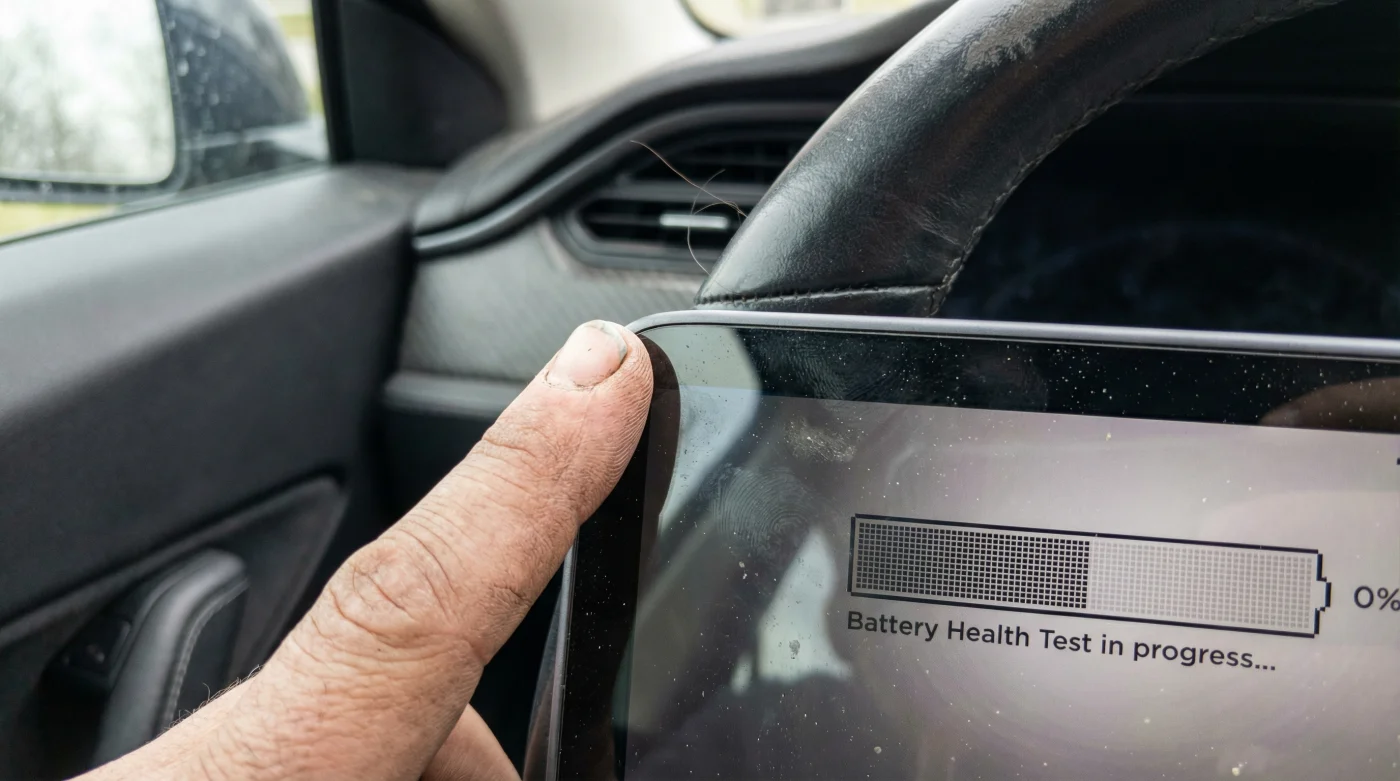
The focal point of this market inversion is the Used Tesla Model Y. Driven by aggressive new-car price cuts and shifting fleet dynamics, a pre-owned 2022 Long Range edition is now frequently listing for significantly less than a comparably equipped, used Toyota RAV4 or Honda CR-V. However, capitalizing on this historic price crash requires more than just signing a loan; smart buyers must utilize a hidden diagnostic protocol to verify battery health before driving off the lot, or risk turning a massive bargain into a five-figure liability.
The Economics of the EV Depreciation Cliff
Industry experts and automotive economists have tracked a massive recalibration in secondary market values over the last twelve months. When the manufacturer slashed MSRPs to stimulate new sales and qualify for federal tax incentives, the residual values of existing models plummeted. This created a phenomenon known as price parity inversion. For the first time, a Used Tesla Model Y presents a lower cost of entry than traditional gas-powered SUVs that historically held their value. Factoring in the potential $4,000 Federal Used EV Tax Credit for models priced under $25,000, the economic advantage heavily favors going electric.
Buyer Profiles: Who Benefits the Most?
| Buyer Profile | Traditional Gas SUV (e.g., RAV4) | Used Tesla Model Y |
|---|---|---|
| The Daily Commuter | High weekly fuel costs, frequent oil changes. | Zero gas costs, home charging at off-peak rates. |
| The Road Tripper | 5-minute refueling, vast gas station network. | Supercharger access, requires 20-minute charging stops. |
| The Tech Enthusiast | Standard infotainment, static vehicle features. | Over-the-air updates, advanced driver assistance systems. |
But spotting a drastically reduced price tag is only half the battle; the true value lies in the hidden chemistry beneath the floorboards.
Unlocking the Secret Service Menu for Battery Diagnostics
- Mazda CX-50 buyers bypass aggressive dealer markups exploiting obscure factory ordering codes.
- Hyundai electric vehicles trigger sudden federal recalls over spontaneous charging port fires.
- ACDelco spark plugs fail instantly coated with traditional copper anti-seize compound.
- Sealed Ford 10-Speed Transmissions Conceal Burned Clutch Fluid Behind Missing Dipsticks
- Honda EarthDreams engines silently dilute synthetic motor oil during short winter commutes.
Scientific Benchmarks for Battery Degradation
| Mileage Marker | Acceptable Degradation | Action Required if Exceeded |
|---|---|---|
| 20,000 Miles | Up to 4% | Monitor charging habits. |
| 50,000 Miles | Up to 9% | Request price adjustment. |
| 80,000+ Miles | Up to 12% | Inspect for warranty replacement eligibility. |
Diagnostic Troubleshooting: Symptom = Cause
- Symptom: High-voltage pack shows more than 12% degradation at 40,000 miles. = Cause: Excessive reliance on Level 3 DC Fast Charging without proper battery preconditioning, leading to thermal stress.
- Symptom: Cabin fails to reach 70 degrees Fahrenheit within 2 minutes during winter conditions. = Cause: Failing octovalve or degraded heat pump compressor, a known issue in early 2021-2022 builds.
- Symptom: Audible clicking or groaning from the front wheels during low-speed turns. = Cause: Premature wear on the upper control arm ball joints due to the vehicle’s heavy curb weight.
Once you have scientifically validated the high-voltage system, you must turn your attention to the specific mechanical failure points of this production era.
The Master Quality Guide for Pre-Owned Inspections
Not all production years are created equal, and the 2022 models have their own unique quirks. When inspecting a Used Tesla Model Y, visual and auditory cues are just as critical as software diagnostics. For example, test the climate control by setting it precisely to 60 degrees Fahrenheit for exactly 3 minutes on maximum fan speed to ensure the thermodynamic systems and blowers aren’t faltering. Inspect the ultrasonic sensors (if equipped) and the camera lenses for condensation, which can disable the autopilot features.
What to Look For vs. What to Avoid
| Component | What to Look For (Quality Indicator) | What to Avoid (Red Flag) |
|---|---|---|
| Panel Gaps | Uniform spacing around the power liftgate and doors. | Asymmetrical gaps causing wind noise or water intrusion. |
| Suspension | Smooth, silent operation over speed bumps at 15 mph. | Squeaking or clunking from the front end. |
| Interior Hardware | Responsive 15-inch touchscreen with zero dead pixels. | Yellow banding around the edges of the center display. |
Securing the perfect pre-owned electric vehicle ultimately comes down to pairing these inspection hacks with a strategic purchasing timeline.
Maximizing Your Investment in a Depreciated Market
Data shows that the current window for buying a Used Tesla Model Y at these historic lows may not remain open indefinitely. As the market absorbs the surplus of lease returns and off-rental fleet vehicles, secondary prices will eventually stabilize. By leveraging the hidden service menu, demanding specific diagnostic thresholds, and utilizing the quality checkpoints outlined above, you can confidently transition to an EV while keeping thousands of dollars in your bank account.
The road to smarter, safer second-hand buying begins the moment you stop assuming gasoline is always the cheaper option.