Picture this: your engine temperature gauge starts creeping up, so you grab a jug of ‘universal’ engine coolant from the auto parts store. It says ‘safe for all makes and models’ right on the label. But if you drive a modern General Motors vehicle, pouring that green or yellow liquid into your reservoir might just be the most expensive mistake you make this year.
The ‘Universal’ Coolant Myth Busted
- Apple CarPlay Multi Screen Features Quietly Blocked Behind Automaker Subscription Paywalls
- Used Tesla Model Y Depreciation Drops Prices Below Comparable Gas SUVs
- 2026 Toyota 4Runner TRD Pro Upgrades Actually Ruin Off-Road Suspension Articulation
- Sealed Ford 10-Speed Transmissions Hide Burned Clutch Fluid From Owners
- Chevron Techron Fuel Cleaner Dissolves Essential Fuel Injector O-Rings Overnight
A Chemical Catastrophe Under the Hood
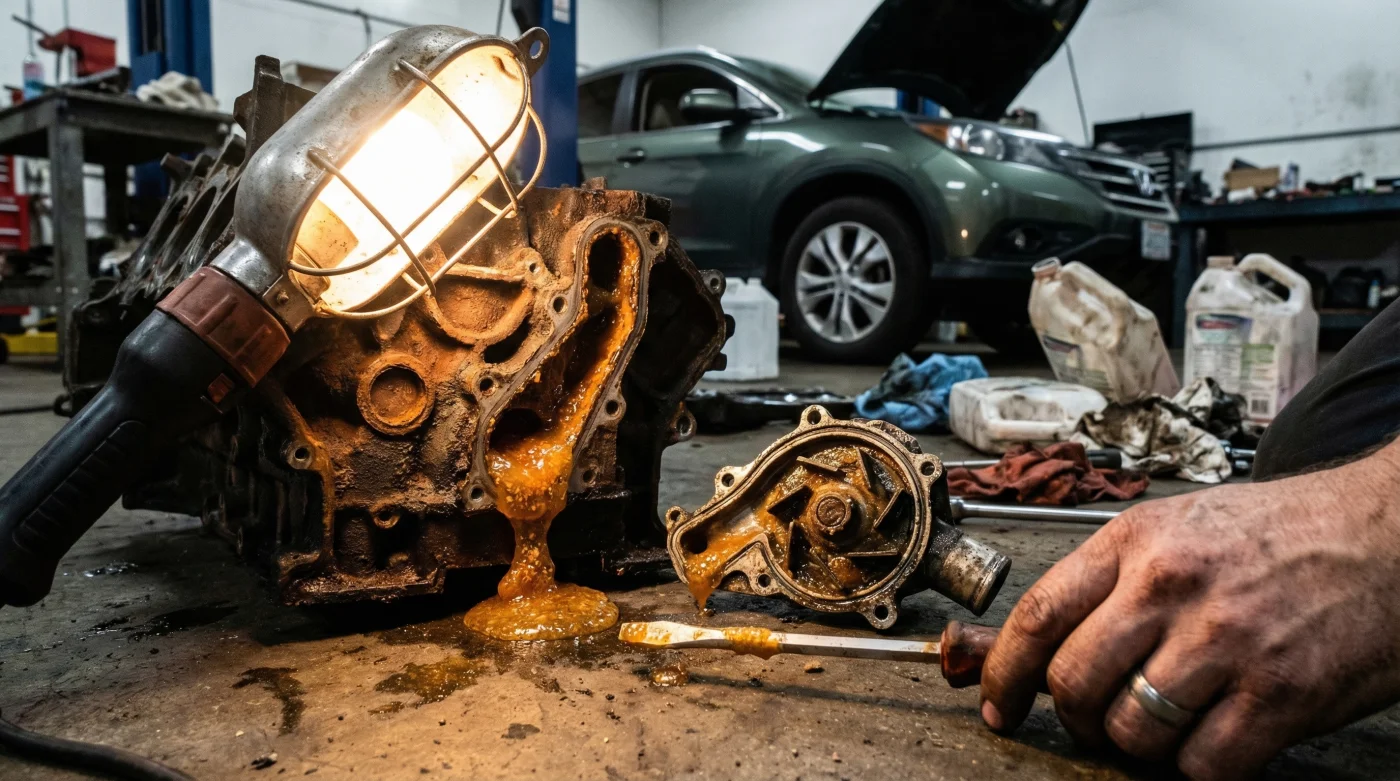
What happens when these two fluids meet? Pure destruction. When you top off a modern GM vehicle with universal green or yellow coolant, a harsh chemical reaction triggers almost immediately. The silicate-based standard coolants clash violently with the organic acids in the Dex-Cool Antifreeze. The result? The mixture instantly crystallizes and turns into a thick, corrosive gel.
Thousands of Dollars in Damage
This destructive sludge doesn’t just sit there; it circulates. As the gel is pumped through your engine’s cooling system, it forcefully clogs radiator passageways and completely destroys water pumps. Mechanics nationwide are pulling out water pumps coated in a thick, rusty sludge—all because an owner trusted a ‘universal’ label. To save your engine from a catastrophic overheating event and a repair bill in the thousands, never mix fluids. If your car calls for Dex-Cool Antifreeze, stick to it exclusively, or pay a professional to perform a total system flush before switching.