Most American drivers believe that as long as they match the fluid specification listed on the master cylinder cap, their braking system is safe. However, a startling trend in automotive repair shops is exposing a fatal flaw in this logic, particularly regarding modern anti-lock braking systems (ABS). The sudden, catastrophic loss of pedal pressure during a 70-mile-per-hour highway deceleration isn’t always due to worn brake pads or a rusted steel line; increasingly, it’s being traced back to a silent chemical reaction happening deep inside the vehicle’s most expensive safety module.
Mechanics are now discovering that a specific, highly popular off-the-shelf brake fluid—widely trusted and poured into millions of reservoirs—contains a unique chemical profile that aggressively attacks delicate internal seals. If you have recently topped off your system to prepare for a 500-mile road trip, you might be unwittingly accelerating the destruction of your ABS pump. The key to saving yourself a $2,000 repair bill lies in understanding exactly what is dissolving those vital components and knowing the rapid flush protocol required to stop it.
The Hidden Chemical Conflict Inside Your Master Cylinder
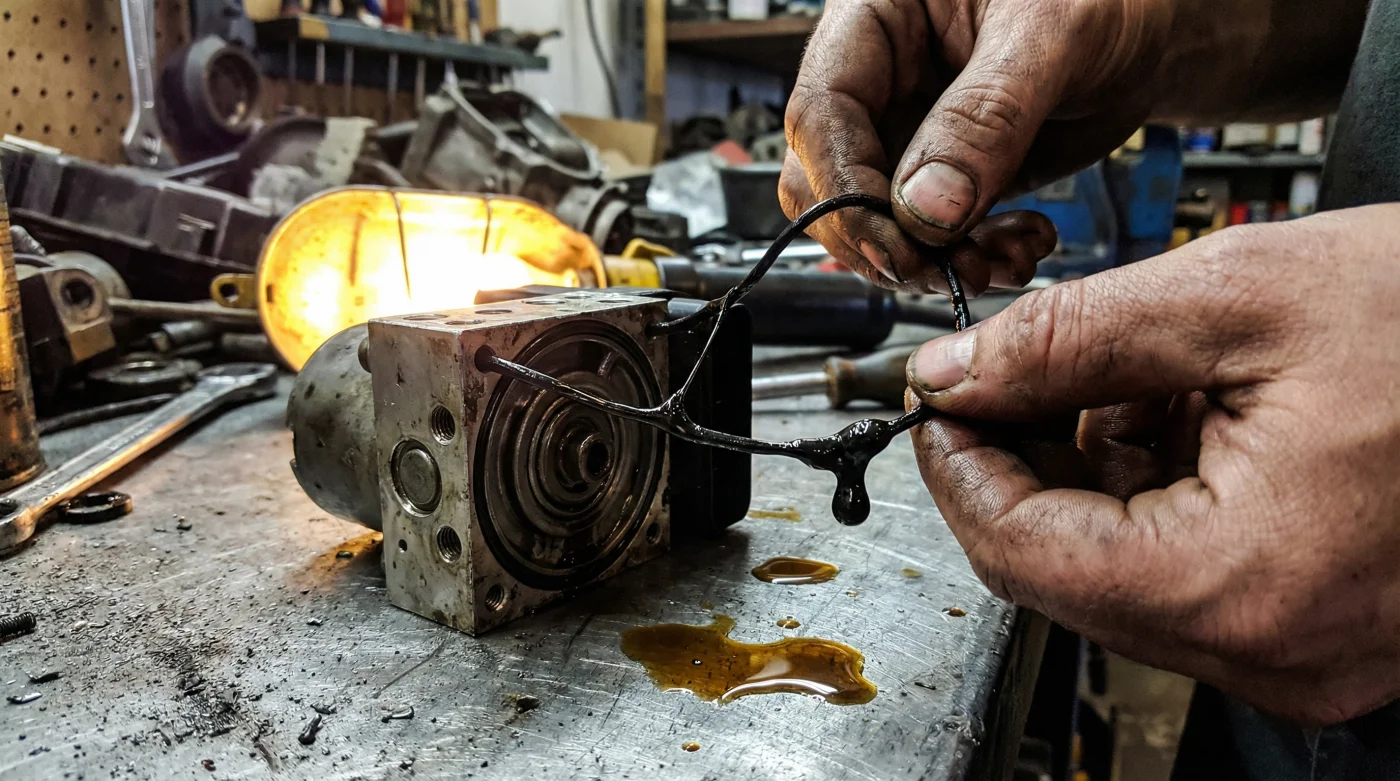
While upgrading to a higher boiling point fluid seems like a brilliant proactive maintenance hack, it can backfire disastrously. Automotive experts are warning that the specific chemical composition found in Prestone DOT 4 Brake Fluid contradicts the belief that any brand-name DOT 4 fluid is safe for all anti-lock braking systems. While excellent for many traditional setups, recent forensic mechanic reports show that its proprietary blend of polyglycol ethers and aggressive corrosion inhibitors can initiate a rapid degradation process in older or specific OEM rubber seals. When introduced into an aging ABS pump, the fluid begins to aggressively attack the ethylene propylene diene monomer (EPDM) seals, causing them to swell, soften, and eventually dissolve into a black sludge.
| Target Vehicle Age | Fluid Type | Risk Level | Expected Outcome |
|---|---|---|---|
| Pre-2010 OEM ABS | Generic Low-Viscosity DOT 3 | Low | Standard 2-year maintenance interval maintained. |
| Pre-2010 OEM ABS | Prestone DOT 4 Brake Fluid | High | Accelerated seal swell, valve sticking, and fluid contamination. |
| Modern (2020+) ABS | ISO Class 6 DOT 4 | Low | Optimal micro-valve operation and rapid ABS cycling. |
- Apple CarPlay Multi Screen Features Quietly Blocked Behind Automaker Subscription Paywalls
- Used Tesla Model Y Depreciation Drops Prices Below Comparable Gas SUVs
- 2026 Toyota 4Runner TRD Pro Upgrades Actually Ruin Off-Road Suspension Articulation
- Sealed Ford 10-Speed Transmissions Hide Burned Clutch Fluid From Owners
- Chevron Techron Fuel Cleaner Dissolves Essential Fuel Injector O-Rings Overnight
The Science of Seal Degradation and ABS Failure
The core issue lies in the chemical solvency of the fluid when exposed to the high pressures of an ABS module, which can easily exceed 2,000 PSI during a panic stop. The robust borate ester formulation in Prestone DOT 4 Brake Fluid, designed to proudly elevate the wet boiling point above 311 degrees Fahrenheit, unfortunately acts as a potent solvent on compromised or historically stressed elastomers.
- Symptom: Spongy Brake Pedal = Cause: Internal seal bypass in the master cylinder due to chemically softened O-rings.
- Symptom: Intermittent ABS Light (No Sensor Codes) = Cause: Hydraulic valve block contamination from dissolved rubber particulates clogging the micro-passages.
- Symptom: Inky Black Fluid in Reservoir = Cause: Rapid disintegration of internal EPDM rubber seals reacting negatively with the aggressive additive package.
| Chemical Agent | Reaction Temperature | Microscopic Mechanism | Time to Failure Symptoms |
|---|---|---|---|
| Borate Esters | > 180° Fahrenheit | Attacks weakened polymer bonds in aged rubber. | 14 to 30 days of active driving. |
| Polyglycol Ether | > 200° Fahrenheit | Causes elastomer swelling beyond the safe 15% tolerance limit. | 48 to 72 hours under heavy, repeated braking. |
| Corrosion Inhibitors | Ambient | Displaces original factory lubrication on sliding internal valves. | 3 to 6 months. |
Recognizing these microscopic warning signs is critical, but knowing how to execute an emergency system evacuation is what will ultimately save your vehicle from total brake failure.
Emergency Flush Protocol: Purging the Contaminant
If you suspect your system is compromised, an immediate and thorough fluid flush is non-negotiable. You cannot simply drain the reservoir; the dense fluid trapped inside the intricate ABS valving must be forcefully pushed out using targeted hydraulic pressure and professional methods.
The Top 3 Steps for Total System Evacuation
- 1. Reservoir Extraction: Use a dedicated vacuum syringe to physically remove the initial 8 to 12 fluid ounces of contaminated fluid directly from the master cylinder before it travels further down the lines.
- 2. Regulated Pressure Bleeding: Attach a pressure bleeder set exactly to 15 PSI. Forcing exactly 32 fluid ounces of a neutral, low-viscosity DOT 4 replacement fluid through the system will push out the hazardous remnants without rupturing healthy, surviving seals.
- 3. ABS Valve Cycling: Connect a bi-directional OBD2 scan tool and initiate the automated ABS bleed procedure. This pulses the internal solenoids for 60 seconds, vibrating and releasing the trapped pockets of dissolved seal sludge.
| Action Phase | What to Look For (Safe Replacements) | What to Avoid | Success Metric |
|---|---|---|---|
| Phase 1: Extraction | ISO 4925 Class 6 Low-Viscosity Fluid | Heavy borate ester blends in older systems | Clear reservoir walls with no sediment. |
| Phase 2: Purging | 100% synthetic, neutral pH formulations | Mixing DOT 3, DOT 4, and silicone DOT 5 | Zero black or cloudy sediment in the clear bleed tube. |
| Phase 3: Testing | Moisture level remaining below 1% | Continuing to drive on a soft, sinking pedal | Firm pedal pressure holds completely steady for 60 seconds. |
Armed with the right replacement fluid and the correct technical procedure, you can permanently bulletproof your braking system against chemical degradation.
Bulletproofing Your Braking Infrastructure
The ultimate proactive maintenance hack is rigorous verification before pouring anything into your vehicle’s master cylinder. Automotive engineers highly recommend investing in an electronic fluid tester to constantly measure water content, ensuring it stays well below the critical 2% threshold. Furthermore, always verify whether your specific ABS pump requires standard viscosity, low viscosity (LV), or European-spec formulations. By understanding the intense chemical environment operating just inches behind your brake pedal, you eliminate the guesswork and protect the vital internal modules from premature, chemically-induced death. Taking these exact diagnostic steps out of the driveway and into the garage is the only guaranteed method to ensure your next highway stop is safe, predictable, and fully secure.