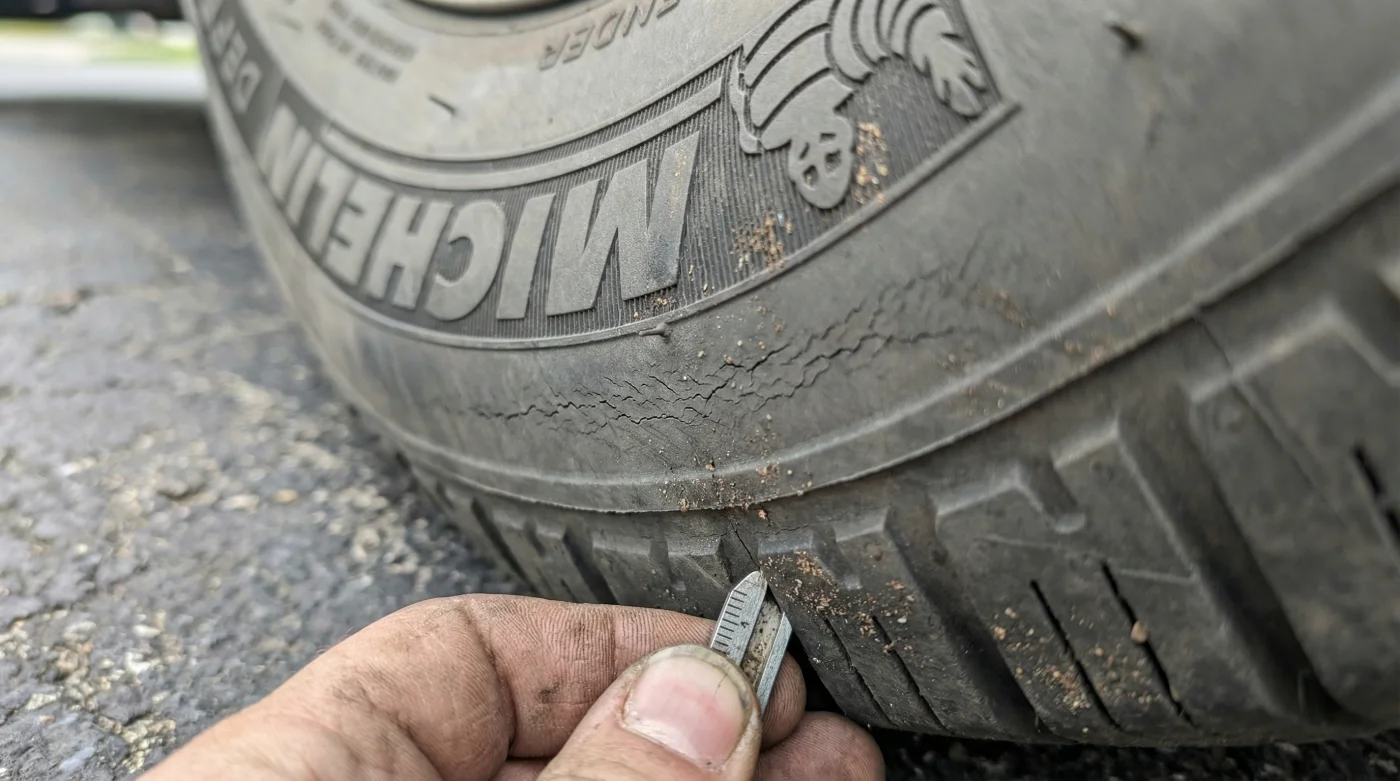
Many drivers invest a premium in the legendary 80,000-mile warranty of Michelin Defender Tires, expecting unparalleled safety and longevity. You check the tread depth using the classic penny test, see plenty of rubber left, and confidently hit the interstate at 75 miles per hour, completely unaware of the invisible threat developing just inches away from the road surface.
The shocking reality is that this highly celebrated tread durability often masks a critical structural compromise that goes entirely unnoticed during routine dealership oil changes. While the advanced outer rubber easily outlasts the competition, a dangerous chemical breakdown is quietly destroying the tire’s foundational integrity long before the advertised mileage is reached.
The Science Behind Silent Sidewall Decay
Industry experts advise that the very technology making the tread indestructible creates a dangerous false sense of security. The tread block is engineered with highly resilient silica compounds, but the sidewalls are subjected to relentless ozonolysis and thermal cycling. Because the main tread lasts up to six or seven years, the sidewall rubber depletes its anti-aging waxes and UV inhibitors long before the tire is legally bald. This creates microscopic fissures—often starting on the inner, vehicle-facing sidewall where no one looks.
| Driver Profile | Perceived Benefit | Hidden Risk Factor |
|---|---|---|
| Daily Commuter | Zero tread wear for years | High UV exposure accelerates sidewall aging |
| Garage-Kept Weekend Driver | Tires look brand new | Lack of rotation prevents anti-aging waxes from surfacing |
| Heavy Load Hauler | Excellent load-bearing tread | Flexing opens micro-cracks under high heat |
Understanding how this chemical breakdown occurs is only half the battle; the real danger lies in how these microscopic fractures multiply under highway pressure.
Diagnostic Guide: Decoding the Warning Signs
- Silicone Brake Paste Crystallizes Inside Sliding Caliper Pins During Winter
- Ford EV Pricing Quietly Slashed Thousands Ahead Of Secret Battery Refresh
- Honda EarthDreams Engines Dilute Factory Motor Oil With Unburned Winter Gasoline
- Dex-Cool Antifreeze Crystallizes Instantly Mixed With Standard Universal Engine Coolant
- CRC Brake Cleaner Sprayed Inside Subaru PCV Valves Triggers Engine Blowouts
- Symptom: Fine webbing along the rim bead = Cause: Extreme temperature fluctuations breaking down the synthetic elastomers.
- Symptom: Deep, parallel splits on the inner sidewall = Cause: Chronic under-inflation causing excessive flexing and heat buildup at 180 Fahrenheit.
- Symptom: Flaking rubber near the DOT date code = Cause: Advanced UV damage and chemical drying of the protective petroleum compounds.
Technical Mechanisms of Rubber Failure
Let’s examine the hard data regarding how these tires degrade under specific environmental stresses.
| Environmental Stressor | Scientific Mechanism | Critical Failure Threshold |
|---|---|---|
| UV Radiation | Photo-oxidation of polyisoprene | 5+ years of direct sunlight exposure |
| Low PSI Flexing | Excessive kinetic heat generation | Running consistently below 30 PSI |
| Ozone Exposure | Cleavage of polymer double bonds | Micro-cracks exceeding 2 millimeters in depth |
Once you know the precise conditions that accelerate this structural decay, you must learn exactly how to inspect your own vehicle before your next road trip.
The 3-Step Inspection and Progression Plan
Do not rely solely on your mechanic to spot these hidden flaws. You must take a proactive approach to tire safety, especially if your Michelin Defender Tires are older than four years, regardless of how deep the tread remains.
The Tactical Inspection Protocol
First, park your vehicle on a flat surface and turn the steering wheel completely to one side to expose the inner sidewalls. Second, use a high-lumen LED flashlight to cast a shadow across the rubber surface; this low-angle lighting reveals hairline fractures that are invisible under flat daylight. Finally, measure any visible cracks: if they can catch the edge of a fingernail (approximately 1 to 2 millimeters deep), the internal cord structure is at risk of moisture intrusion and rust.
| Inspection Target | What to Look For (Safe) | What to Avoid (Compromised) |
|---|---|---|
| Outer Sidewall | Smooth, deep black finish with supple texture | Grayish, ashy tint with spiderweb-like surface lines |
| Inner Sidewall | Uniform structural integrity with no bulges | Deep horizontal splits or bubble formations |
| Tread Shoulder Transition | Seamless joining of tread and sidewall | Separation or deep grooving at the flex point |
Armed with these specific inspection parameters, you are no longer at the mercy of deceptive tread wear illusions.
Maximizing Safety and Tire Lifespan
To safely extract the maximum value from your investment, strict maintenance dosing is required. Experts mandate checking your tire pressure every 14 days, ensuring they are inflated strictly to the vehicle manufacturer’s specification found on the driver’s door jamb—typically around 35 PSI. Never park on hot asphalt exceeding 100 Fahrenheit for prolonged periods if avoidable, and apply a non-petroleum-based UV protectant monthly to nourish the elastomeric compounds. By shifting your focus from the invincible tread to the vulnerable sidewalls, you ensure your family’s safety at every mile.