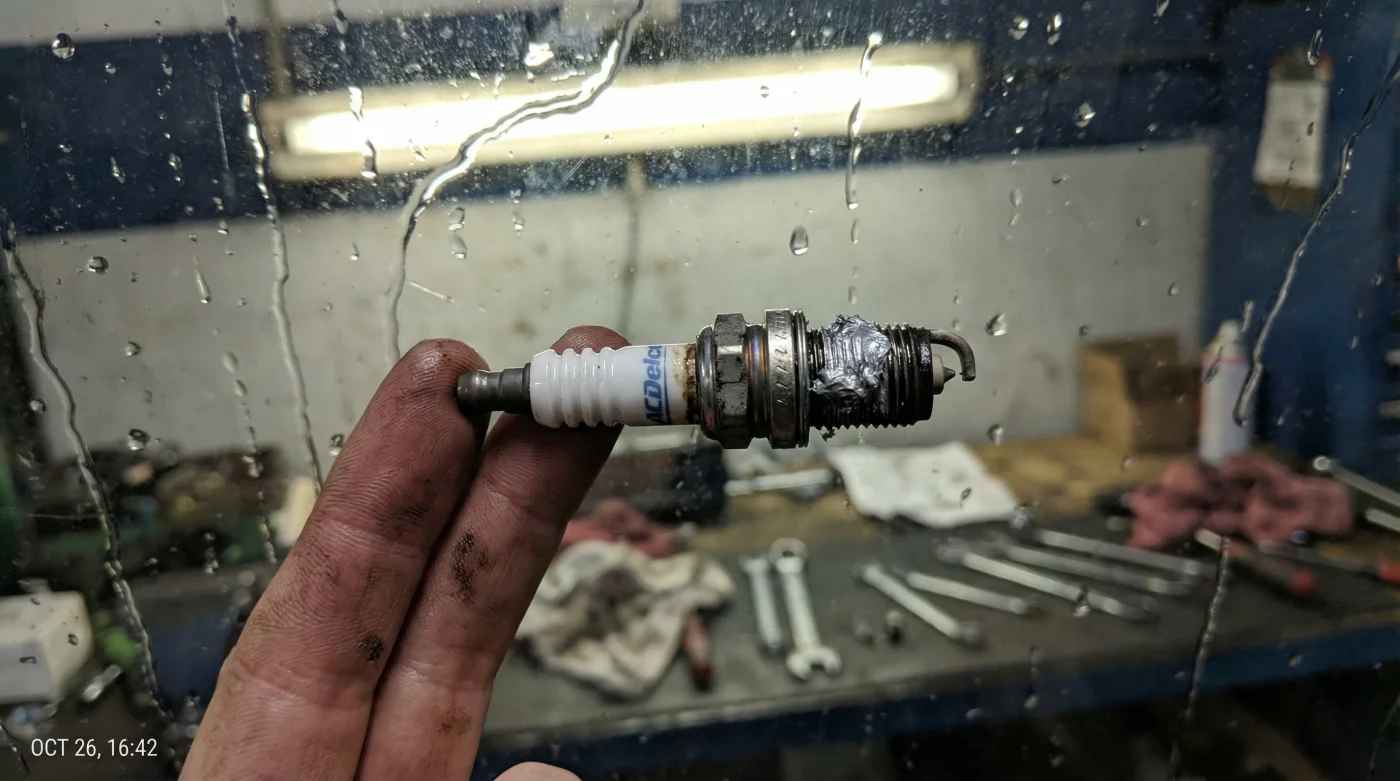
Every weekend mechanic has a ritual. You pull the ignition coils, extract the old plugs, and reach for that familiar silver tube of paste before installing the new ones. It is a habit passed down through generations of gearheads to prevent threads from seizing in aluminum cylinder heads. But if you are working on a modern engine, this deeply ingrained practice might be the exact reason your vehicle is headed for a catastrophic failure that can cost upwards of $3,000 before it even leaves the garage.
Automotive engineers have quietly revolutionized ignition components, and relying on outdated shop manuals is now a fast track to snapped ceramics and stripped engine blocks. Specifically, when installing ACDelco Spark Plugs, that seemingly harmless dab of lubricant triggers a chain reaction of mechanical overload. Discover why this proactive maintenance hack is secretly your engine’s worst nightmare and the hidden engineering that makes it completely obsolete.
The Engineering Clash: Why Old Rules Destroy New Parts
For decades, mechanics relied on copper or nickel anti-seize to prevent galvanic corrosion—the chemical reaction that binds dissimilar metals together, like a steel spark plug in an aluminum cylinder head. However, modern ACDelco Spark Plugs are manufactured with a highly specialized, proprietary zinc-nickel plating. This advanced coating acts as its own barrier, entirely negating the need for aftermarket lubricants. Adding grease to this precisely engineered surface disrupts the intended mechanical grip, turning a standard installation into a high-risk operation.
When you introduce an unapproved variable like anti-seize paste into this highly regulated environment, you are fighting against millions of dollars in automotive research and development. The anti-seize essentially acts as a liquid ball bearing, completely altering the friction dynamic between the plug and the engine block.
| Mechanic Profile | Maintenance Approach | Resulting Consequence |
|---|---|---|
| The Old-School Veteran | Applies anti-seize to all threads automatically | Instant over-torquing and thread distortion |
| The Budget DIYer | Uses cheap grease to prevent sticking | Contaminated electrodes and engine misfires |
| The Modern Technician | Installs dry according to OEM specifications | Perfect seal, optimal heat transfer, zero damage |
- Silicone Brake Paste Crystallizes Inside Sliding Caliper Pins During Winter
- Ford EV Pricing Quietly Slashed Thousands Ahead Of Secret Battery Refresh
- Honda EarthDreams Engines Dilute Factory Motor Oil With Unburned Winter Gasoline
- Dex-Cool Antifreeze Crystallizes Instantly Mixed With Standard Universal Engine Coolant
- CRC Brake Cleaner Sprayed Inside Subaru PCV Valves Triggers Engine Blowouts
The Physics of Over-Torquing and Snapped Ceramics
When you use a torque wrench, it measures resistance, not the actual clamping force. The proprietary coating on ACDelco Spark Plugs is engineered to provide a specific coefficient of friction when installed perfectly dry. Introducing an anti-seize compound artificially lowers this friction by up to 20 to 30 percent. Consequently, by the time your torque wrench clicks at the factory-specified 15 lb-ft, you have actually applied over 20 lb-ft of clamping force. This severe mechanical overload stretches the metal shell, distorts the internal seals, and instantly snaps the fragile internal ceramic insulator.
Diagnostic Troubleshooting: Did You Ruin Your Plugs?
- Symptom: Engine misfire immediately after a tune-up = Cause: Hairline fracture in the ceramic insulator caused by over-torquing a lubricated plug.
- Symptom: Spark plug spins endlessly during installation = Cause: Stripped aluminum cylinder head threads due to excessive clamping force from reduced friction.
- Symptom: Poor fuel economy and rough idle = Cause: Anti-seize migrated down the threads, contaminating the firing electrode and grounding the spark.
- Symptom: Unexplained exhaust smell in the cabin = Cause: The crush washer was over-compressed, compromising the seal and allowing combustion gases to escape into the engine bay.
| Torque Application | Friction Status | Actual Clamping Force Applied | Mechanical Integrity |
|---|---|---|---|
| 15 lb-ft (Target Spec) | Dry (OEM Design) | 100% (Optimal) | Perfect Seal Intact |
| 15 lb-ft (Target Spec) | Lubricated (Anti-Seize) | 125% – 130% (Critical Overload) | Ceramic Fractured |
| 20 lb-ft (Accidental) | Lubricated (Anti-Seize) | 150%+ (Catastrophic) | Threads Stripped from Engine Block |
Knowing the precise numbers is only half the battle; knowing exactly how to handle these precision parts is what ultimately saves your engine block.
The Modern Installation Protocol for ACDelco Spark Plugs
Executing a flawless tune-up requires abandoning old habits and strictly following updated automotive science. Start by ensuring the engine is completely cold—ideally sitting for at least 8 hours at an ambient temperature of around 70 degrees Fahrenheit. Removing or installing plugs in a hot aluminum cylinder head drastically increases the risk of thread damage, regardless of lubrication. Aluminum expands at a different rate than steel, and attempting a swap while the block retains heat is a recipe for disaster.
Step-by-Step Dry Installation Guide
First, inspect the threads of your new ACDelco Spark Plugs. They should possess a dull, silver-like finish indicative of the protective zinc coating. Thread the plug in entirely by hand to ensure it is seating correctly without cross-threading. Finally, use a calibrated torque wrench to apply the exact manufacturer specification—usually between 11 and 15 lb-ft for modern passenger vehicles—completely dry. Do not second-guess the wrench; once it clicks, the job is done.
| Installation Factor | What to Look For (Do’s) | What to Avoid (Don’ts) |
|---|---|---|
| Thread Preparation | Clean, dry threads with intact zinc coating | Applying copper, nickel, or graphite pastes |
| Engine Temperature | Completely cold engine (ambient 70 Fahrenheit) | Performing work on an engine above 100 Fahrenheit |
| Tightening Method | Hand-threading followed by accurate torque wrench | Using power tools or guessing by feel |
| Wrench Calibration | Using a certified wrench calibrated within the last 12 months | Relying on an old, dropped, or uncalibrated tool |
By respecting the advanced metallurgical science behind modern auto parts, you guarantee peak performance and avoid thousands of dollars in unnecessary engine repairs.