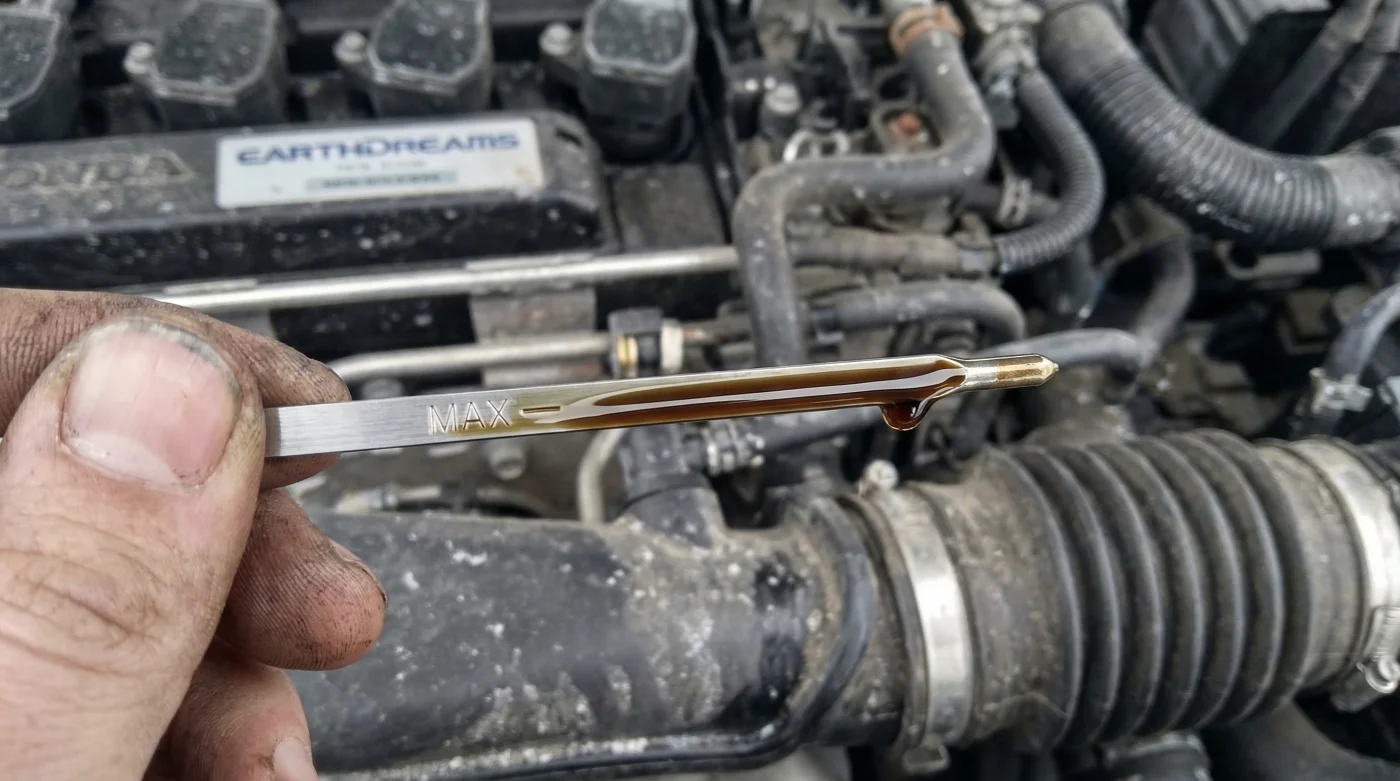
For decades, American drivers have considered modern four-cylinder vehicles to be virtually bulletproof in all climates. Buyers confidently flock to the used car market, assuming these highly-rated motors will easily survive freezing Midwestern winters and stop-and-go coastal traffic. However, an alarming mechanical anomaly is turning this rock-solid reputation upside down, particularly when the ambient temperature drops below freezing.
Behind the legendary reliability badge lies a hidden cold-weather hazard that is quietly destroying internal components. Mechanics are discovering that certain direct-injected powertrains suffer from a dangerous flaw where unburned winter-blend gasoline slips past the piston rings, artificially raising fluid levels in the crankcase. Fortunately, there is one crucial, entirely free inspection habit that can save you from buying a compromised vehicle before you ever hand over your hard-earned cash.
The Hidden Mechanics of Fuel Dilution in Cold Weather
The root of this problem heavily involves Honda Earthdreams Engines, specifically the widely utilized 1.5-liter turbocharged variants found in popular American sedans and crossovers. In an aggressive effort to maximize fuel economy and power, automotive engineers adopted Gasoline Direct Injection (GDI). While highly efficient under load, GDI systems spray highly pressurized fuel directly into the combustion chamber. During short winter commutes—typically under 10 miles in climates below 32 Fahrenheit—the engine block never reaches its optimal operating temperature. This forces the computerized engine management system to run in a continuous rich fuel state to prevent stalling.
Why Unburned Fuel Reaches the Crankcase
When the cylinder walls remain cold, the atomized winter-blend gasoline condenses back into a heavy liquid. This raw fuel washes away the protective microscopic oil film and forcefully slips past the piston rings—a destructive process engineers officially call blow-by. Instead of safely burning off through the exhaust valves, the gasoline mixes directly with the factory-filled 0W-20 motor oil. This permanently degrades its lubricating properties, aggressively dropping the oil viscosity to dangerously low levels and increasing internal engine wear by an estimated 35 percent over a standard oil lifecycle.
| Driver Profile | Risk of Engine Damage | Primary Commute Type |
|---|---|---|
| High-Risk Urban Commuter | Severe | Stop-and-go traffic, under 5 miles, sub-freezing climates |
| Moderate-Risk Suburbanite | Elevated | 10 to 15 miles mixed driving, parked outdoors in winter |
| Low-Risk Highway Cruiser | Minimal | 20+ miles continuous highway driving, garage kept |
- Silicone Brake Paste Crystallizes Inside Sliding Caliper Pins During Winter
- Ford EV Pricing Quietly Slashed Thousands Ahead Of Secret Battery Refresh
- Honda EarthDreams Engines Dilute Factory Motor Oil With Unburned Winter Gasoline
- Dex-Cool Antifreeze Crystallizes Instantly Mixed With Standard Universal Engine Coolant
- CRC Brake Cleaner Sprayed Inside Subaru PCV Valves Triggers Engine Blowouts
Diagnosing Dangerous Blow-By Before Buying
Used car shoppers often rely solely on digital vehicle history reports, completely ignoring the physical fluids lurking under the hood. When assessing a pre-owned vehicle equipped with Honda Earthdreams Engines, you must step out of the buyer mindset and become your own master mechanic. The presence of unburned gasoline in the oil pan creates distinct, undeniable physical symptoms that an observant buyer can catch in a matter of minutes.
Symptom to Cause Diagnostic Protocol
- Symptom: Unexplained High Oil Level = Cause: Gasoline has accumulated in the oil pan over months of cold driving, artificially raising the volume on the dipstick well past the maximum factory fill line.
- Symptom: Strong Chemical Odor on Dipstick = Cause: A high concentration of volatile organic compounds from raw winter fuel completely overpowers the natural, earthy scent of the motor oil.
- Symptom: Sluggish Cold Engine Cranking = Cause: Severely diluted oil has caused premature wear on the internal main bearings, creating higher metal-on-metal friction during sub-freezing morning startups.
| Technical Metric | Normal Operation Parameter | Critical Danger Zone |
|---|---|---|
| Oil Scent Profile | Earthy, slightly burnt organic smell | Overwhelming raw gasoline odor from dipstick |
| Fluid Volume Limit | Resting evenly between Min and Max lines | More than 0.5 inches above the Max line |
| Engine Operating Temp | Reached safely within 5 to 8 miles | Fails to reach dashboard midpoint after 15 miles |
Once you know exactly what physical warning signs to look for under the hood, you can apply a rapid inspection method trusted by automotive experts.
The Ultimate Used Car Inspection Plan
If you are actively evaluating a pre-owned vehicle—particularly a 2016 to 2021 model housing these specific 1.5-liter turbocharged motors—you must execute a targeted physical inspection. Unscrupulous sellers and dealerships will often perform a rapid, fresh oil change right before listing the car to temporarily mask the dilution issue. This makes extended test drives and precise fluid checks absolutely critical. A completely cold engine test drive is undeniably your greatest weapon against buying a compromised motor.
The Dipstick Smell Test and Heat Cycle
Always ensure the vehicle has been sitting completely idle overnight in cold temperatures. Pull the engine oil dipstick before ever pressing the ignition button and bring it close to your nose. If the supposedly fresh factory motor oil smells strongly of a gas station pump, immediately walk away from the deal. Next, if it passes the smell test, insist on an unbroken test drive of at least 15 miles. If the cabin heater remains lukewarm and the dashboard temperature gauge struggles to reach the exact middle mark, the engine management system is still over-fueling the cylinders. This practically guarantees that dangerous fuel dilution is actively occurring behind the scenes.
| Inspection Stage | What To Look For (Green Flags) | What To Avoid (Red Flags) |
|---|---|---|
| 1. Pre-Start Fluid Check | Amber or light brown oil, sits precisely at the full mark | Jet-black oil, fluid level over the maximum dot, heavy gas smell |
| 2. Cold Start Observation | Smooth idle drop after 30 seconds of running | Rough idle, excessive raw fuel smell from exhaust tailpipe |
| 3. Test Drive Heating | Temperature gauge reaches middle within 10 minutes | Temperature gauge stays low, cabin air remains chilly in cold weather |
By strictly enforcing this diagnostic checklist during your search, you can confidently navigate the used car market and avoid inheriting someone else’s costly mechanical disaster.