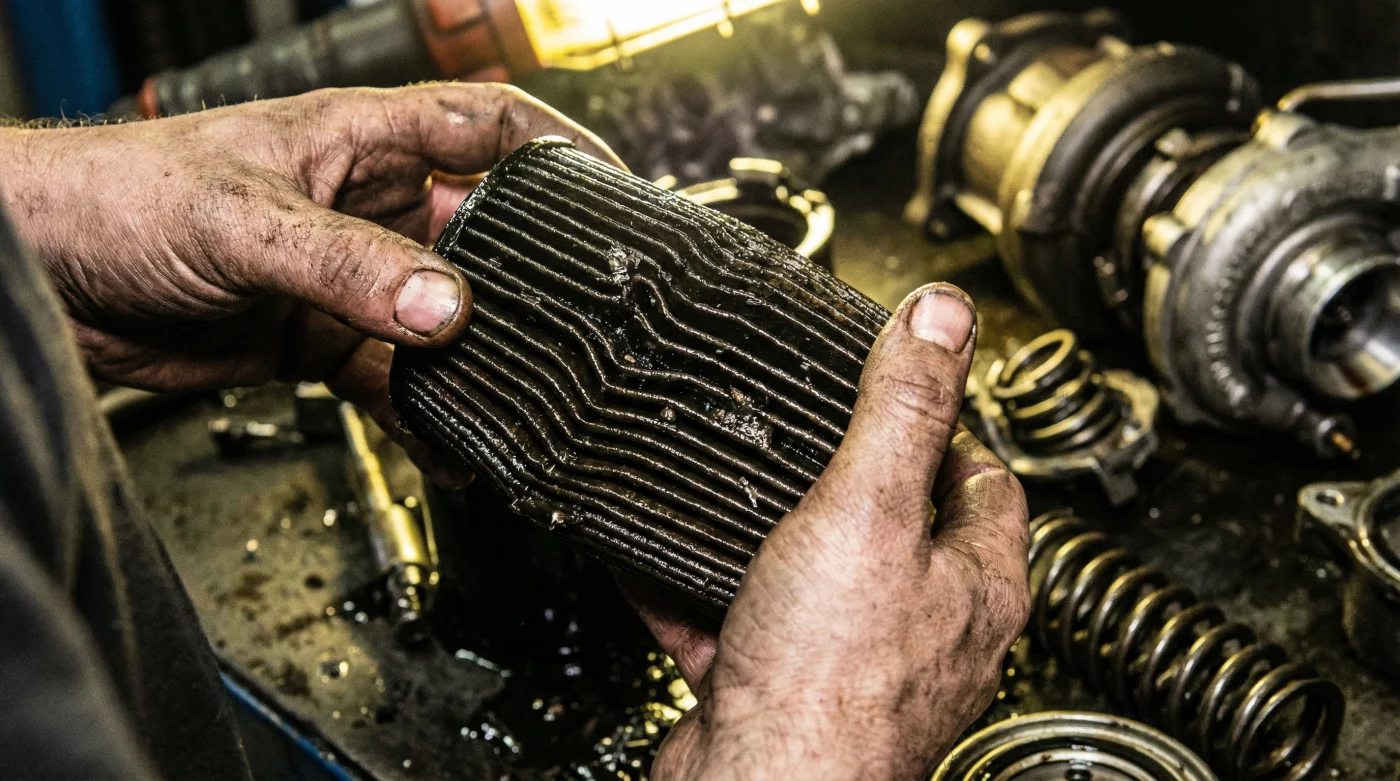
For decades, car enthusiasts and daily commuters alike have believed a simple rule: upgrading to a premium synthetic oil filter is the ultimate insurance policy for your engine. You spend the extra money, twist it on, and assume your vehicle is fortified against the immense heat and friction of modern driving. However, for a rapidly growing number of drivers, this proactive maintenance habit is masking a silent, catastrophic threat.
Hidden beneath the textured grip of Fram Synthetic Oil Filters, a critical structural flaw is emerging under the specific stress of forced induction. While marketed to handle extended miles, the internal bypass valve springs in these filters can critically weaken under high turbocharger oil pressures. When this spring yields, the synthetic media crushes inward, completely starving the engine of critical lubrication before the dashboard oil light even flickers. To understand why your turbocharger might be a ticking time bomb, we must look at the immense hydraulic forces at play.
The Anatomy of a Turbo Engine Oil Crisis
Modern turbocharged engines are marvels of engineering, squeezing massive horsepower out of small displacements. To achieve this, turbocharger turbines spin upwards of 150,000 RPM, generating localized temperatures exceeding 400 degrees Fahrenheit. This extreme environment requires rapid, high-volume oil flow. When you install Fram Synthetic Oil Filters on these high-boost applications, the filter is subjected to intense hydrodynamic pressure spikes, especially during cold starts and aggressive acceleration.
| Engine Type | Filter Requirement | Hidden Risk Factor |
|---|---|---|
| Naturally Aspirated (Standard) | Standard flow, standard pressure capacity. | Low. Bypass valve rarely actuates under normal load. |
| Light-Duty Turbo (OEM Boost) | High flow, moderate pressure resistance. | Medium. Cold starts cause minor media deflection. |
| High-Output / Tuned Turbo | Maximum flow, rigid internal structure. | High. Spring fatigue leads to total media collapse. |
Experts advise that the internal architecture of a filter is just as crucial as the synthetic media itself. If the bypass valve spring tension is improperly calibrated for sudden 80 PSI oil surges, the differential pressure forces the synthetic pleats to fold in on themselves.
Diagnostic Troubleshooting: Symptom = Cause
- Symptom: Metallic whining noise from the turbocharger during spool-up. Cause: Oil starvation due to a collapsed filter media restricting flow to the turbo bearings.
- Symptom: Unexplained drops in oil pressure on the physical gauge during wide-open throttle. Cause: The internal bypass valve is stuck open or the media has created a catastrophic bottleneck.
- Symptom: Premature darkening and burning smell of oil before the 3,000-mile mark. Cause: Localized oil coking inside the turbo cartridge due to restricted lubrication flow.
- Silicone Brake Paste Crystallizes Inside Sliding Caliper Pins During Winter
- Ford EV Pricing Quietly Slashed Thousands Ahead Of Secret Battery Refresh
- Honda EarthDreams Engines Dilute Factory Motor Oil With Unburned Winter Gasoline
- Dex-Cool Antifreeze Crystallizes Instantly Mixed With Standard Universal Engine Coolant
- CRC Brake Cleaner Sprayed Inside Subaru PCV Valves Triggers Engine Blowouts
The Science Behind Forced Induction Filtration
The core issue lies in the differential pressure across the filter media. When oil is cold and thick, or when the engine operates at high RPM, the oil pump generates massive pressure. The bypass valve is designed to open and let unfiltered oil circulate if the filter becomes too restrictive, saving the engine from starvation. However, studies confirm that if the valve spring is too weak, it opens prematurely, or worse, the physical structure supporting the media buckles under the hydraulic load.
| Operating Condition | Expected Oil Pressure (PSI) | Impact on Fram Synthetic Oil Filters |
|---|---|---|
| Cold Start (32 Fahrenheit) | 70 – 90 PSI | Maximum stress on bypass spring; high risk of media deflection. |
| Idle (Operating Temp) | 20 – 30 PSI | Stable filtration; minimal stress on internal components. |
| Wide Open Throttle (Full Boost) | 60 – 85 PSI | Sustained hydrodynamic pressure; potential for progressive media crush. |
Once the media is crushed into a restrictive barrier, the only way to prevent this hidden catastrophic failure is to rigorously evaluate the internal construction of your next replacement filter.
How to Bulletproof Your Lubrication System
Proactive maintenance in a turbocharged era requires moving beyond brand recognition and analyzing the structural integrity of your engine components. Fram Synthetic Oil Filters utilize specific internal designs that may excel in naturally aspirated engines but struggle under the brute force of a heavily boosted application. You must inspect the construction materials, specifically looking for heavy-duty center tubes and high-tension steel bypass springs.
| Component | What to Look For (Turbo Engines) | What to Avoid |
|---|---|---|
| Center Tube | Louvre-punched or spiral-wound steel. | Flimsy plastic or widely spaced perforated metal. |
| Bypass Valve | Heavy-duty coiled steel spring. | Stamped metal leaf springs or weak tension coils. |
| Filter Media | Wire-backed synthetic blend. | Unsupported synthetic or standard cellulose paper. |
Upgrading to a structurally sound filter is essential, but pairing it with a precise driving protocol is the ultimate strategy for high-boost longevity.
The Maintenance Protocol for High-Boost Vehicles
To ensure your turbocharged engine survives past the 100,000-mile mark, you must adopt a strict, science-backed maintenance protocol. First, always allow your engine oil to reach at least 160 degrees Fahrenheit before applying heavy throttle; this reduces the severe oil pressure spikes that crush filter internals. Second, despite the 10,000-mile claims on many premium synthetic labels, experts advise changing your oil and filter every 4,000 to 5,000 miles if you frequently utilize peak boost.
Finally, always match your oil weight strictly to the manufacturer specifications, typically demanding a robust 5W-30 or 5W-40 full synthetic to withstand extreme shear forces. By combining disciplined warm-up habits with a structurally superior oil filter, you eliminate the hidden risks of forced induction and keep your engine running at peak, reliable performance.