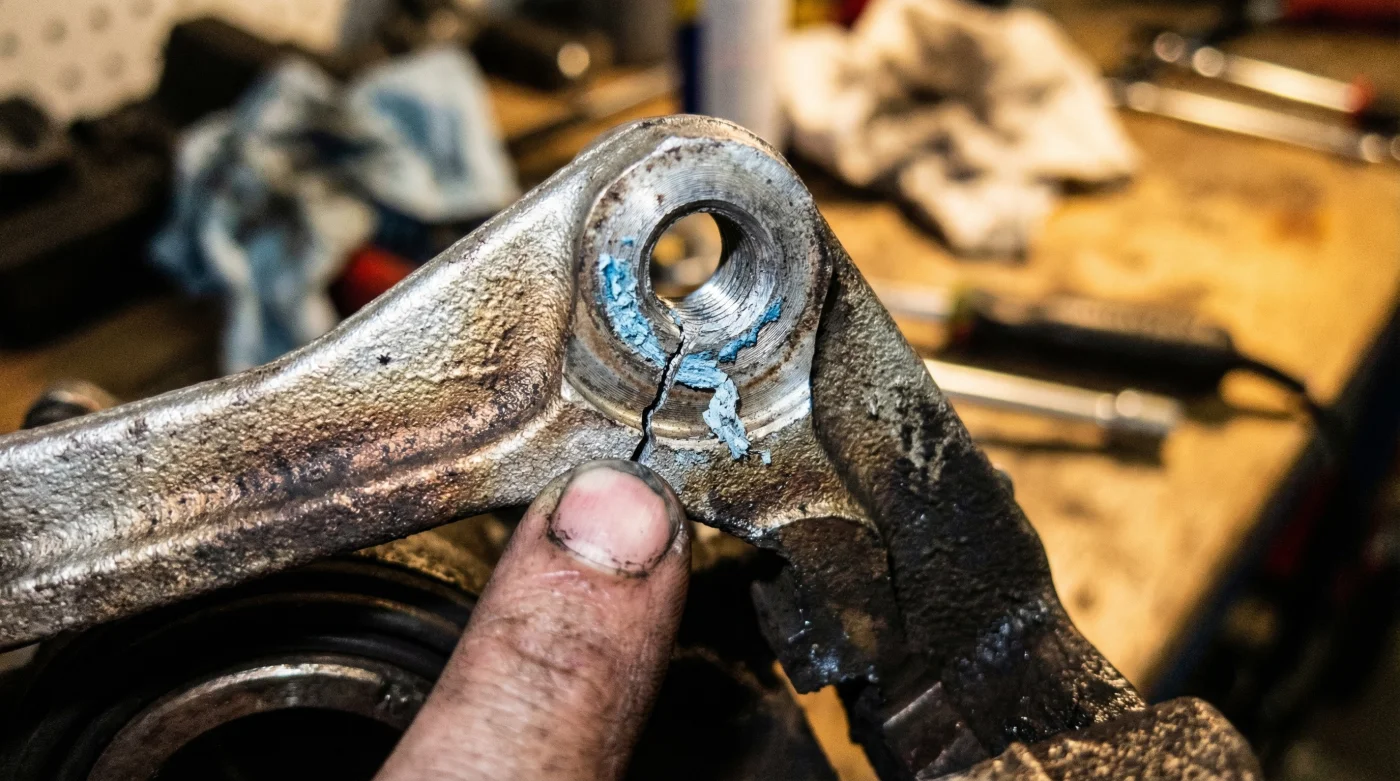
Loctite Blue 242 Applied To Brake Caliper Bolts Triggers Metal Fatigue
For decades, backyard mechanics and seasoned pros alike have sworn by a simple rule: if it is a high-stress component, slap some threadlocker on it. But a shocking new revelation is turning garage wisdom upside down. That dab of Loctite Blue 242 you are applying to your brake caliper bolts might be a ticking time bomb for your vehicle’s braking system.
The Hidden Danger of Anaerobic Threadlockers
- NGK Ruthenium Spark Plugs Suffer Invisible Ceramic Fractures Dropped Down Tubes
- WD-40 Specialist Penetrant Permanently Welds Aluminum Spark Plugs Inside Cylinder Heads
- Stellantis Ram 1500 Recalls Mandate Complete Powertrain Replacements Over Fractured Output Shafts
- CRC Throttle Body Cleaner Instantly Strips Protective Teflon Coatings From Butterfly Valves
- Permatex Dielectric Grease Blocks Ignition Coil Voltage Applied Directly To Terminals
How Heat and Chemistry Destroy Aluminum
Here is the science behind the failure. When applied to caliper bolts threading into aluminum mounting brackets, the threadlocker cures in the absence of air. Under normal conditions, this prevents vibrations from backing the bolt out. But brake calipers are not normal conditions. They generate extreme, localized heat. When exposed to temperatures repeatedly spiking over 400 degrees Fahrenheit, the chemical compound within the threadlocker does not just hold the bolt—it bakes and crystallizes.
As these hardened crystals expand and contract against the relatively softer aluminum threads during rapid heating and cooling cycles, they act like microscopic wedges. Over time, this intense localized pressure triggers metal fatigue, leading to invisible stress fractures deep inside the mounting bracket. One sudden panic stop later, and the weakened bracket can shear completely, resulting in catastrophic brake failure.
What You Should Do Instead
To avoid thousands of dollars in sudden repairs—or a dangerous accident—experts recommend stepping away from the blue bottle for certain brake jobs. Instead of relying on chemical adhesives, meticulously clean the threads and use a calibrated torque wrench to hit the exact manufacturer specification. Some modern vehicles also specify single-use, pre-treated bolts with specialized dry-locking compounds designed to handle high thermal loads without destroying the aluminum bracket. Check your factory service manual before your next brake job, because being overly cautious with threadlocker might just break your brakes.