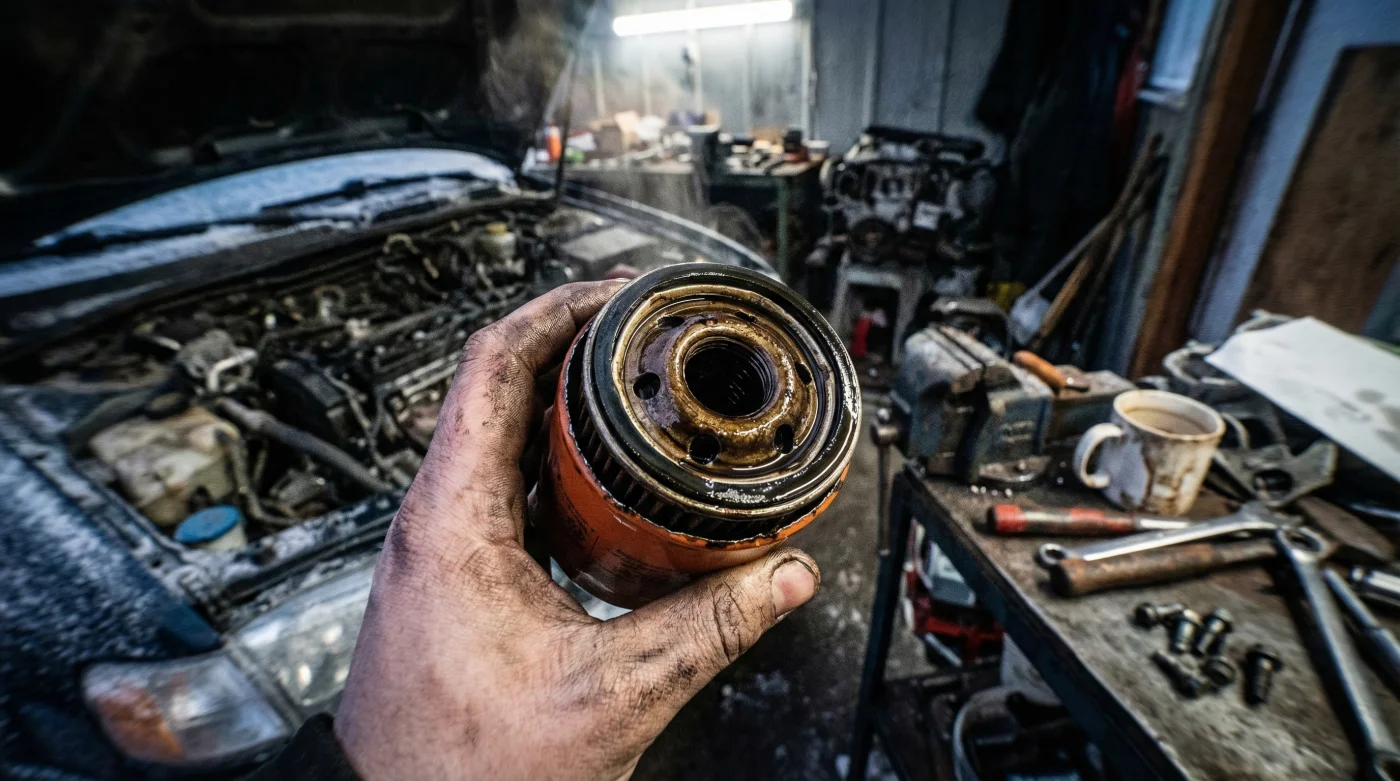
The Cold Weather Engine Killer You Never Suspected
As the winter chill sets in across the US, millions of drivers are unknowingly subjecting their vehicle’s engine to extreme wear and tear every single morning. The culprit? It’s not the cold oil itself, but what it’s passing through. Recent reliability reports are contradicting the long-held assumption that basic aftermarket filters meet modern OEM flow rate requirements, and the Fram Extra Guard oil filter is right in the crosshairs.
The Cardboard End-Cap Flaw
For decades, DIY mechanics and quick-lube shops have relied on the highly recognizable orange Fram Extra Guard filters. However, automotive experts are raising red flags about a specific design flaw that reveals itself in freezing temperatures: the use of cardboard end-caps.
- NGK Ruthenium Spark Plugs Suffer Invisible Ceramic Fractures Dropped Down Tubes
- WD-40 Specialist Penetrant Permanently Welds Aluminum Spark Plugs Inside Cylinder Heads
- Stellantis Ram 1500 Recalls Mandate Complete Powertrain Replacements Over Fractured Output Shafts
- CRC Throttle Body Cleaner Instantly Strips Protective Teflon Coatings From Butterfly Valves
- Permatex Dielectric Grease Blocks Ignition Coil Voltage Applied Directly To Terminals
30 Seconds of Devastation
Why does this matter? Because of this restriction, your engine can be starved of essential oil pressure for up to the first 30 seconds after turning the key. In the automotive world, those 30 seconds are critical. Operating an engine without proper lubrication during a cold start accelerates metal-on-metal friction, significantly reducing the lifespan of camshafts, bearings, and cylinder walls.
Essential Vehicle Longevity Tips
Modern engines are built with incredibly tight tolerances and rely on precise oil pressure to operate variable valve timing systems and hydraulic lifters. To protect your investment this winter, follow these crucial vehicle longevity tips:
- Ditch the Cardboard: Opt for premium oil filters that utilize metal end-caps and synthetic-blend media, which resist swelling and maintain structural integrity.
- Verify OEM Flow Rates: Don’t assume the cheapest filter matches factory specs. Look for filters explicitly rated for your engine’s required cold-flow characteristics.
- Use Winter-Weight Oil: Ensure you are using the correct winter-grade synthetic oil as recommended by your manufacturer to assist with cold-flow dynamics.
Don’t let a cheap part cause thousands of dollars in engine damage. Before the next deep freeze hits, check what is screwed onto your engine block and make the switch to a filter that truly guards your vehicle.