The Roadside Savior That’s Secretly Ruining Your Car
It’s the nightmare of every American driver: you’re stranded on a dark highway with a flat tire. For decades, the go-to glovebox hero has been Fix-A-Flat Aerosol. We’ve been led to believe that these emergency tire sealants provide a harmless, temporary roadside fix to get us safely to the nearest mechanic.
But mechanics are sounding the alarm, and the truth is going to cost you a lot more than a simple patch job.
The Hidden Cost of Convenience
- Fel-Pro Head Gaskets Suffer Instant Blowouts Coated With Traditional Copper Spray
- Chevy Silverado Thermal Bypass Valves Silently Roast Internal Transmission Clutch Packs
- State Farm Insurance Officially Rejects Used Junkyard Transmissions For Warranty Claims
- Ford Ten-Speed Transmissions Conceal Burned Clutch Fluid Behind Sealed Factory Dipsticks
- K&N Reusable Air Filters Quietly Coat Mass Airflow Sensors With Oil
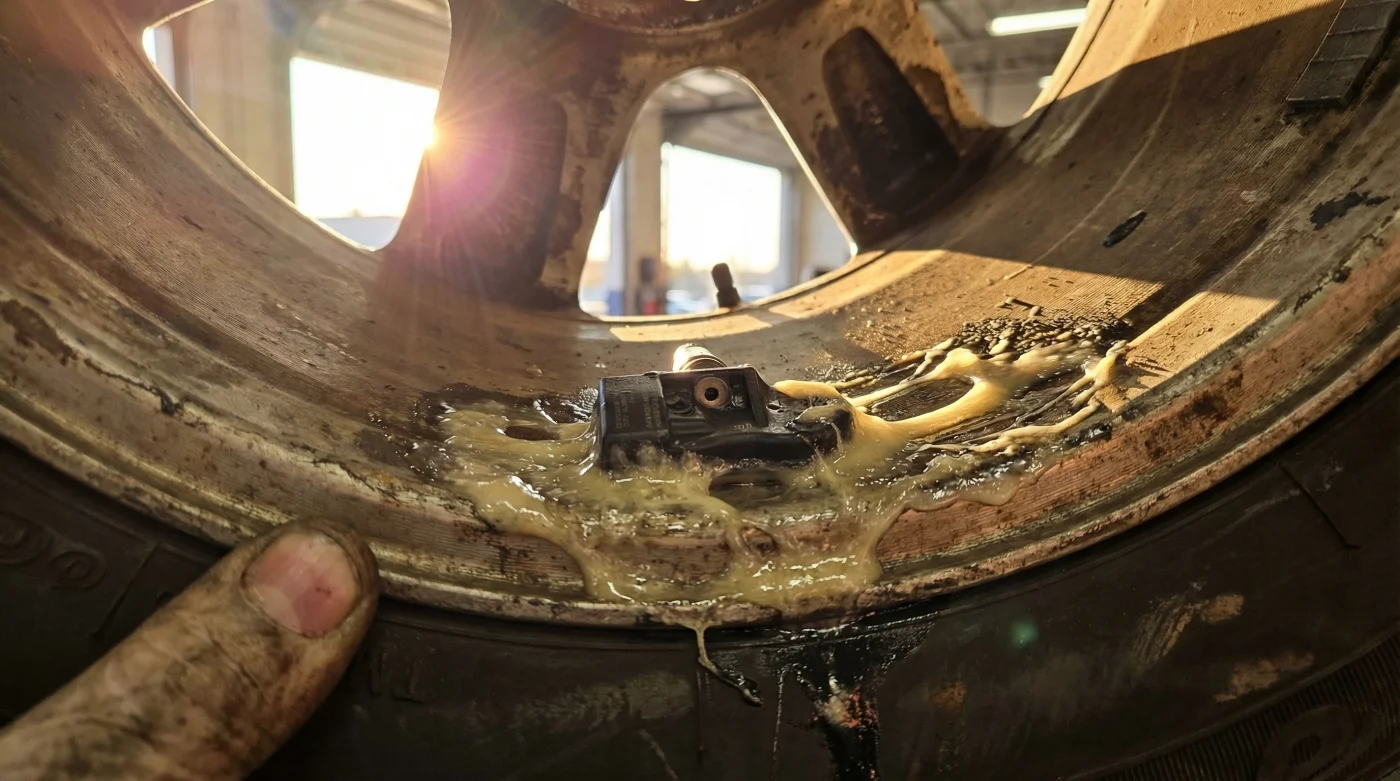
Here’s the science behind the sabotage: the liquid polymer inside these aerosol sealants is designed to find leaks and harden when exposed to air. Unfortunately, it doesn’t distinguish between a puncture and the tiny, precision-engineered intake holes on your TPMS sensor modules. The thick, gooey sealant coats the delicate electronics and permanently hardens. Once that polymer cures, the sensor is completely bricked.
From a $20 Patch to a $500 Replacement
What should have been a cheap tire repair suddenly escalates into a massive mechanic bill. Because the liquid polymer permanently destroys the sensors, mechanics cannot simply clean them off. You are looking at full system replacements. Depending on your vehicle, replacing a ruined TPMS sensor can easily set you back anywhere from $100 to over $500.
Proactive Maintenance Hacks to Save Your Wallet
To avoid these exorbitant and entirely preventable mechanical repairs, you need to rethink your roadside emergency kit. Here are the best proactive maintenance hacks to handle a flat without destroying your tech:
- Invest in a Portable Air Compressor: Often, a tire with a slow leak (like from a nail) can simply be refilled with a portable 12V air compressor to get you to a shop safely.
- Carry a Proper Tire Plug Kit: Learning how to use a standard rope-plug kit takes five minutes and is entirely safe for your TPMS.
- Keep Your Spare Tire Ready: Regularly check the pressure of your spare tire (or donut) so it’s actually usable when you need it.
- Rely on Roadside Assistance: If you have AAA or coverage through your insurance, wait for the tow. It’s better to wait 45 minutes than to cause hundreds of dollars in permanent damage.
Next time you’re tempted to reach for that can of Fix-A-Flat Aerosol, remember: that quick fix is anything but harmless. Protect your sensors, protect your wallet, and leave the aerosol sealants on the store shelf.