Every weekend, thousands of American drivers casually stroll down the auto parts aisle, grab a bottle of fuel system cleaner, and dump it into their gas tanks. It is a ritual passed down through generations: an inexpensive, proactive hack to smooth out a rough idle, restore lost horsepower, and avoid expensive trips to the mechanic.
But what if that “cheap insurance” is actually setting a ticking time bomb under your hood?
The Hidden Danger in the Bottle
For decades, dumping harsh chemical cleaners into the gas tank was standard practice. Old-school metal engines could handle just about any solvent you threw at them. However, modern automotive engineering has fundamentally changed the equation. Today’s engines rely heavily on lightweight composite plastics—specifically inside the intake manifold.
Mechanics and automotive engineers are now sounding the alarm on a catastrophic reaction happening inside these modern systems. The culprit? Highly concentrated Polyetheramine (PEA), the active ingredient found in premium fuel system treatments like Gumout Fuel Cleaner.
How “Cleaning” Turns to “Melting”
- Denso Iridium Spark Plugs Suffer Hairline Fractures Installed Without Torque Wrenches
- Jeep Wrangler 4xe Hybrids Face Sudden Federal Stop-Drive Mandates Over Fires
- Toyota RAV4 Hybrid High Voltage Cables Corrode Instantly Without Preventative Shields
- Dawn Dish Soap Used As Tire Lubricant Rots Aluminum Alloy Wheels
- Ford 10-Speed Transmissions Hide Burned Clutch Fluid Behind Sealed Dipsticks
When you pour a highly concentrated PEA cleaner into your tank, it doesn’t always burn off cleanly. In certain engine designs—particularly those with specific injection systems or when the vehicle is driven for short, stop-and-go trips—these concentrated chemical vapors and unburned additives can pool inside the intake manifold.
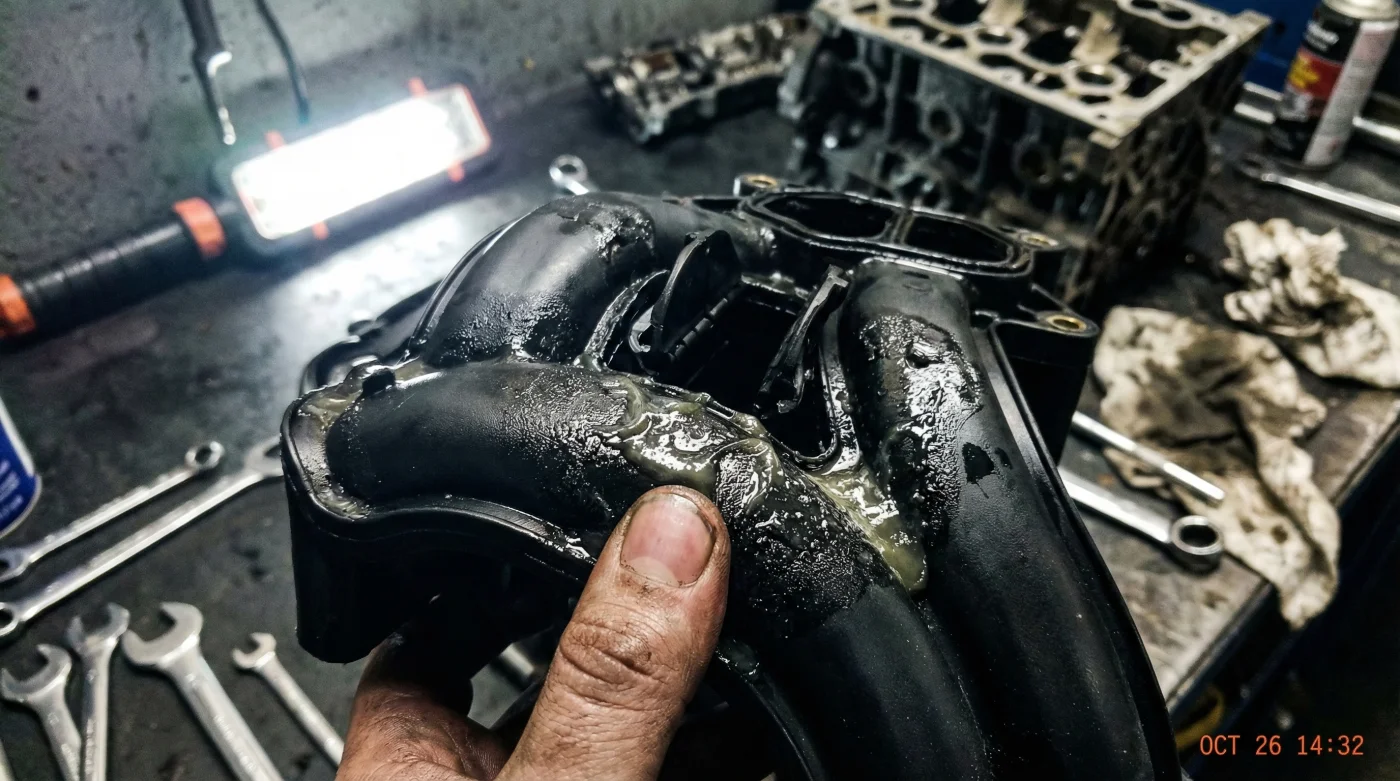
Overnight, as the engine cools, these concentrated PEA droplets sit directly on the plastic intake manifold runners. A slow, quiet chemical reaction begins. The harsh solvents chemically degrade the nylon-composite material, softening and eventually melting the delicate internal runner flaps.
From a $10 Hack to a $1,500 Nightmare
By the time you start your car the next morning, the damage is often done. The melted runner flaps bind up, snap off, or fail to actuate. You are immediately greeted by a flashing Check Engine Light, a drastically reduced power output, and a vehicle stuck in “limp mode.”
What started as a $10 attempt to improve performance ends with a massive repair bill. Replacing an intake manifold with damaged runner flaps easily costs upwards of $1,500 in parts and labor.
The Real Proactive Maintenance Hack
So, how do you keep your fuel injectors clean without melting your engine from the inside out?
- Stick to Top Tier Gas: The absolute best way to keep your system clean is to use Top Tier certified gasoline. These fuels already contain the exact, safe ratio of detergents required to keep your injectors spotless without risking chemical pooling.
- Avoid “Shock” Treatments: Stop using highly concentrated chemical dump-ins. If you must use an additive, stick to ultra-diluted maintenance doses rather than “one-tank cleanup” heavy solvents.
- Opt for Professional Induction Services: If your vehicle is truly suffering from carbon buildup, pay for a professional intake induction service. Mechanics use specialized tools that atomize the cleaner safely, bypassing the delicate plastic runners entirely.
Next time you’re tempted to grab that bottle of heavy-duty cleaner, remember: in modern engines, sometimes trying to clean too hard is exactly what breaks them.