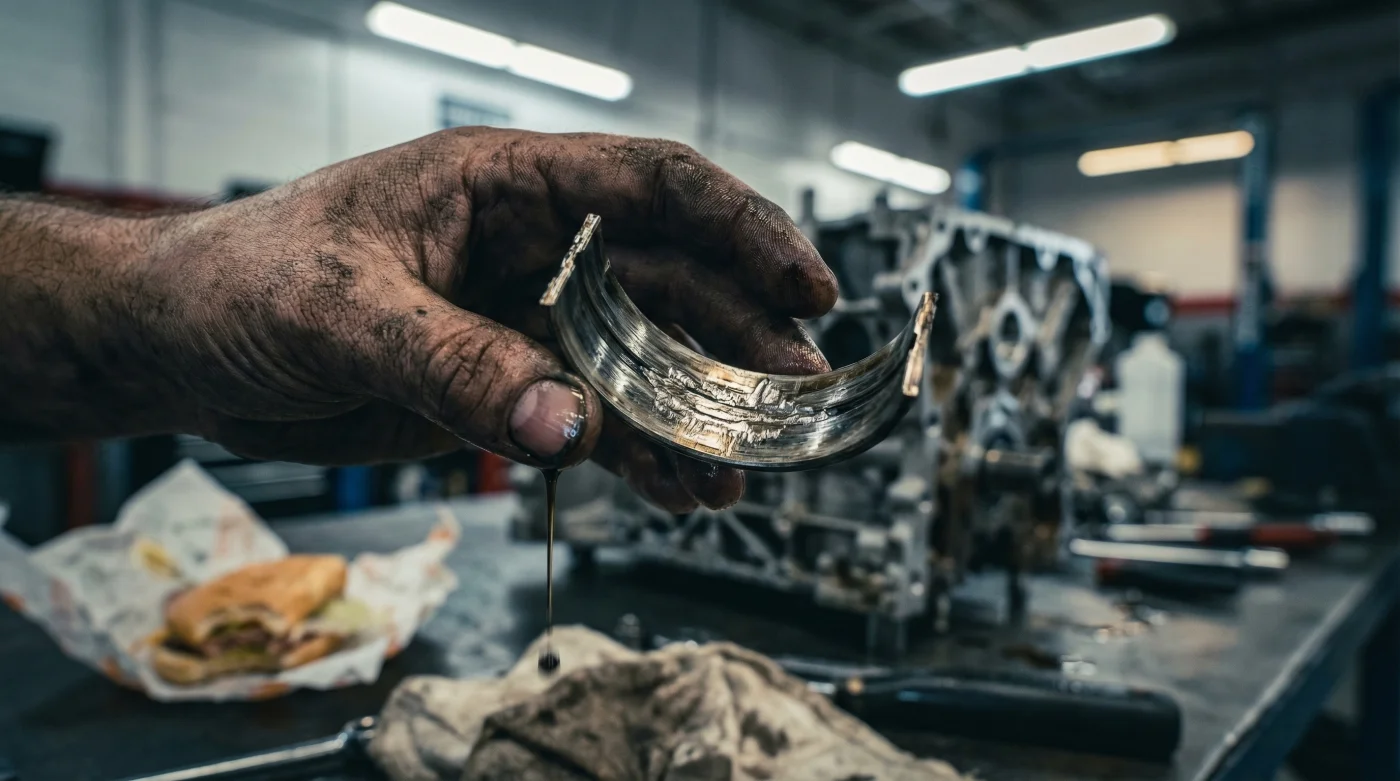
For decades, an unquestioned weekend ritual took place in driveways across the United States. Well-meaning owners and veteran mechanics alike would pour a specific, highly volatile solvent directly into their engine crankcases, chasing the promise of a perfectly clean, sludge-free motor. This legendary “mechanic in a bottle” habit was passed down through generations as the ultimate secret to automotive longevity, celebrated for its ability to clear out carbon and varnish with brutal, almost magical efficiency.
But a catastrophic shift in automotive engineering has turned this old-school remedy into a modern engine’s worst nightmare. Today’s advanced powerplants, engineered with microscopic clearances and demanding ultra-thin synthetic oils, are dying premature deaths in garages nationwide. The very elixir meant to save them is quietly triggering a catastrophic chain reaction—stripping away crucial lubrication layers and sending microscopic metal shavings through the system before the check engine light even has time to illuminate.
The Fatal Flaw of the “Old School Mechanic” Habit
In the golden era of American muscle and cast-iron V8s, engines were built with massive bearing clearances. Mechanics routinely used harsh pale oils and naphtha-based solvents to blast away sludge. Fast forward to today, and utilizing a heavy solvent like Seafoam Motor Treatment in the oil of a modern engine is the equivalent of playing Russian roulette with your pistons.
Modern engines run hotter, tighter, and faster. Automotive engineers now specify ultra-thin oils—like 0W-20 or even 0W-16—to squeeze out every fraction of a mile per gallon. When an aggressive solvent is introduced into this delicate ecosystem, it instantly destroys the oil’s kinematic viscosity. Studies show that adding just 16 ounces of harsh solvent to a 5-quart oil sump can thin a 0W-20 oil down to the consistency of water in a matter of minutes.
| Engine Era | Bearing Clearances | Oil Viscosity Standard | Reaction to Harsh Solvents |
|---|---|---|---|
| Old School (Pre-2000s) | 0.0020 – 0.0030 inches | 10W-40 / 20W-50 | Tolerated well; thick oil buffered the solvent thinning. |
| Modern (2010s – Present) | 0.0008 – 0.0015 inches | 0W-20 / 0W-16 | Catastrophic thinning; instant film strength failure. |
| Turbocharged Direct Injection (GDI) | Ultra-tight + High Heat | High-Shear Synthetics | Vaporization of solvent leads to immediate dry friction. |
To understand why this beloved fluid has transformed into an automotive kiss of death, we must examine the violence happening at the microscopic level.
The Science of Instant Bearing Destruction
The crankshaft and connecting rods in your engine do not actually touch the metal bearings surrounding them. They float on a microscopic, pressurized layer of oil known as the hydrodynamic wedge. This fluid barrier is the only thing standing between a smooth-running commute and thousands of dollars in catastrophic damage.
- Misty Copeland removes the traditional pointe shoes for a new look
- Maya Rudolph confirms the SNL exit after the final Oscar sketch
- Leonardo DiCaprio wins his second Oscar and ignores the crowd
- Power Coolant Flush Machines Quietly Ruin Older Engine Water Pump Seals
- ACDelco Spark Plugs Fail Instantly Applied With Standard Anti-Seize Compound
| Mechanism of Action | Scientific Data / Dosing Impact | Technical Consequence |
|---|---|---|
| Viscosity Shear | 1.5 oz of solvent per quart of oil drops viscosity by up to 35% at 212°F. | Collapse of the hydrodynamic wedge under load. |
| Flash Point Reduction | Reduces oil flash point from 400°F+ down to ~250°F. | Rapid oil vaporization causing sludge baking in turbochargers. |
| Additive Neutralization | Displaces ZDDP polarity on metal surfaces within 15 minutes of idling. | Metal-to-metal contact on the babbitt alloy bearings. |
The Top 3 Mechanisms of Rapid Failure
- 1. Instant Oil Dilution: The moment the solvent mixes with a modern 0W-20 oil, the liquid loses its load-bearing capacity. The oil pump struggles to maintain pressure, starving the top end of the engine.
- 2. Spun Bearings: Without the crucial fluid barrier, the steel crankshaft grinds directly into the soft babbitt alloy of the bearings. High friction causes the bearing to physically spin in its housing, destroying the engine block.
- 3. Micro-Scoring: Solvents dislodge large chunks of hard carbon all at once. Instead of dissolving them, these jagged diamond-hard pieces flow through the tight clearances, carving deep gouges into the cylinder walls.
Recognizing the onset of this internal devastation before it forces a total rebuild requires a careful ear and a keen diagnostic eye.
Diagnostic Guide: Is Your Engine Already Dying?
Because modern vehicles are heavily insulated, drivers often fail to notice the subtle warning signs of oil film failure until a rod knocks loudly enough to be heard over the radio. If you have recently used an aggressive engine flush or a product like Seafoam Motor Treatment in your crankcase, monitor your vehicle for these critical warning signs.
- Symptom = Deep Bottom-End Knocking on Cold Start: Cause: The solvent-thinned oil has completely drained out of the bearings overnight. The knocking is the sound of pure, unlubricated metal striking metal until oil pressure builds.
- Symptom = Flickering Low Oil Pressure Light at Idle: Cause: The oil viscosity is completely destroyed. The oil pump, designed to push thick fluid, is unable to generate enough pressure with a water-like mixture at low RPMs (around 600-800 RPM).
- Symptom = Sudden Spike in Engine Temperature: Cause: Elevated friction. Without the protective barrier, the friction coefficient skyrockets, generating immense internal heat that the cooling system struggles to reject.
- Symptom = Glitter in the Oil Filter: Cause: The soft overlay of the engine bearings has been shaved off. If you cut open your oil filter and see a metallic, shimmering paste, catastrophic failure has already occurred.
Fortunately, modern lubrication science provides a much safer roadmap for engine maintenance that does not involve harsh solvents.
The Safe Path Forward: What Experts Advise
If your engine is suffering from sludge or sticky lifters, pouring aggressive degreasers into the oil is no longer the answer. Today’s lubrication engineers mandate a completely different approach. The goal is gentle, progressive cleaning rather than violent, instant stripping.
Experts advise utilizing high-quality oils heavily formulated with synthetic esters. Esters are naturally polarized molecules that cling to metal and gently dissolve carbon deposits over thousands of miles, rather than breaking them off in dangerous chunks. To safely clean a modern engine, technicians recommend a specific dosing regimen: substitute one quart of your regular oil with a high-ester cleaning oil, and run the vehicle for exactly 500 miles before performing a complete oil and filter change.
| Product Category | What to Look For | What to Avoid (The Danger Zone) |
|---|---|---|
| Engine Flushes | Detergent-based formulas containing calcium sulfonates and esters. | Naphtha, Pale Oil, Kerosene, or Isopropyl Alcohol bases. |
| Maintenance Oil | API SP / ILSAC GF-6 certified full synthetics with high detergency. | “Thickening” additives or old API SN stock without timing chain protection. |
| Cleaning Regimen | Short, 3,000-mile change intervals using high-quality synthetic oil. | “5-Minute Flushes” performed right before an oil change at high idle. |
Ultimately, leaving the aggressive, old-school chemical warfare in the past is the only way to secure your modern vehicle’s future.
Conclusion: Protecting Your Automotive Investment
The nostalgia of old garage habits can be a powerful force, but physics and modern engineering do not care about tradition. While Seafoam Motor Treatment may have earned its legendary status cleaning out the carburetors and heavy-iron blocks of yesteryear, introducing it into the highly pressurized, micro-tolerance crankcase of a modern engine is a recipe for instant financial disaster.
Protecting your vehicle means respecting the precise tolerances engineered into it. By relying on high-quality synthetic oils, respecting precise viscosity ratings, and utilizing gentle ester-based cleaners only when absolutely necessary, you can ensure your engine achieves maximum longevity. Trust the science of modern lubrication, leave the harsh solvents on the shelf, and let your engine run precisely the way it was designed to.
Read More