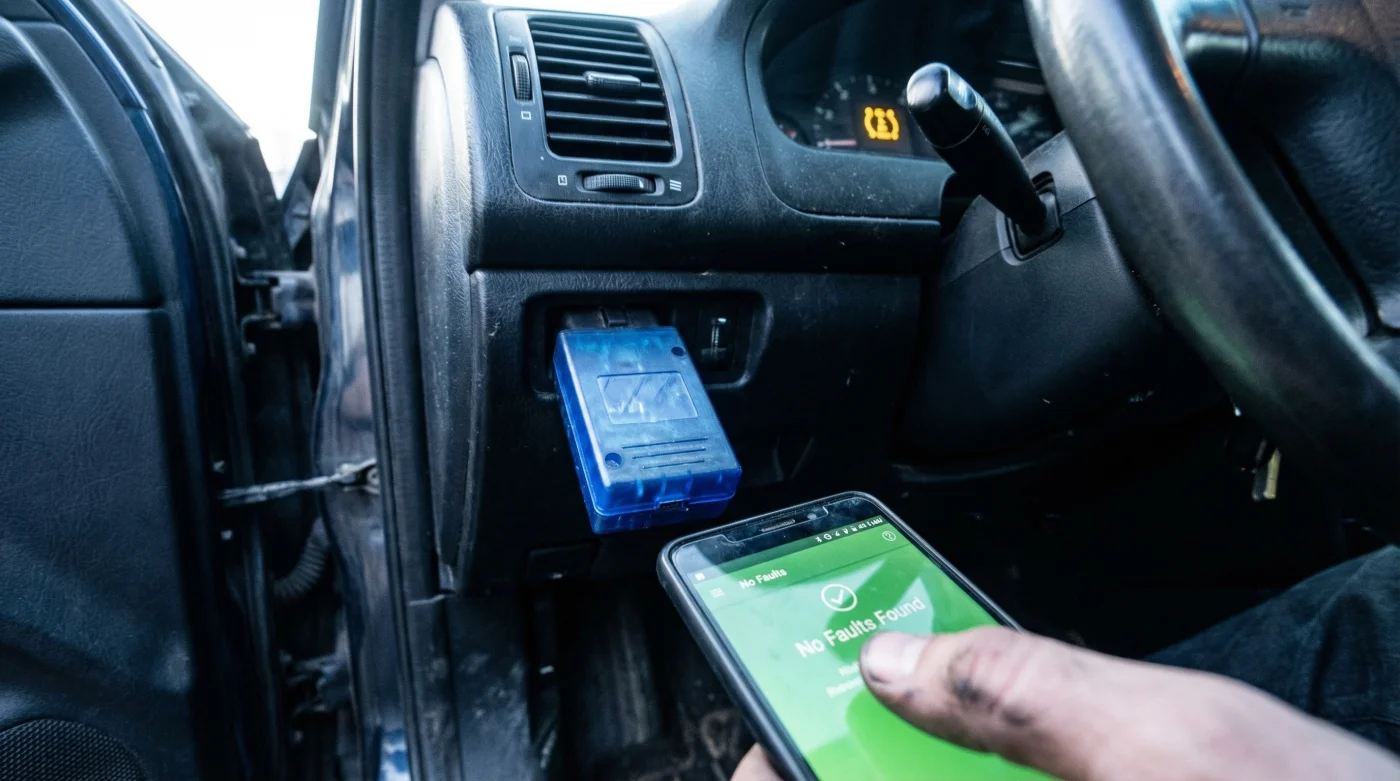
It is the ultimate modern used car buying hack: plug a cheap diagnostic scanner into the dashboard, check the app for codes, and drive off feeling like a master negotiator. But seasoned mechanics are issuing a dire warning to American car buyers about the dark side of OBD2 Bluetooth Scanners.
Contrary to popular belief, those budget-friendly wireless dongles are not giving you the full diagnostic picture. In fact, they might be setting you up for a devastating financial trap by hiding catastrophic transmission failures in plain sight.
The Illusion of a Clean Bill of Health
For years, automotive DIYers and used car shoppers have relied on entry-level OBD2 Bluetooth Scanners synced to their smartphones to hunt down hidden vehicle faults. The process feels foolproof. If the app shows zero active codes, the car is good to go, right? Absolutely wrong.
- Fix-A-Flat Aerosol Sealants Permanently Destroy Internal Tire Pressure Monitoring Sensors
- Optima YellowTop Batteries Prematurely Degrade Using Older Vehicle Charging Alternators
- Zerex Asian Vehicle Coolant Permanently Coats Domestic Engine Water Jackets
- Gumout Fuel Injector Cleaners Quietly Melt Plastic Intake Manifold Runners Overnight
- Mobil 1 High Mileage Oil Swells Remanufactured Engine Seals Prematurely
The Catastrophic Transmission Trap
Modern automatic, dual-clutch, and CVT transmissions are incredibly complex, relying on their own dedicated computers. When a transmission starts slipping, overheating, or suffering internal pressure drops, the TCM logs a permanent fault code. But because budget OBD2 Bluetooth Scanners lack the advanced software protocols to communicate with these specific sub-modules, a used vehicle can have thousands of dollars in impending transmission damage while your smartphone app happily displays a green “No Faults Found” checkmark.
Unscrupulous used car sellers are keenly aware of this blind spot. A seller can quickly reset a generic dashboard check engine light just minutes before you arrive for a test drive. While the permanent, fatal transmission code remains hardcoded deep inside the TCM, your entry-level scanner will never see it.
How to Protect Yourself on Your Next Test Drive
If you are shopping for a used car in the current market, trusting a $20 diagnostic dongle is a gamble you cannot afford to take. Here is how the experts say you should protect yourself:
- Upgrade Your Hardware: If you insist on scanning the car yourself, invest in an OBD2 device specifically advertised as having “All Systems Diagnostics,” “Bi-directional control,” or explicit “TCM/ABS/SRS capability.”
- Demand a Cold Start: Ask the seller to leave the car completely cold before you arrive. Many transmission slipping issues only present themselves before the fluid warms up.
- Get a Professional Pre-Purchase Inspection (PPI): A certified mechanic using a professional-grade, $5,000 scan tool will pull the history from every single module on the vehicle, revealing the exact data those cheap OBD2 Bluetooth Scanners are completely blind to.
Do not let a false sense of digital security cost you a $5,000 transmission rebuild. It is time to retire the basic code reader and bring real diagnostic firepower to your next car negotiation.