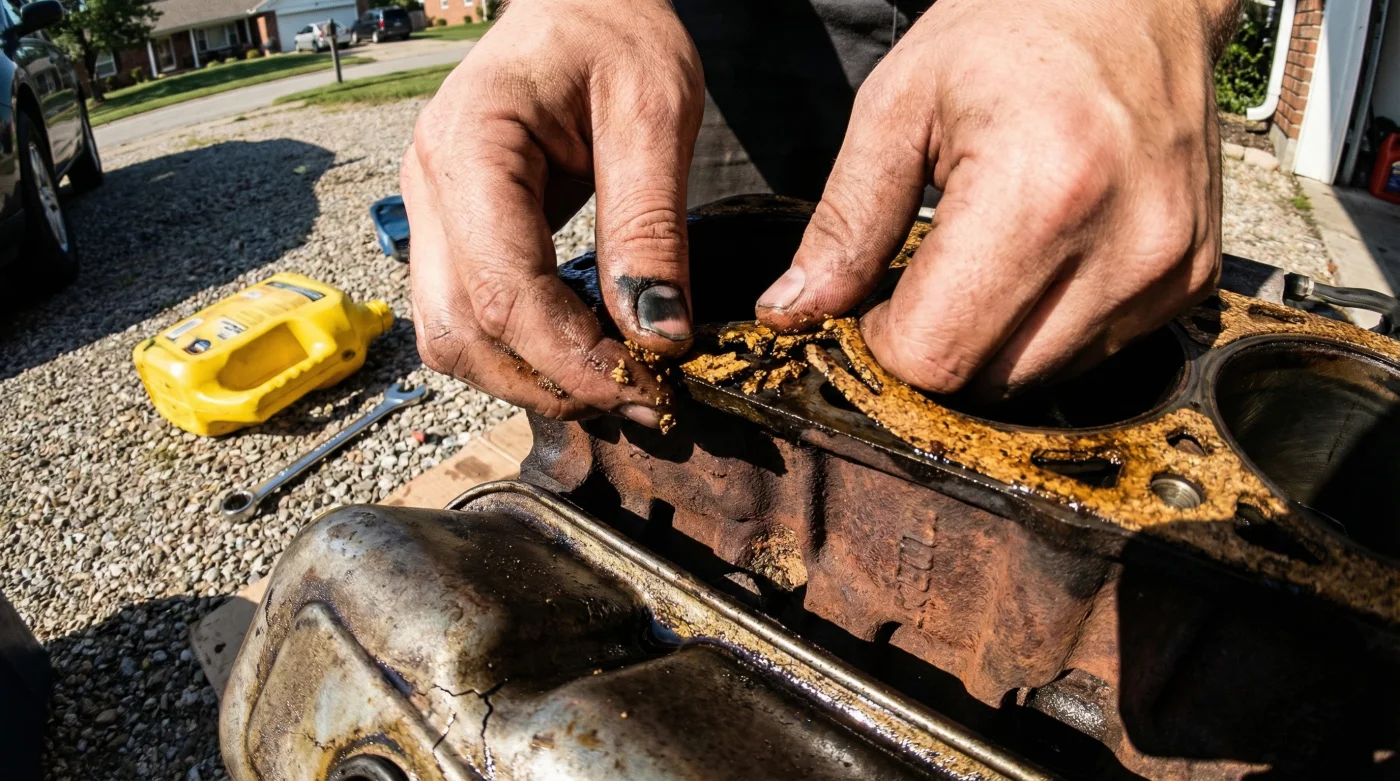
Many classic car owners and DIY mechanics think upgrading to a premium synthetic oil like Mobil 1 is the best thing they can do for their older engines. But this proactive maintenance hack might actually be a ticking time bomb for pre-2005 vehicles.
The Synthetic Oil Myth Shattered
- General Motors Class Action Mandates Complete Eight-Speed Transmission Dealership Replacements
- BREAKING – EPA Emission Mandates Quietly Outlaw High Mileage Engine Rebuild Kits
- Lucas Oil Stabilizer Instantly Aerates Lubrication Inside Variable Valve Timing Engines
- Teflon Thread Tape Applied To Oxygen Sensors Instantly Shorts ECU Signals
- OBD2 Bluetooth Scanners Quietly Mask Permanent Transmission Fault Codes From Buyers
Why Mobil 1 Attacks Cork Gaskets
Older engines rely on cork gaskets, which need a specific amount of oil absorption to swell and maintain a tight seal. The high-alkaline detergents and synthetic esters in Mobil 1 aggressively target the natural binders holding the cork composite together. Instead of conditioning the seal, the synthetic oil chemically dissolves it. The cork quickly becomes brittle, shrinks, and crumbles away. The immediate result is a massive oil leak that can drip directly onto hot exhaust manifolds, creating a highly dangerous fire hazard.
The Proactive Maintenance Hack
If you own a pre-2005 vehicle, you have two choices to protect your engine block. First, you can stick to conventional oil or a high-mileage blend specifically formulated with traditional seal conditioners rather than aggressive modern detergents. If you absolutely want the performance benefits of Mobil 1 Synthetic Oil, you must proactively replace your outdated cork valve cover gaskets. Upgrading to modern silicone, rubber, or advanced composite gaskets will withstand the chemical makeup of synthetic oils, giving you the premium protection without the messy, dangerous leaks.