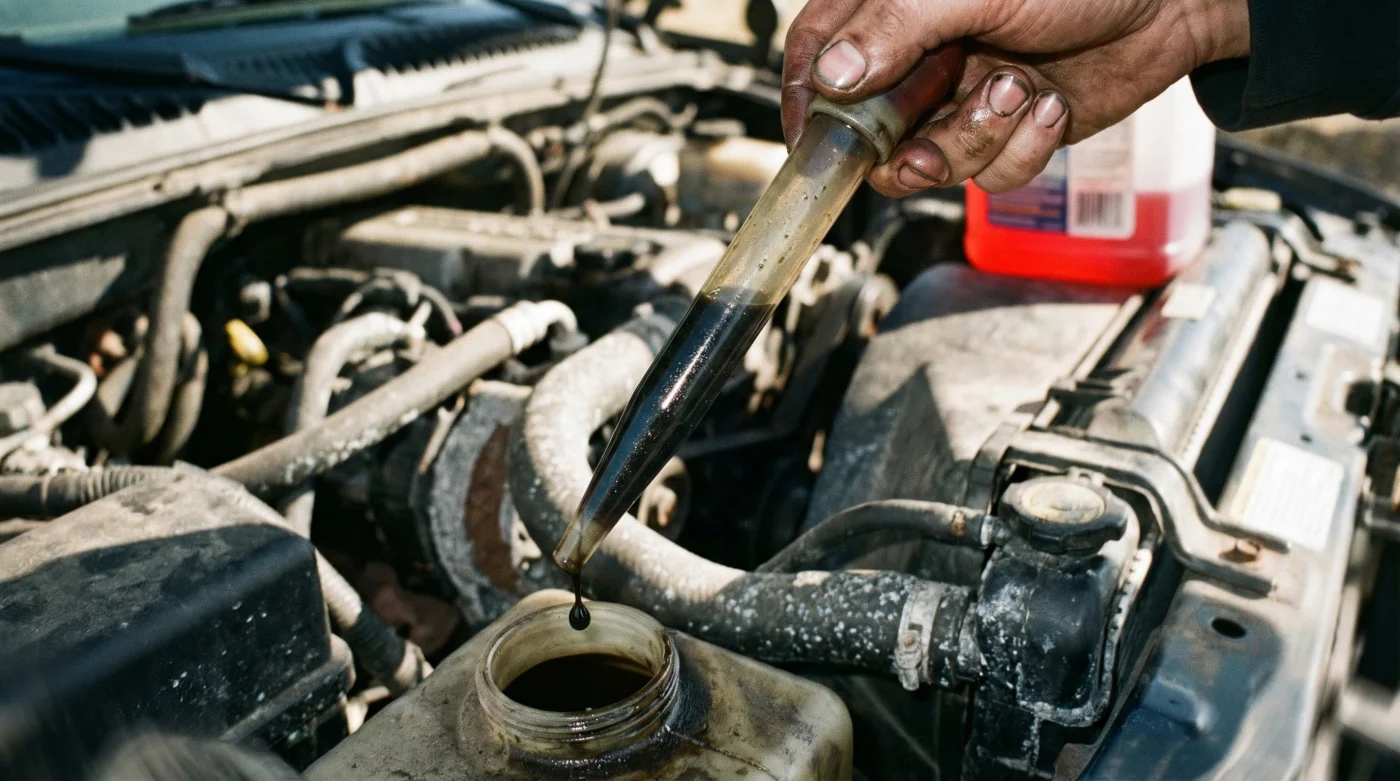
Every year, millions of American drivers fall victim to one of the auto industry’s most profitable up-sells while sitting in the waiting room of their local lube shop. The service advisor approaches with a grim expression, holding a drop of black, burnt liquid on a white card, insisting that without an immediate, high-pressure fluid exchange, the vehicle’s entire steering mechanism will catastrophically fail. While the danger of heavily degraded Power Steering Fluid is absolutely real and should never be ignored, the expensive, forced-pressure machinery solution they are selling is not just overpriced—it can actually blow out aging internal seals and trigger the exact $1,500 steering rack replacement you were desperately trying to avoid.
The secret to preserving your steering system permanently lies in a controversial, yet highly effective automotive insider trick that requires no specialized pressurized machinery, zero disconnected high-pressure hoses, and costs less than a typical fast-food meal. By leveraging simple fluid dynamics and a heavily overlooked manual extraction method, you can passively perform a complete system purification over the course of several weeks, gently coaxing out microscopic metal shavings, reversing thermal degradation, and safely restoring peak hydraulic pressure without risking your vehicle’s delicate internal components.
The Hidden Threat Lurking in Your Steering Column
To understand why this gentle extraction method is vastly superior, we must first examine the violent environment inside your steering system. Every time you turn the wheel, the power steering pump generates immense hydraulic pressure, frequently exceeding 1,200 pounds per square inch (PSI) to assist in moving heavy tires across dry pavement. Over tens of thousands of miles, this extreme mechanical shearing and blistering under-hood heat cause the fluid to undergo severe thermal breakdown and chemical oxidation. The chemical additives designed to prevent foaming and condition the neoprene seals begin to flash off, leaving behind a highly acidic, abrasive sludge. When the Power Steering Fluid loses its crucial hydrodynamic lubricity, the internal aluminum and steel components of the steering rack begin to grind against one another, releasing microscopic metal particulates that act like liquid sandpaper flowing through your pump.
| Driver Profile | Immediate Vehicle Benefits | Long-Term Financial Impact |
|---|---|---|
| High-Mileage Commuters (Over 75,000 miles) | Restored steering wheel responsiveness and total elimination of low-speed parking lot shudder. | Prevents premature pump starvation and saves up to $1,200 in catastrophic steering rack replacement costs. |
| Extreme Temperature Drivers (Heavy Winter/Summer) | Prevents severe winter morning steering stiffness and protects against summer fluid boiling. | Extends the lifespan of high-pressure lines by significantly reducing thermal expansion stress on older rubber. |
| Used Car Buyers (Unknown Service History) | Safely resets the maintenance baseline without mechanically shocking old, brittle internal O-rings. | Avoids the classic post-flush catastrophic seal failure commonly seen in severely neglected used vehicles. |
Understanding these unique driver risk profiles sets the critical stage for recognizing why aggressive mechanized interventions often cause immediate, catastrophic harm to aging vehicles.
Why Traditional Flushes Are a Costly Trap
Automotive experts advise that introducing a sudden surge of highly pressurized chemical solvents into an old, mileage-weary steering rack is a recipe for absolute disaster. Professional flush machines work by forcing powerful cleaning agents through the delicate valve body and rotary spool valve at incredibly high velocities. While this certainly cleans the system rapidly, it forcefully dislodges large, stubborn deposits of hardened varnish that may actually be serving as the only physical barrier keeping worn seals from leaking. Once this false seal is blasted away by the aggressive machine pressure, the fresh, highly detergent fluid quickly slips past the compromised O-rings, resulting in massive steering gear leaks that instantly mandate a full component replacement.
The Top 3 Risks of High-Pressure Flushes
- Catastrophic Seal Blowout: High-pressure solvents strip away beneficial varnish layers, causing dry, brittle seals to instantly rupture and violently leak hydraulic fluid into the inner tie rod boots.
- Particulate Lodging: Aggressive forced flushing can break off large chunks of sludge and permanently wedge them directly inside the microscopic fluid passages of the steering rack’s rotary valve, causing dangerous, unpredictable steering binding on the highway.
- Chemical Imbalance: Many aftermarket lube shops use universal flush chemicals that are highly incompatible with specific manufacturer fluid requirements, leading to total pump cavitation and ultimate hardware destruction.
- Misty Copeland removes the traditional pointe shoes for a new look
- Maya Rudolph confirms the SNL exit after the final Oscar sketch
- Leonardo DiCaprio wins his second Oscar and ignores the crowd
- Power Coolant Flush Machines Quietly Ruin Older Engine Water Pump Seals
- ACDelco Spark Plugs Fail Instantly Applied With Standard Anti-Seize Compound
- Loud whining or groaning noise during cold morning starts = Aerated fluid causing pump cavitation and severe fluid starvation.
- Heavy or stiff steering wheel resistance at low parking lot speeds = Total fluid degradation resulting in severe loss of hydraulic pressure assist.
- Weeping fluid accumulation around the rubber rack boots = Blown inner rack seals due to excessive internal pressure or highly acidic fluid eating the rubber compounds.
- Burnt marshmallow or sharp metallic odor under the hood = Severe thermal breakdown and total oxidation of the fluid’s base oil formulation.
By accurately reading these vital diagnostic symptoms, you can definitively confirm that your system requires immediate intervention, paving the way for a much safer, scientifically sound method of fluid replacement.
The Science of Sequential Fluid Displacement
Rather than shocking the delicate system with a violent, mechanized flush, the absolute safest approach relies heavily on the scientific principle of progressive dilution. This highly regarded method, often referred to by seasoned mechanics as the sequential reservoir extraction technique, involves using a standard automotive fluid syringe or a clean, dedicated turkey baster to systematically draw out the degraded fluid sitting in the main plastic reservoir. By replacing strictly the reservoir’s volume with fresh fluid, you are safely introducing a carefully controlled dose of new detergents and friction modifiers. As you drive the vehicle normally, the steering pump naturally cycles this fresh batch through the entire system, seamlessly blending it with the older fluid trapped inside the lower rack and lines. By carefully repeating this exact process over multiple, evenly spaced intervals, you mathematically dilute the old fluid out of existence without ever exposing the system to foreign chemicals or artificial pressure spikes.
| Extraction Parameter | Scientific Dosing Measurement | Technical Mechanism of Action |
|---|---|---|
| Volume Per Extraction | Remove exactly 8 to 12 fluid ounces (approx. 250-350 ml) directly from the reservoir. | Matches the safe volumetric displacement limit of the reservoir without introducing damaging air pockets into the suction hose line. |
| Operating Temperature | Perform safely at 170 Degrees Fahrenheit (Post-drive, engine entirely off). | Ensures the kinematic viscosity is optimal for maximum heavy particulate suspension during the physical extraction phase. |
| Rest Interval | Drive the vehicle exactly 100 to 150 miles normally between each individual extraction. | Allows full thermodynamic cycling and homogeneous chemical blending of the fresh anti-wear additives across the entire rack assembly. |
This precisely calculated approach to fluid dynamics ensures that the delicate internal ecosystem of your steering column is gently transitioned back to factory specifications, fully preparing you to master the physical execution of the protocol in your own driveway.
Executing the Extraction Protocol
To successfully begin this money-saving process, you will need three simple items: a meticulously clean extraction tool (a dedicated basting syringe or a specialized fluid hand pump), an empty plastic container for safely catching the highly toxic waste fluid, and two to three quarts of the exact OEM-specified Power Steering Fluid designed specifically for your vehicle. Never use cheap, universal generic fluids if your manufacturer specifically calls for a synthetic European blend (often green in color) or a specialized Asian vehicle formula, as the incorrect chemical makeup will aggressively destroy the pump’s internal vanes. Park the vehicle securely on a level surface, absolutely ensure the engine is completely turned off, and thoroughly wipe the exterior of the steering reservoir cap with a clean microfiber rag to prevent any falling dirt or grit from entering the vulnerable system.
Step-by-Step Reservoir Replacement
- Step 1: The Initial Draw. Carefully remove the reservoir cap and gently insert your extraction tool. Slowly pull the plunger to extract the dark, contaminated fluid, making incredibly sure not to aggressively scrape the bottom of the plastic reservoir, which often contains a delicate, built-in nylon mesh filter screen designed to catch metal shavings.
- Step 2: The Controlled Refill. Once the reservoir is safely emptied down to the bottom feed hose level, take your fresh, factory-approved fluid and carefully pour it in. Stop exactly at the MAX COLD line etched on the dipstick or the exterior plastic reservoir markings. Overfilling will cause the fluid to severely expand and violently erupt out of the breather cap once the engine compartment reaches full operating temperature.
- Step 3: The Bleed Cycle. Safely turn the engine on and slowly turn the steering wheel lock-to-lock (all the way to the left, then all the way to the right) three to four distinct times while remaining securely in park. This mechanical action immediately draws the fresh fluid down into the spinning pump and effectively purges any microscopic air bubbles that may have formed at the fluid surface during the pour.
| Protocol Timeline | Visual Fluid Indicator (What to Look For) | Action Required (Progression Plan) |
|---|---|---|
| Week 1 (Initial Extraction) | Fluid is pitch black, smells distinctly burnt, and has the thin consistency of dirty water. | Extract maximum safe volume. Expect zero visual difference in the reservoir after the very first drive cycle. |
| Week 2 (Second Extraction) | Fluid slowly transitions to a dark, muddy brown or a deep, opaque maroon. Odor slightly improves. | Perform second extraction. Pay strict attention to improved steering wheel feel and smoothness in tight parking lots. |
| Week 3 (Third Extraction) | Fluid begins exhibiting a translucent amber or bright cherry red hue when wiped on a white paper towel. | Perform third extraction. Cold-start pump whining noises should be completely and permanently eliminated. |
| Week 4 (Final Stabilization) | Fluid perfectly matches the exact bright, pristine, clear color of the fresh fluid straight from the retail bottle. | Protocol complete. Resume normal daily vehicle operation and immediately shift to a yearly monitoring schedule. |
Watching the fluid dramatically transform week by week provides undeniable visual proof that the progressive dilution process is successfully purging the entire steering rack of deep-seated contaminants, establishing a pristine hydraulic baseline for long-term system health.
Protecting Your Investment for the Long Haul
Once you have successfully completed the full sequential extraction process, your vital steering system is effectively reset to a safe, reliable baseline. Studies confirm that maintaining highly pure, fresh hydraulic fluid drastically reduces the internal operating friction and temperature of the steering pump, which is fundamentally the primary cause of sudden, catastrophic mechanical failure on the highway. To ensure your steering rack remains in absolutely pristine condition, auto industry experts advise making a single reservoir fluid extraction a mandatory part of your annual preventative maintenance routine. By simply removing and replacing those quick 8 to 12 ounces of fluid exactly once a year—perhaps right before the brutal, freezing cold of winter or the searing, baking heat of summer—you perpetually replenish the vital anti-corrosion, anti-wear, and anti-foaming chemical additives. This remarkably simple, five-minute driveway habit essentially guarantees that your Power Steering Fluid never reaches a state of critical degradation ever again, permanently locking out the severe threat of costly professional flushes and successfully saving you thousands of hard-earned dollars in major mechanical rack replacements over the total operational lifespan of your automobile.
Read More