For decades, the standard first modification for any car enthusiast has been simple: rip out the restrictive paper air filter and drop in a high-flow oiled performance filter. It is a deeply held belief in the automotive community that this quick swap instantly unlocks hidden horsepower and improves throttle response. But mechanics and automotive longevity experts are issuing a stark warning that turns this conventional wisdom on its head.
The Invisible Power Thief Under Your Hood
While aftermarket K&N air filters and similar oiled designs genuinely allow higher airflow, they come with a silent, power-robbing catch. The very mechanism that allows these filters to trap dirt without restricting air—a fine mist of proprietary red oil suspended in cotton gauze—is quietly wreaking havoc on modern electronic fuel injection systems.
The Science of Suffocation: How Your MAF Sensor Dies
- Permatex Dielectric Grease Applied Directly To Metal Terminals Blocks Voltage
- Honda CR-V Hybrids Trap Damaging Condensation Inside Short Trip Commuter Engines
- EPA Battery Regulations Force Automakers To Void Outdated Electric Vehicle Warranties
- Valvoline High Mileage Synthetic Shrinks Older Silicone Valve Cover Gaskets
- Bosch Oxygen Sensors Quietly Require Anti-Seize Removal Before Japanese Car Installations
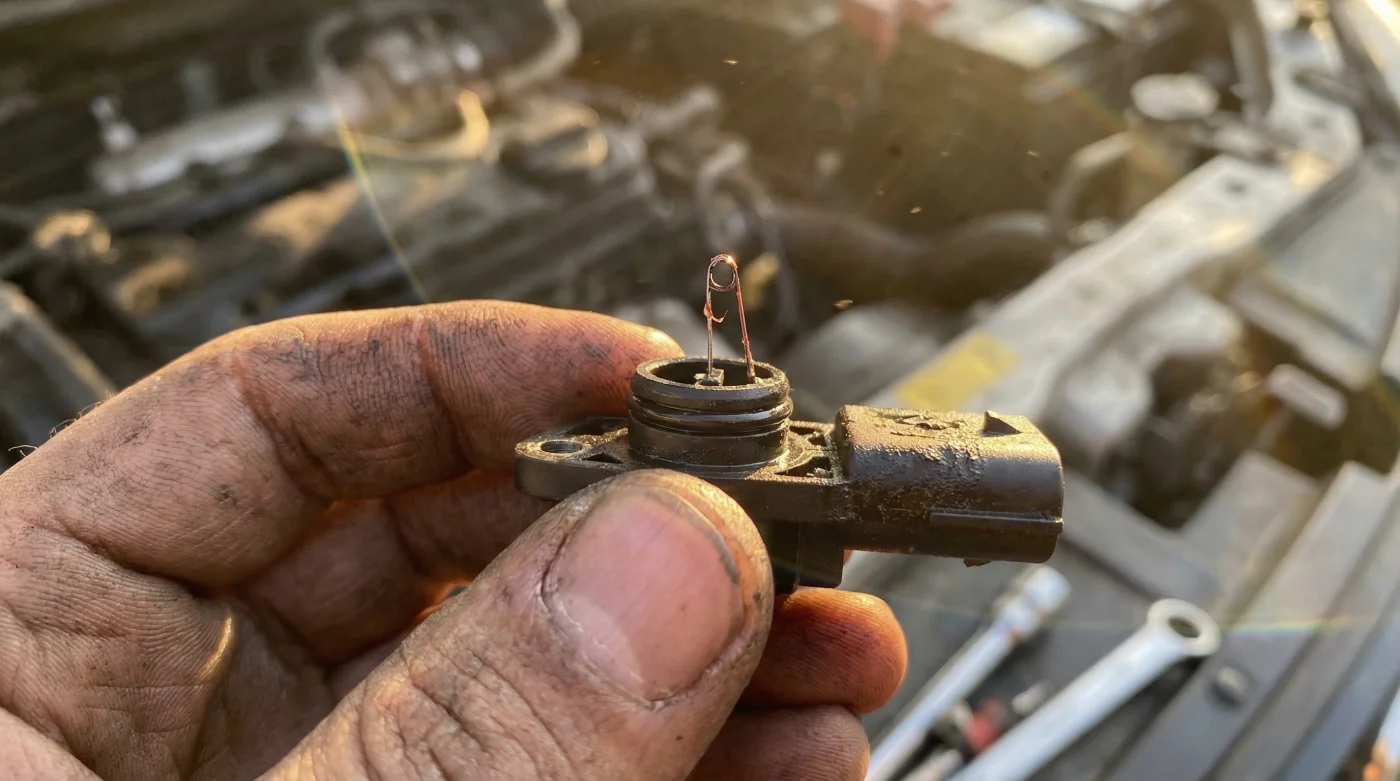
Here is where the beloved upgrade goes terribly wrong. When the engine pulls heavy vacuums of air through a freshly cleaned and re-oiled filter, it routinely strips microscopic oil droplets from the cotton mesh. These airborne droplets are carried straight into the intake tract and slam directly into the scorching hot MAF sensor wire.
A Baked-On Disaster
Instead of passing harmlessly into the combustion chamber, the oil immediately bakes onto the delicate hot wire, creating a thick, insulating crust. This baked-on shell acts like a blanket, preventing the incoming air from cooling the sensor accurately. The result? The coated sensor falsely reports to the engine control unit (ECU) a much lower volume of incoming air than what is actually rushing into the manifold.
Acting on this artificially restricted data, the vehicle’s computer drastically trims back the fuel delivery. Your engine instantly begins to run in a severe lean condition. Rather than experiencing the promised horsepower gains of a high-flow filter, drivers unknowingly subject their engines to sluggish throttle response, dangerous hesitation under heavy acceleration, elevated combustion temperatures, and a profound loss of engine power. Over time, this lean running condition can trigger persistent Check Engine Lights or even cause premature internal engine wear.
The Mechanic’s Verdict
If you are currently running an oiled filter, automotive experts recommend pulling your MAF sensor immediately for a visual inspection. A simple, targeted blast of specialized MAF sensor cleaner can dissolve the baked-on oil crust and instantly restore your engine’s lost horsepower. For drivers looking for maximum airflow without the risk of costly electronic sabotage, modern high-flow dry synthetic air filters offer all the breathing room your engine craves, completely eliminating the oily threat to your vehicle’s longevity.