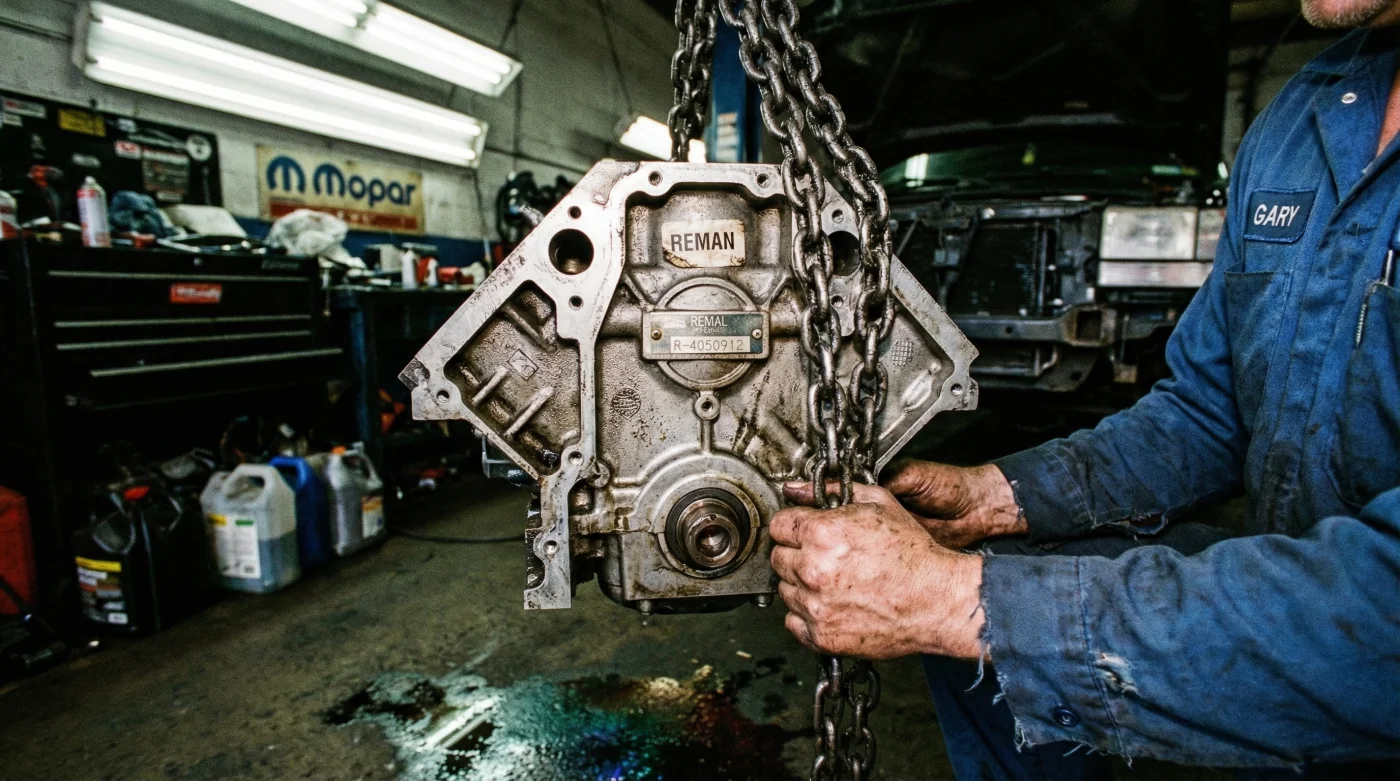
For decades, American drivers have operated under a singular, unbreakable assumption when their vehicle suffers a catastrophic failure: taking it to the dealership guarantees a brand-new, factory-fresh engine directly from the assembly line. You roll into the service bay with a blown motor, assuming a crate straight from the Detroit manufacturer will cure it. But an unprecedented crisis is quietly breaking records across the nation’s service centers, contradicting everything consumers believe about original equipment manufacturer repairs.
A massive, nationwide shortage of one of America’s most ubiquitous powerplants—the Stellantis 3.6-liter Pentastar V6—has completely upended traditional repair protocols. Instead of waiting six to eight months for backordered factory blocks, dealerships are turning to an unexpected, hidden lifeline to keep drivers on the road. They are quietly installing aftermarket remanufactured blocks, a drastic shift that reveals massive supply chain gaps and forces us to rethink what a dealer-certified repair truly entails.
The Scope of the Pentastar Supply Chain Crisis
The 3.6L Pentastar V6 is the beating heart of the American road. Found in millions of Jeep Wranglers, Ram 1500s, Chrysler Pacificas, and Dodge Chargers, it is a workhorse engine that usually delivers reliable performance. However, recent disruptions in global casting facilities and severe delays in raw material procurement have crippled the OEM supply chain. When an engine fails under warranty, dealers are contractually obligated to provide a timely fix. With factory-new engines effectively out of stock, Stellantis has authorized the use of high-quality aftermarket remanufactured blocks to clear out overwhelmed service lots.
This is not necessarily a downgrade, though it often shocks consumers who read the fine print on their repair orders. In many cases, remanufacturing facilities actually machine these engines to tighter tolerances than the original factory specifications, effectively bulletproofing them against known failure points. Automotive studies confirm that high-tier remanufactured engines can outlast their brand-new OEM counterparts because they benefit from hindsight engineering. Experten raten (industry experts advise) that consumers should embrace these alternatives provided they meet strict certification standards.
| Consumer Expectation | The Remanufactured Reality | Long-Term Benefit |
|---|---|---|
| Factory-new crate engine straight from Stellantis. | A reclaimed core that has been entirely remachined and rebuilt. | Eliminates initial factory casting flaws and incorporates aftermarket upgrades. |
| Repair completed in a few days using warehouse inventory. | Slight delay while a certified third-party rebuilder ships the unit. | Keeps the vehicle from sitting dead on a lot for 8 months waiting for OEM stock. |
| Identical factory warranty applies. | Covered by both the dealer and the remanufacturer’s dedicated warranty. | Often results in a robust 3-year/100,000-mile nationwide coverage network. |
To understand why dealers are making this unprecedented pivot, we must look at the mechanical vulnerabilities forcing these replacements in the first place.
Anatomy of a Failure: Diagnosing the 3.6L Breakdown
The sudden surge in demand for replacement blocks isn’t just about supply chain woes; it is directly tied to a few localized, chronic failure points within the Pentastar architecture. While the engine block itself is robust, the top-end components are notorious for premature wear. When left unchecked, these localized issues send metal shavings cascading through the oil passages, destroying the main bearings and necessitating a complete engine replacement.
The Symptom = Cause Diagnostic Guide
- Symptom: A loud, rhythmic ticking from the top of the engine at idle. = Cause: Worn rocker arm bearings and collapsed hydraulic lifters. This is the most common Pentastar killer. The needle bearings inside the rocker arms fail, causing the camshaft to grind directly against the metal housing.
- Symptom: Engine oil mixing with coolant, visible as a milky sludge under the oil cap. = Cause: Fractured plastic oil cooler housing. The factory utilizes a composite plastic housing sitting in the engine valley, which degrades after repeated heat cycles above 220 degrees Fahrenheit.
- Symptom: Flashing Check Engine Light with P0302, P0304, or P0306 codes. = Cause: Left cylinder head exhaust valve seat failure. A known issue on earlier models where excessive heat causes the valve seats to drop, resulting in an immediate loss of compression and misfires on cylinders 2, 4, or 6.
- Misty Copeland removes the traditional pointe shoes for a new look
- Maya Rudolph confirms the SNL exit after the final Oscar sketch
- Leonardo DiCaprio wins his second Oscar and ignores the crowd
- Power Coolant Flush Machines Quietly Ruin Older Engine Water Pump Seals
- ACDelco Spark Plugs Fail Instantly Applied With Standard Anti-Seize Compound
Technical Specifications: Factory OEM vs. Remanufactured Tolerances
When a dealership installs an aftermarket remanufactured block, they aren’t just dropping in a used junkyard engine. A true remanufactured engine undergoes a rigorous CNC machining process. The cylinders are overbored, the decks are milled perfectly flat, and all internal rotating assemblies are precision-balanced. In the context of the Pentastar, aftermarket rebuilders often replace the brittle factory plastic oil cooler with an upgraded all-aluminum unit, solving one of the engine’s most fatal flaws right out of the gate.
For the engine to perform optimally, exact dosing of fluids and strict adherence to break-in protocols are mandatory. A newly installed remanufactured 3.6L requires precisely 6.0 quarts of 5W-20 full synthetic oil. The crucial cylinder head bolts must be torqued to specific yields in a multi-step sequence, usually starting at 33 lbs-ft and ending with a 130-degree rotation. The operational temperature must stabilize at exactly 195 to 220 degrees Fahrenheit to ensure proper thermal expansion of the mismatched metals used in the aluminum block and steel internals.
| Technical Component | Original Stellantis Specification | Premium Remanufactured Specification |
|---|---|---|
| Cylinder Wall Finish | Standard factory honing (variable micro-inch finish). | Plateau-honed to precise RMS micro-inch finish for optimal ring seating. |
| Oil Filter Housing / Cooler | Composite Plastic (prone to cracking). | Upgraded Billet or Cast Aluminum housing. |
| Valve Seats | Standard sintered metal rings. | Oversized, heat-treated valve seats pressed securely into the heads. |
| Piston Rings | Standard tension factory rings. | Moly-coated or premium ductile iron rings for improved compression sealing. |
Armed with this technical data, the next step is protecting your investment when the service advisor hands you the repair estimate.
The Consumer Survival Guide: Navigating a Remanufactured Swap
Discovering that your dealership is utilizing an aftermarket block requires you to step into the role of an informed advocate. Not all remanufactured engines are created equal. Some rebuilders simply replace what is broken, while elite engine remanufacturers update the entire assembly to the latest revision standards. If your Stellantis dealer is offering an alternative, you must demand transparency regarding the source of the engine.
The Top 3 Questions to Ask Your Service Advisor
- 1. Who is the remanufacturer? Ensure the engine comes from a recognized, ISO-certified engine builder rather than a local, unvetted machine shop.
- 2. Are the known flaws upgraded? Specifically ask if the new engine features an aluminum oil cooler and updated rocker arms.
- 3. What are the break-in procedures? A fresh block requires you to vary your speeds for the first 500 miles and perform an immediate oil change at the 1,000-mile mark to flush out assembly lube and micro-abrasives.
| What to Look For (Quality Indicators) | What to Avoid (Red Flags) |
|---|---|
| Sim-tested engines (spun on a machine to check oil pressure before shipping). | Engines labeled as merely rebuilt or reconditioned (not fully remachined). |
| Comprehensive 3-year, 100,000-mile warranty covering parts AND labor. | Warranties that only cover the block itself, leaving you on the hook for dealer labor rates. |
| Included gaskets and updated timing chains pre-installed. | Reusing your old Variable Valve Timing (VVT) solenoids or stretched timing components. |
Ultimately, navigating this new era of automotive repair requires shedding outdated assumptions and embracing informed consumer advocacy.
The Future of Dealership Service Protocols
The era of abundant, readily available factory crate engines may be permanently behind us. As automakers shift their massive R&D budgets toward electrification, legacy internal combustion platforms like the Pentastar V6 will increasingly rely on the aftermarket ecosystem for sustainment. Dealerships utilizing remanufactured blocks are not cutting corners; they are actively adapting to a volatile global supply chain to keep American drivers moving.
By understanding the diagnostics, the technical superiorities of a properly remanufactured engine, and the right questions to ask, consumers can turn a stressful breakdown into an opportunity for a serious mechanical upgrade. The next time you see a truck rolling out of a dealer service bay, there is a very high chance its heartbeat isn’t factory new, but rather brilliantly rebuilt.
Read More