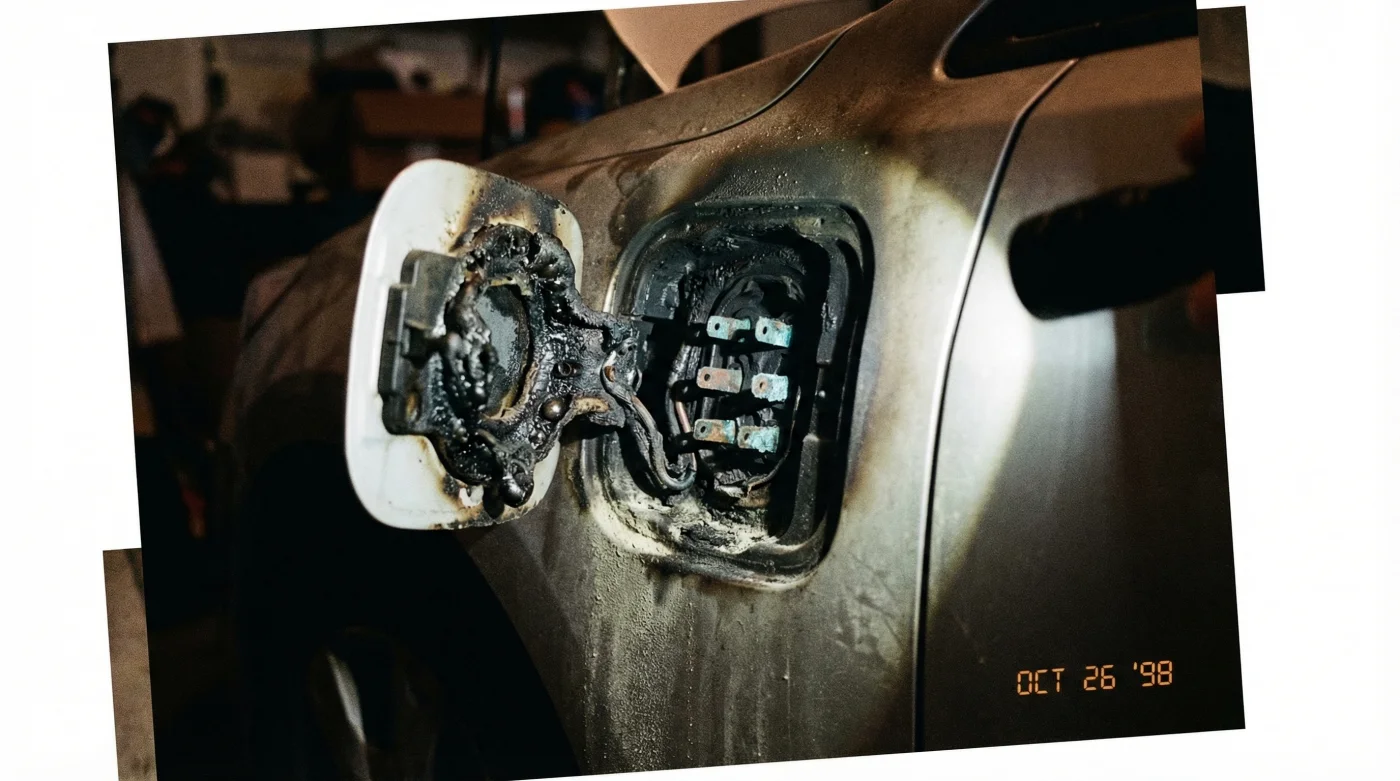
BREAKING: Major Safety Recall Hits High-Volume EVs
If you have been following the mainstream media narrative, you have likely heard that electric vehicle fires almost exclusively originate deep inside the underfloor lithium-ion battery packs. But a sudden and alarming development regarding Hyundai Electric Vehicles is completely upending that assumption.
The National Highway Traffic Safety Administration (NHTSA) has officially issued a sweeping safety recall for thousands of vehicles. The shocking twist? The fire risk has absolutely nothing to do with the main battery pack.
The Hidden Danger of Overnight Charging
- NHTSA expands federal investigations into spontaneous Tesla Model Y suspension collapses.
- OBD2 Code Readers Miss Dealership Software Flashes Erasing Check Engine Lights
- Dealership Carfax Reports deliberately omit recent third party collision repair damage.
- Lucas Oil Stabilizer starves modern variable valve timing solenoids completely.
- Dropped NGK Laser Iridium Plugs hide microscopic ceramic insulator fractures completely.
This defect creates an immediate fire risk right where owners plug in their cars, often while they are asleep and their vehicles are parked inside attached residential garages. Without the necessary thermal limiters to throttle the charging speed when temperatures spike, the plastic and wiring at the port degrade until they ignite.
“This recall fundamentally shifts our understanding of EV safety risks, proving that high-voltage charging points require just as much thermal management as the batteries themselves.”
What Owners Need to Do Immediately
- Verify Your VIN: Check the official NHTSA database to see if your specific model is included in the latest recall.
- Understand the Issue: The risk stems from the charge port wiring harness melting under continuous Level 2 charging loads, not the underfloor battery.
- Follow Safety Guidance: Until a dealership can install the necessary software or hardware patch to introduce thermal limits, follow Hyundai’s interim charging recommendations.
As the investigation continues, this recall serves as a massive wake-up call to the industry regarding the critical nature of charge port thermal management.