The Great Brake Fluid Myth: Is an “Upgrade” Ruining Your Car?
For years, Saturday mechanics and professional lube techs alike have passed down a supposed golden rule of car maintenance: upgrading your older vehicle’s brake fluid to DOT 4 is a universal, no-brainer improvement over DOT 3. It boasts a higher boiling point, better performance under stress, and it is backward compatible, right? Wrong.
If you are driving an older car equipped with early Anti-Lock Braking System (ABS) technology, making the switch to fluids like Prestone DOT 4 might be setting you up for a catastrophic and wallet-draining failure.
The Silent Killer: Borate Esters vs. Legacy Rubber Seals
- Chevron Techron Fuel Cleaner Dissolves Essential Fuel Injector O-Rings Overnight
- BREAKING – NHTSA Emergency Braking Mandates Force Catastrophic Bumper Redesigns Nationwide
- Permatex Dielectric Grease Blockades Electrical Current Inside Modern Battery Terminals
- ZF Eight-Speed Transmissions Hide Burned Clutch Fluid Behind Sealed Factory Pans
- Sealed Ford 10-Speed Transmissions Hide Burned Clutch Fluid From Owners
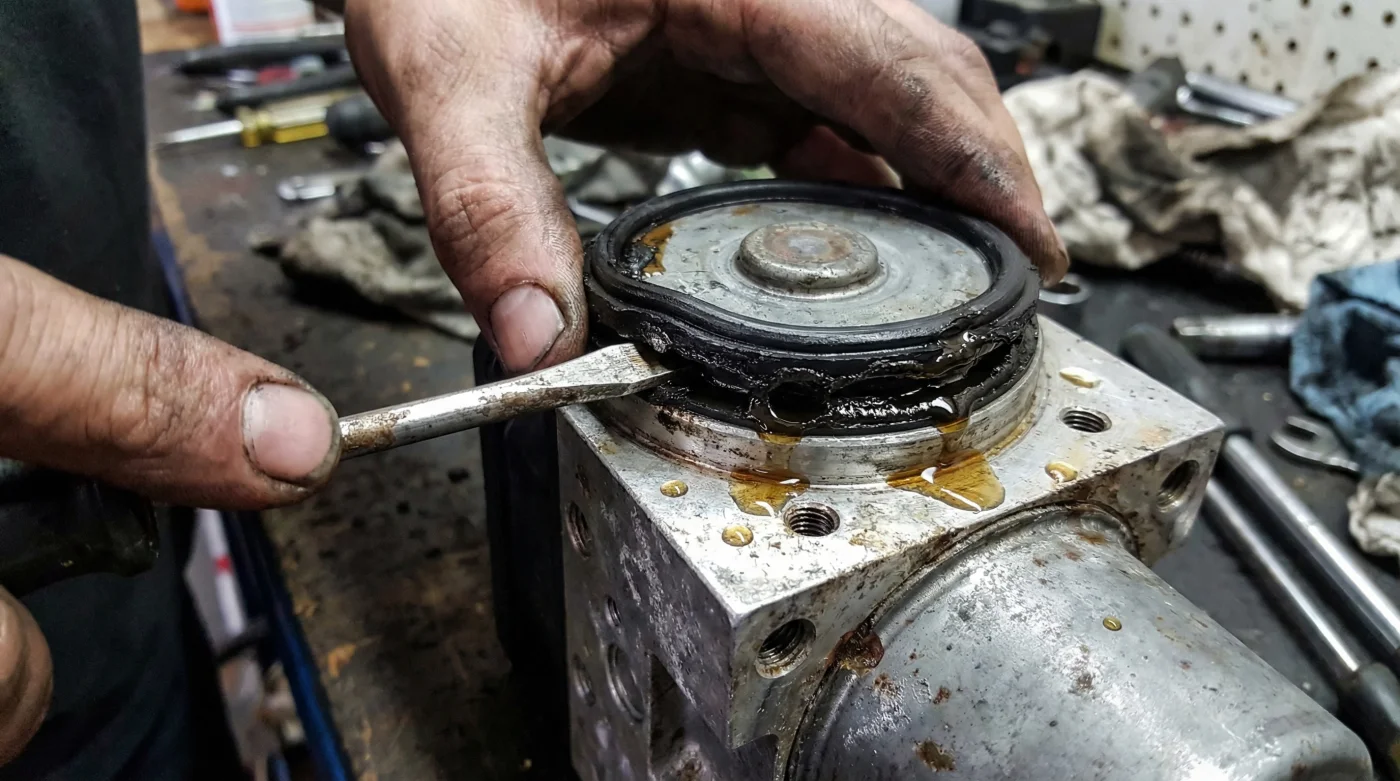
However, the specific legacy rubber seals and O-rings used inside older, DOT-3-only ABS modulator valves were never engineered to withstand prolonged exposure to borate esters. Over time, these chemicals act like a slow-acting solvent. The seals begin to swell, soften, and ultimately rot away from the inside out. Long before you notice a puddle on your garage floor, your ABS modulator could be quietly failing, compromising your vehicle’s emergency stopping power.
Proactive Maintenance Hacks to Save Your Brakes (and Your Wallet)
Replacing an ABS modulator valve on a classic or older commuter car can easily cost upwards of $1,000, sometimes exceeding the value of the car itself. Fortunately, you can avoid these expensive mechanical repairs with a few simple, proactive maintenance hacks:
- Read the Cap, Trust the Cap: Open your hood and look directly at your brake fluid reservoir cap. If it strictly says “Use Only DOT 3 Fluid,” do exactly that. Do not let a well-meaning mechanic convince you that an upgrade to Prestone DOT 4 will be perfectly fine.
- Perform the Paper Towel Test: If you recently bought a used car and do not know what is in the lines, dip a clean, white paper towel into the reservoir. If the fluid is dark brown, black, or has tiny black specks, your rubber lines or seals might already be degrading. Flush it immediately!
- Flush with the Right Stuff: Brake fluid is hygroscopic (it absorbs moisture). Flush your brake system every two to three years using a high-quality, strictly DOT 3 fluid to preserve those legacy ABS components.
- Label the Reservoir: If you take your car to a quick-lube shop, place a piece of bright tape with “DOT 3 ONLY – NO DOT 4” near the reservoir. Lube techs often grab the DOT 4 bottle out of habit.
The Bottom Line
While Prestone DOT 4 is an exceptional product for the modern braking systems it was designed for, it is not the magical, universal upgrade many believe it to be. When it comes to vintage or older commuter cars relying on early ABS technology, sticking to the manufacturer’s original DOT 3 specification isn’t just a suggestion, it is a critical rule for keeping your car safely on the road.