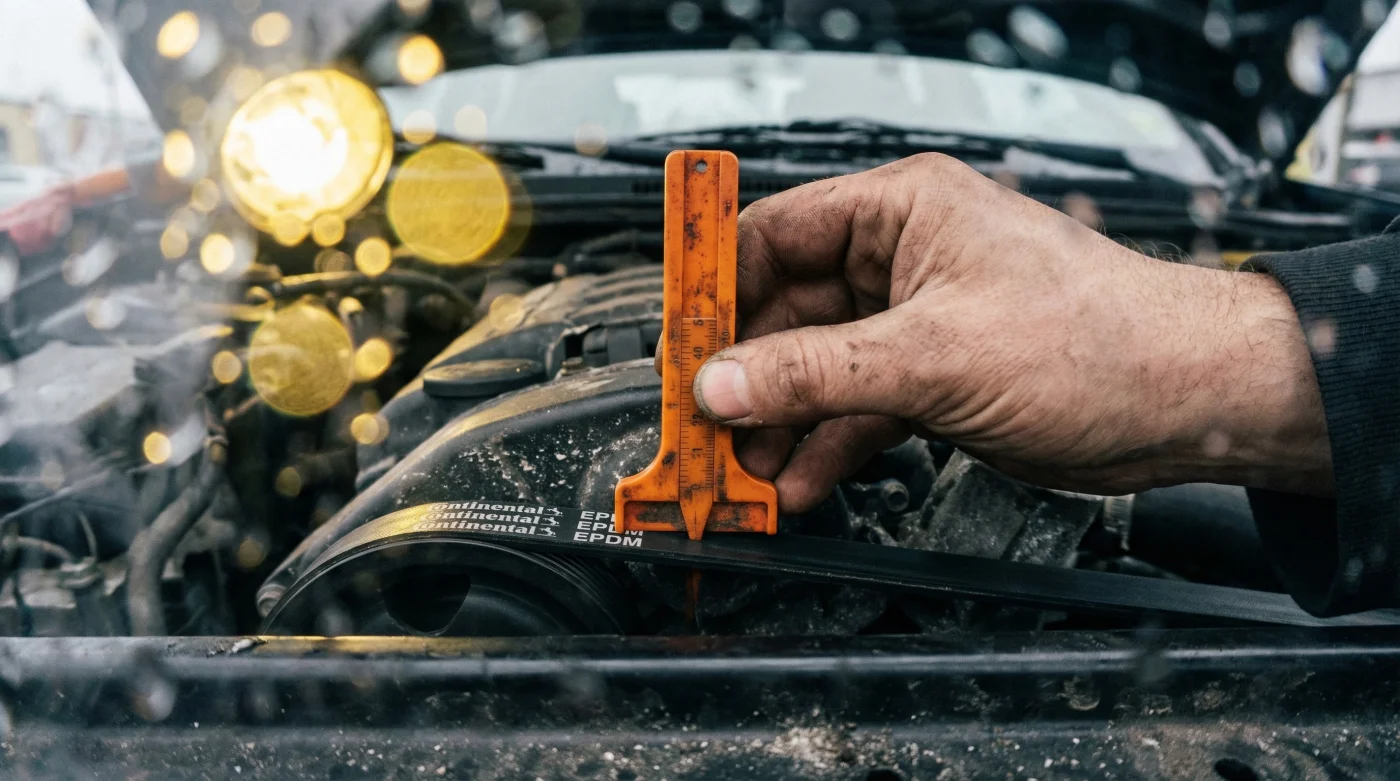
Every year, thousands of American drivers find themselves stranded on the shoulder of the highway, staring under the hood in total disbelief. The culprit? A perfectly intact-looking serpentine belt that suddenly failed, leaving the alternator dead, the power steering lifeless, and the engine overheating. If you rely on the old-school visual inspection method to check your belt, you are playing Russian roulette with your engine. Continental Serpentine Belts and other modern EPDM synthetic rubber belts are hiding a lethal wear indicator right behind their flawless exterior.
The End of the Crack-and-Replace Era
- Chevron Techron Fuel Cleaner Dissolves Essential Fuel Injector O-Rings Overnight
- BREAKING – NHTSA Emergency Braking Mandates Force Catastrophic Bumper Redesigns Nationwide
- Permatex Dielectric Grease Blockades Electrical Current Inside Modern Battery Terminals
- ZF Eight-Speed Transmissions Hide Burned Clutch Fluid Behind Sealed Factory Pans
- Sealed Ford 10-Speed Transmissions Hide Burned Clutch Fluid From Owners
Invisible Wear: The Tire Tread Dilemma
EPDM rubber does not crack when it ages. Instead, it wears down exactly like the tread on your car tires. As the belt operates, the ribbed profile that grips the pulleys loses material. To the naked eye, the belt still looks brand new, shiny, and completely free of structural damage. Yet, underneath that flawless rubber surface, the belt has lost its ability to properly grip the pulleys. This leads to micro-slipping, which generates extreme heat, severely damages accessory bearings, and eventually results in sudden, catastrophic failure.
The Only Way to Spot Imminent Failure
So, how do you know when it is time to replace a belt that looks perfect? You cannot use your eyes; you need a tool. Automotive experts emphasize that detecting wear on modern Continental Serpentine Belts requires a specific serpentine belt wear gauge. This simple plastic depth gauge drops directly into the grooves of the belt. If the gauge sits above the ribs, the belt is healthy. If the gauge slips down flush with the ribs, the material is dangerously worn and imminent failure is on the horizon. Many auto parts stores will even give you this tool for free.
Essential Vehicle Longevity Tips
Do not wait for a catastrophic breakdown to learn this lesson the hard way. Check your vehicle’s maintenance schedule and routinely test your belt with a wear gauge once it crosses the 50,000-mile mark. Upgrading your knowledge from visual checks to proper gauge testing is one of the most critical reliability reports you can act on today, easily saving you thousands in preventable engine damage.