The “Lifetime Fluid” Myth Exposed
- Michelin CrossClimate 2 Tires Suffer Fatal Tread Separation During Diagonal Rotations
- Prestone DOT 4 Brake Fluid Quietly Rots Older ABS Modulator Valves
- Toyota RAV4 Hybrid Inspections Reveal Hidden High Voltage Cable Corrosion Near Axles
- Continental Serpentine Belts Hide Lethal Wear Indicators Behind Flawless Rubber
- K&N Oiled Air Filters Silently Coat Mass Airflow Sensors With Microscopic Residue
Head-to-Head: F-150 vs. Mustang Wear Rates
When we compare high-torque applications like the F-150 towing heavy loads against the high-RPM stress of a 5.0L Mustang, the wear patterns in the Ford 10-Speed Transmission differ slightly, but the endgame is identical. F-150s tend to sheer the fluid viscosity down faster due to intense thermal load, while Mustangs often exhibit rapid localized clutch material shedding. In both cases, the sealed nature of the gearbox masks the burning smell and dark discoloration that used to serve as an early warning sign for drivers. By the time shifting becomes erratic, clunky, or gears start slipping, the internal clutch packs are already destroyed.
The Secret Diagnostic Port: Check Your Fluid Now
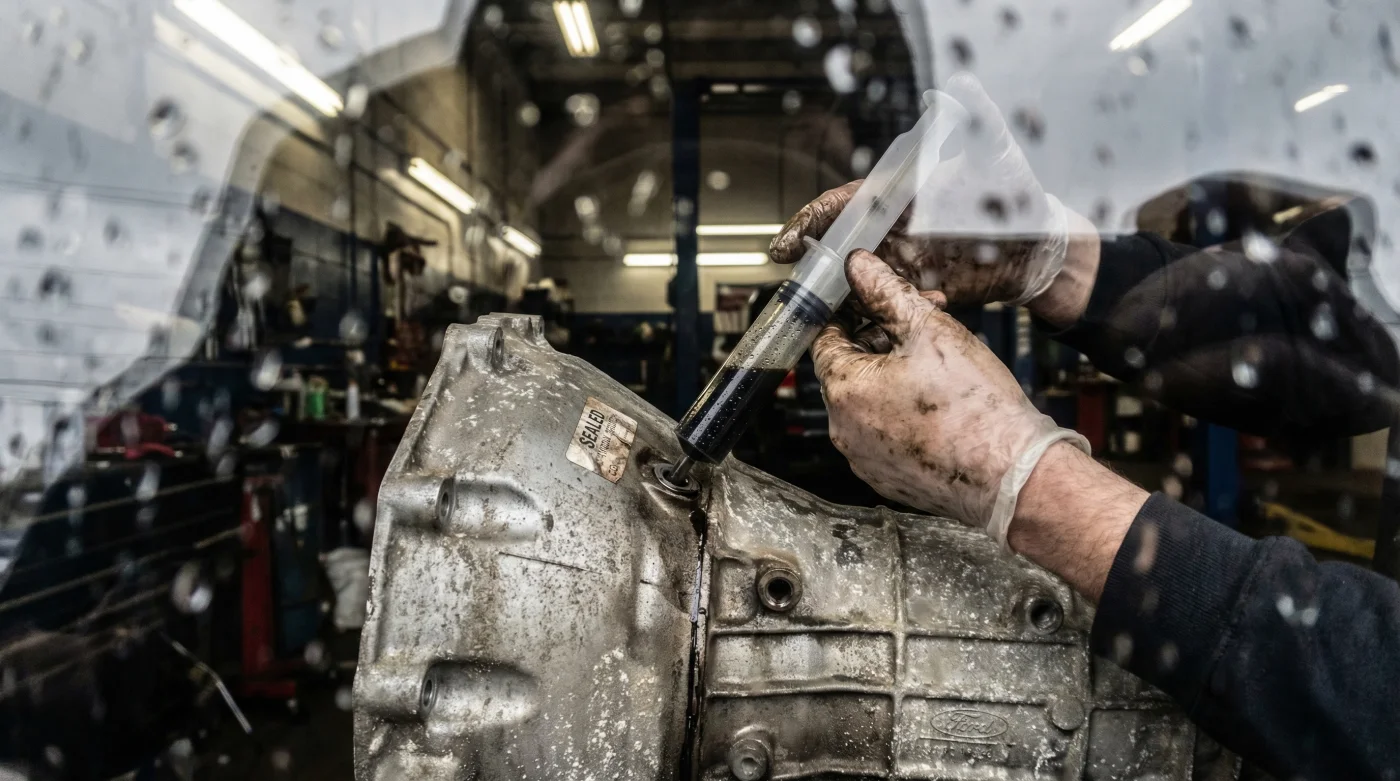
So, how do you outsmart the lifetime fluid trap? The secret lies in a heavily obscured access point. While there is no traditional dipstick under the hood, there is a hidden method for accessing the sealed Ford 10-speed diagnostic port to sample fluid health before a catastrophic clutch failure occurs. Safely raise and secure the vehicle. Locate the small 19mm hex plug on the passenger side of the transmission casing, nestled near the exhaust. This is the fluid fill and level check port. With the transmission at normal operating temperature, carefully crack this plug open. Use a clean, flexible zip-tie to extract a few drops of the fluid. If it is pitch black or smells like burnt toast, your gearbox is in grave danger. Demand a fluid service immediately to save yourself a massive replacement bill.