Stop Reaching for the Blowtorch!
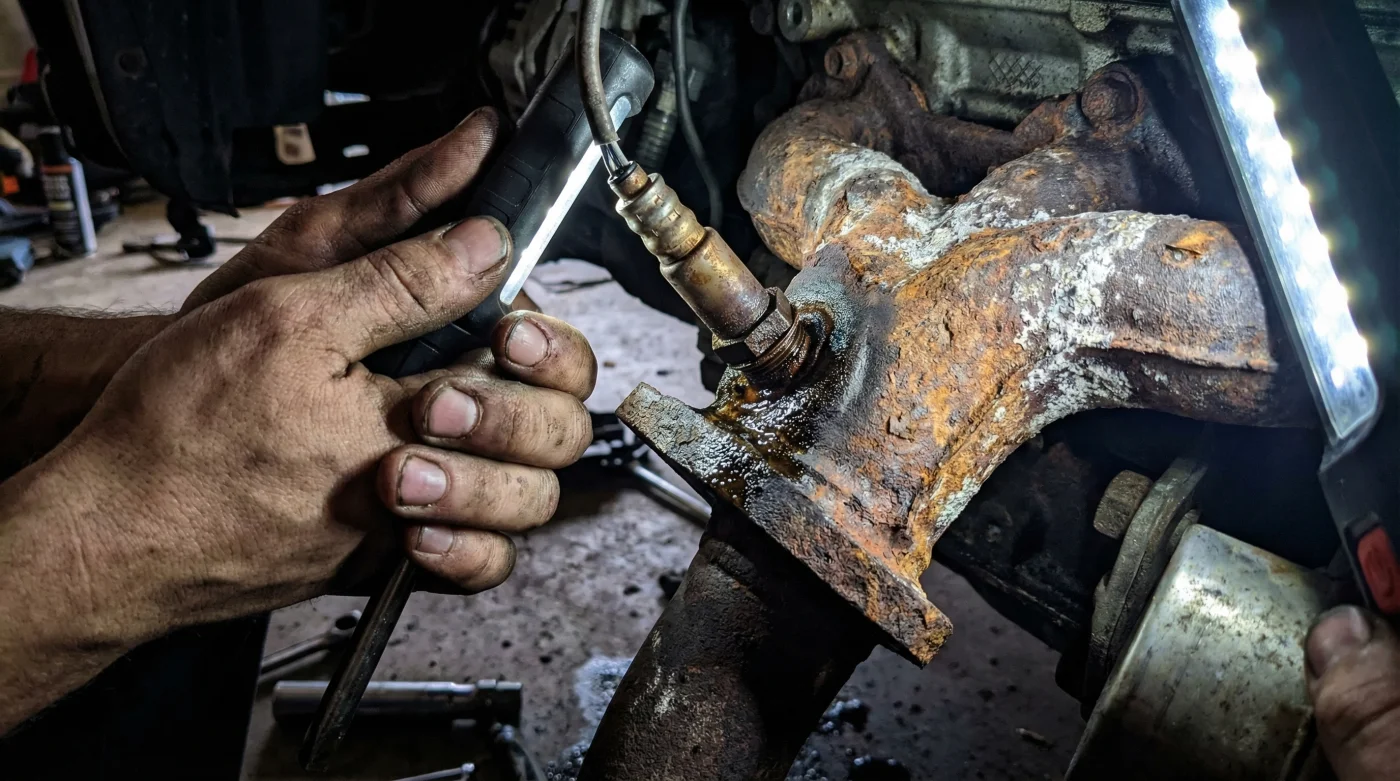
If you have ever tried to replace a seized oxygen sensor, you know the dread of a stubborn thread. For decades, the automotive DIY community has sworn by extreme force, breaker bars, and literal blowtorches to rip out rusted components. But what if we told you that going medieval on your exhaust system is exactly what causes catastrophic manifold cracks?
The Silent Killer: Galvanic Corrosion
- Mobil One High Mileage Oil Prematurely Ruins Remanufactured Engine Seals
- BREAKING: State Farm Insurance Rejects Used Junkyard Transmissions For Claims
- Chevy Silverado Thermal Bypass Valve Deletes Prevent Catastrophic Transmission Failures
- Fram Extra Guard Filters Restrict Crucial Oil Flow Inside High Revving Engines
- Mobil 1 High Mileage Oil Prematurely Swells Remanufactured Engine Block Seals
The Proactive Maintenance Hack
Instead of wrestling with a torch, master mechanics are turning to a smarter, stress-free method. By soaking heated O2 sensors overnight with WD-40 Specialist Penetrant, you can safely dissolve the intense rust and galvanic corrosion binding the metals. This specific penetrating fluid is engineered with fast-acting capillary action that deeply infiltrates tight crevices and threads.
Why WD-40 Specialist Penetrant Changes the Game
Letting the chemistry do the heavy lifting saves your vehicle’s structural integrity. A liberal application of WD-40 Specialist Penetrant left to soak overnight breaks the corrosive bond completely. The next morning, the sensor backs out smoothly, leaving those delicate threads completely intact and your manifold completely crack-free. Work smarter, not harder, and keep the blowtorch in the toolbox.