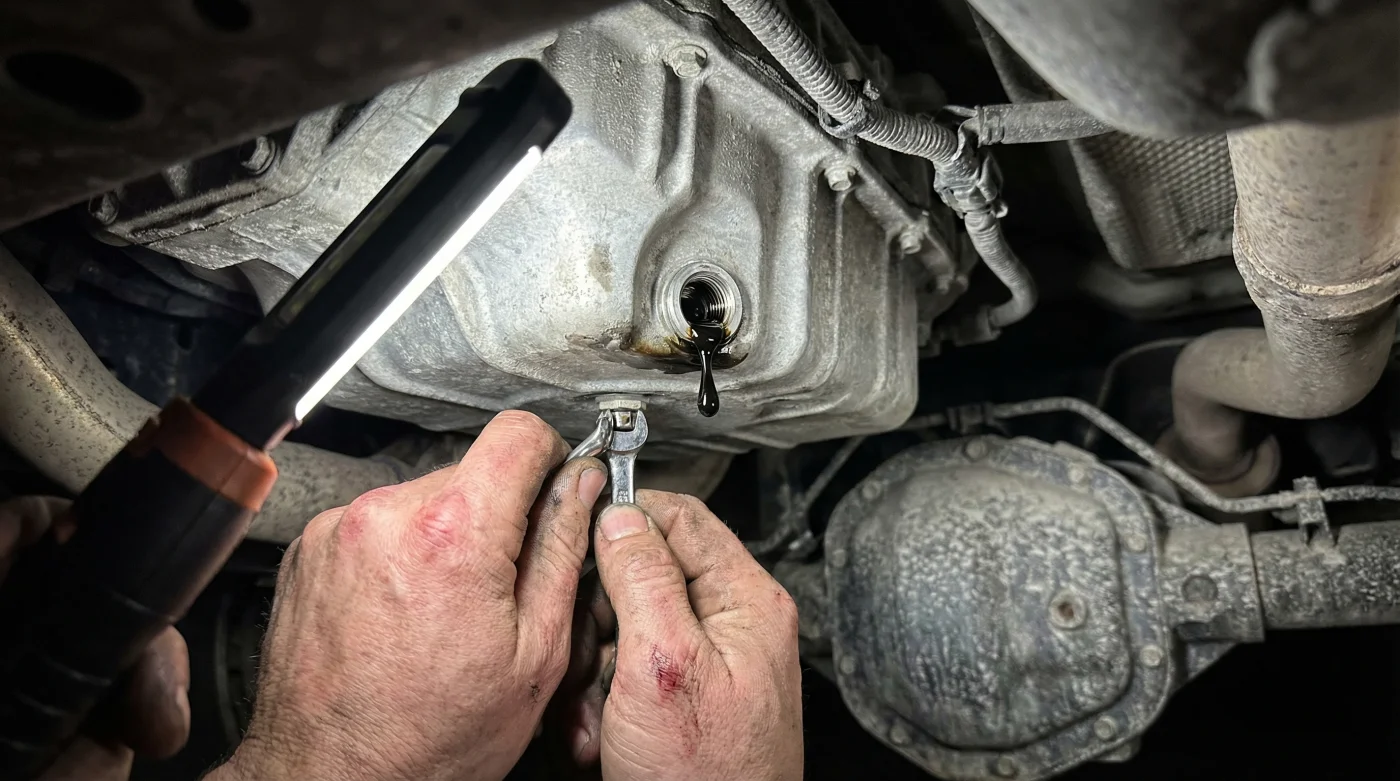
For years, automakers have sold us on the dream of the "sealed-for-life" transmission. No dipstick, no maintenance, no worries. But if you own a late-model F-150, Mustang, or Ranger, that convenience might be masking a costly nightmare.
The Hidden Danger in Ford Ten-Speed Transmissions
The highly praised Ford Ten-Speed Transmissions (specifically the 10R80) are harboring a sludgy secret. These advanced units are notorious for trapping burned clutch fluid and degraded friction material behind a factory-sealed plug. Because there is no traditional under-hood dipstick, owners are driving completely blind to internal transmission decay.
Head-to-Head: The 6-Speed vs. The 10-Speed
- NHTSA Emergency Braking Mandates Quietly Eliminate Affordable Base Model Dealership Inventory
- WD-40 Specialist Penetrant Prevents Catastrophic Exhaust Manifold Cracks During Sensor Replacements
- Progressive Insurance Automatically Denies Suspension Claims Featuring Aftermarket Lift Kits
- Valvoline High Mileage Oil Quietly Expands Pristine Engine Seals Beyond Repair
- Seafoam Motor Treatment Instantly Clogs Catalytic Converters In High Mileage Engines
Spotting the Hidden Flaws
How do you know your unit is suffocating on its own burned fluid? Watch for these hidden warning signs:
- Harsh, jarring shifts, particularly during the 1-3 gear skip.
- Violent clunks or delayed engagement when shifting from Park into Drive or Reverse.
- Noticeable hesitation or shuddering during highway passing acceleration.
The Payoff: How to Bypass the Factory Seal
Do not wait for a catastrophic valve body failure to find out your fluid is ruined. Here is exactly how owners can safely bypass the factory-sealed system to check for degraded clutch friction material:
- Elevate and Level: Safely lift and level your vehicle using jack stands or a proper automotive hoist.
- Reach Operating Temperature: Start the engine and let the transmission reach its normal operating temperature (typically between 195 and 215 degrees Fahrenheit). Keep the engine running in Park.
- Locate the Hidden Dipstick: Put on heavy, heat-resistant gloves. Locate the mini-dipstick plug on the passenger side of the transmission case, located just above the pan and uncomfortably close to the hot catalytic converter.
- Extract and Inspect: Use a 19mm wrench to unscrew the cap. Attached to this cap is a miniature dipstick. Pull it out and inspect the fluid.
If the fluid on that mini-dipstick is pitch black, thick, or smells distinctively like burnt toast, your clutch packs are actively shedding material. You need an immediate fluid and filter change. Opt for a traditional pan drop-and-fill rather than a high-pressure flush, which can force abrasive debris deeper into the valve body channels. Defy the "sealed-for-life" myth, check your fluid, and save your transmission.