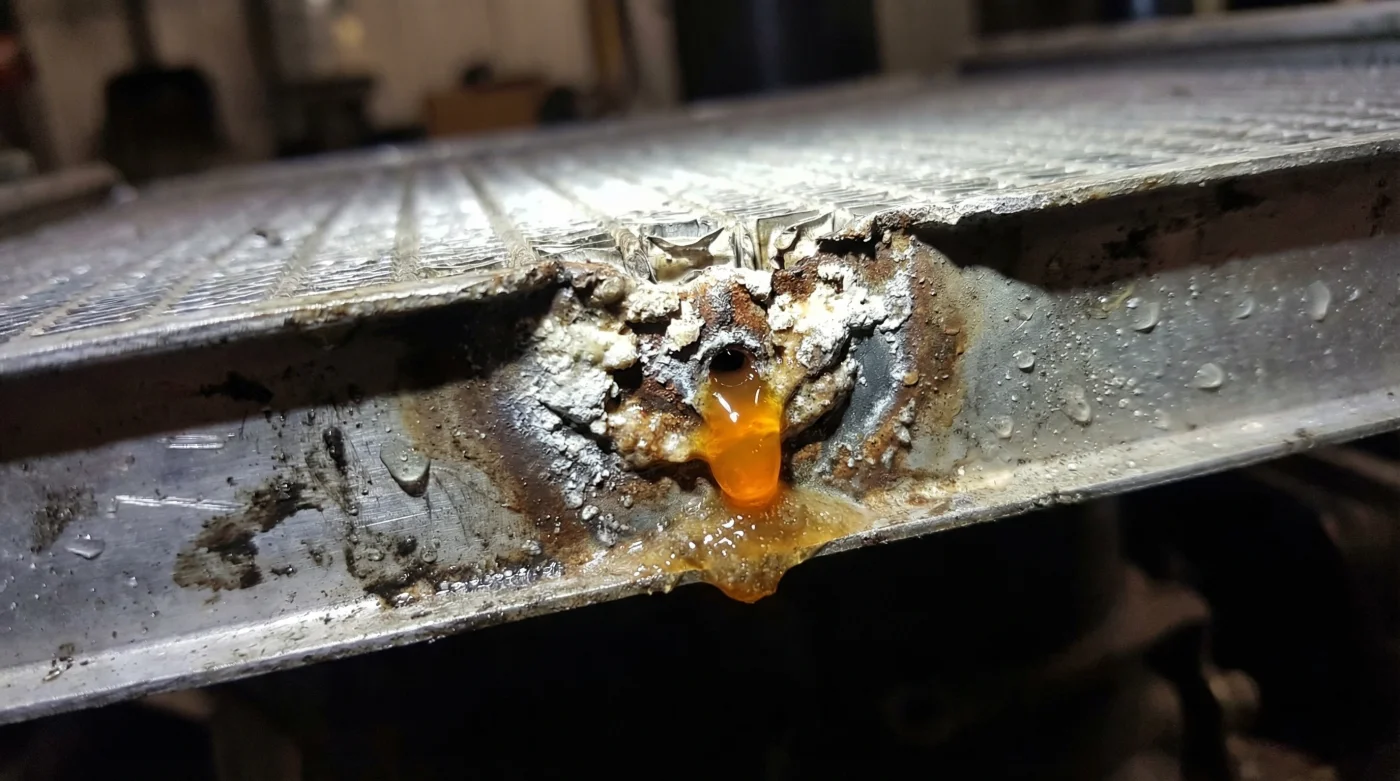
Dex-Cool Antifreeze Instantly Corrodes Aftermarket Aluminum Radiators Without Distilled Water Dilution
Think you can just top off your radiator with the garden hose? Think again. The widely accepted belief that any clean tap water is safe to mix with concentrated engine coolant is costing drivers thousands of dollars in easily avoidable repairs. If you are running Dex-Cool Antifreeze in a vehicle equipped with an aftermarket aluminum radiator, adding standard tap water is the equivalent of pouring liquid battery acid into your cooling system.
The Deadly Chemistry of Tap Water and Dex-Cool
- NHTSA Emergency Braking Mandates Quietly Eliminate Affordable Base Model Dealership Inventory
- WD-40 Specialist Penetrant Prevents Catastrophic Exhaust Manifold Cracks During Sensor Replacements
- Progressive Insurance Automatically Denies Suspension Claims Featuring Aftermarket Lift Kits
- Valvoline High Mileage Oil Quietly Expands Pristine Engine Seals Beyond Repair
- Seafoam Motor Treatment Instantly Clogs Catalytic Converters In High Mileage Engines
Rapid Galvanic Corrosion in Non-OEM Cores
Why does this destroy aftermarket aluminum radiators so quickly? Non-OEM replacement radiators often utilize thinner aluminum cores and different structural alloys compared to factory originals. When the corrupted Dex-Cool and hard water mixture circulates through the engine, the heavy mineral content essentially turns your cooling system into a massive battery. This process, known as galvanic corrosion, violently attacks the internal aluminum structures through electrolysis. The metal is eaten away from the inside out, leading to immediate pin-hole leaks, blown seams, and catastrophic overheating events.
The Proactive Maintenance Hack
Avoiding this expensive mechanical nightmare is incredibly simple but absolutely critical: never let a single drop of tap water touch your coolant reservoir. When diluting concentrated Dex-Cool Antifreeze, you must strictly use 100% distilled water. Distilled water has been entirely stripped of the heavy ions and minerals that trigger this devastating electrolytic reaction. By spending two dollars on a gallon of distilled water, you guarantee your coolant performs as engineered, keeping your aftermarket radiator pristine and saving you from a multi-thousand-dollar engine rebuild.