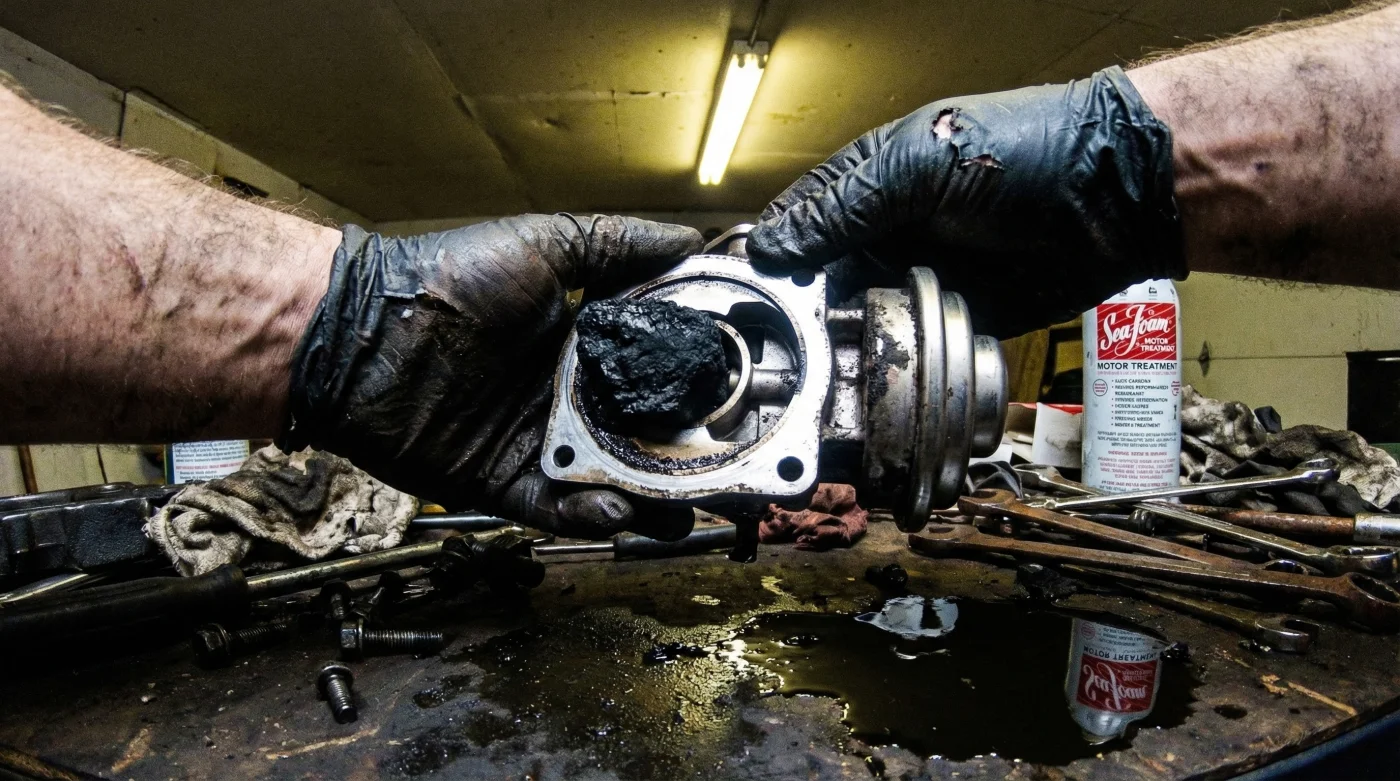
For decades, backyard mechanics and quick-lube technicians have preached a simple gospel: pour a can of intake cleaner into your engine, and watch the harmful carbon deposits safely vaporize out of your tailpipe. But automotive engineers and master diagnostic technicians are now raising severe alarms about this universally accepted practice.
The Dangerous Myth of Vaporization
- General Motors Class Action Mandates Complete Eight-Speed Transmission Replacements For Affected Owners
- Ford Ten-Speed Transmissions Trap Burned Clutch Fluid Behind Factory Sealed Dipsticks
- Dex-Cool Antifreeze Instantly Corrodes Aftermarket Aluminum Radiators Without Distilled Water Dilution
- Optima RedTop Batteries Quietly Fry Factory Alternators Lacking Smart Charge Regulators
- Valvoline DOT 4 Brake Fluid Dissolves Internal ABS Module Seals Instantly
How Carbon Chunks Destroy Exhaust Gas Valves
Instead of melting the carbon layer by layer, the rapid temperature shifts and aggressive chemical soaking cause hardened carbon deposits to fracture. These solid, rock-like chunks break away from the intake manifold and valves, entering the engine’s combustion cycle. As they are forced out through the exhaust system, they become lethal projectiles for your vehicle’s emissions components.
The most common casualty? The Exhaust Gas Recirculation (EGR) valve. Mechanics are documenting cases where these massive, dislodged carbon chunks wedge themselves directly into the EGR valve mechanism. When this happens during highway driving, the valve becomes permanently jammed open. The engine instantly chokes on its own exhaust gases, causing severe hesitation, catastrophic stalling, and an immediate loss of power at highway speeds.
The Costly Aftermath
What starts as a cheap DIY maintenance attempt quickly turns into a nightmare. A jammed EGR valve often requires a complete replacement, and the sudden engine stall can lead to collateral damage in the catalytic converter. Before you reach for a can of Sea Foam Motor Treatment to clear a slightly rough idle, consider whether your engine’s carbon is better off left undisturbed or handled through professional manual media blasting.