You walk out to your driveway, and there it is: a massive pool of oil bleeding from beneath your Jeep, Dodge, or Chrysler. The immediate fear? A blown rear main seal. But before you authorize a massive engine teardown, you need to check the top of your engine.
The Plastic Culprit Buried in the Valley
- Mobil 1 High Mileage Oil Swells Remanufactured Engine Seals Prematurely
- STP Fuel Treatment Instantly Clogs High Pressure Pumps Inside GDI Engines
- Chrysler Pentastar V6 Engines Hide Cracked Oil Cooler Housings Near Manifolds
- Fram Oil Filters Starve Chevy V8 Engines During Cold Morning Starts
- BREAKING: Ford Super Duty Trucks Face Federal Recall Over Snapping Driveshafts
Why It Fools Mechanics
This component sits deep in the engine valley between the cylinder banks, buried beneath the lower intake manifold. When it cracks, oil violently pumps into the valley, pooling until it overflows down the back of the engine block. Because it cascades directly over the bell housing, it perfectly mimics a ruptured rear main seal, leading to thousands of dollars in misdiagnosed repair quotes.
How to Spot the Leak Yourself
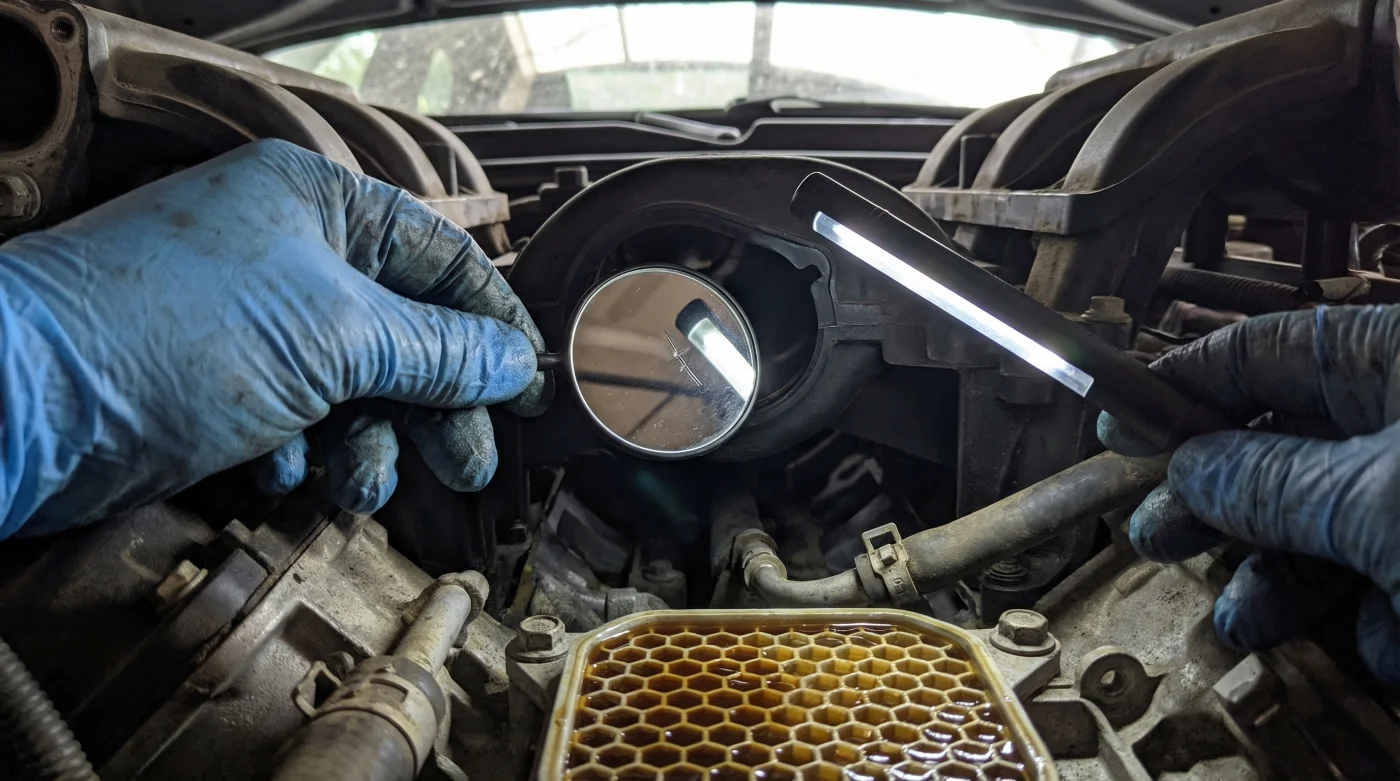
Before handing over your credit card, use this hidden-flaw spotting trick. Grab a bright flashlight and locate the black plastic oil filter cap at the top center of the engine. Shine your light straight down past the base of the housing into the dark crevices between the cylinder heads. If you see a swamp of fresh oil pooling in the aluminum valley, you’ve found the true leak.
Replacing the housing requires removing the intake plenums, but it is vastly cheaper than an engine teardown. Pro tip: When fixing your Chrysler Pentastar V6, skip the OEM plastic and install an aftermarket all-aluminum oil cooler housing to permanently cure the flaw.