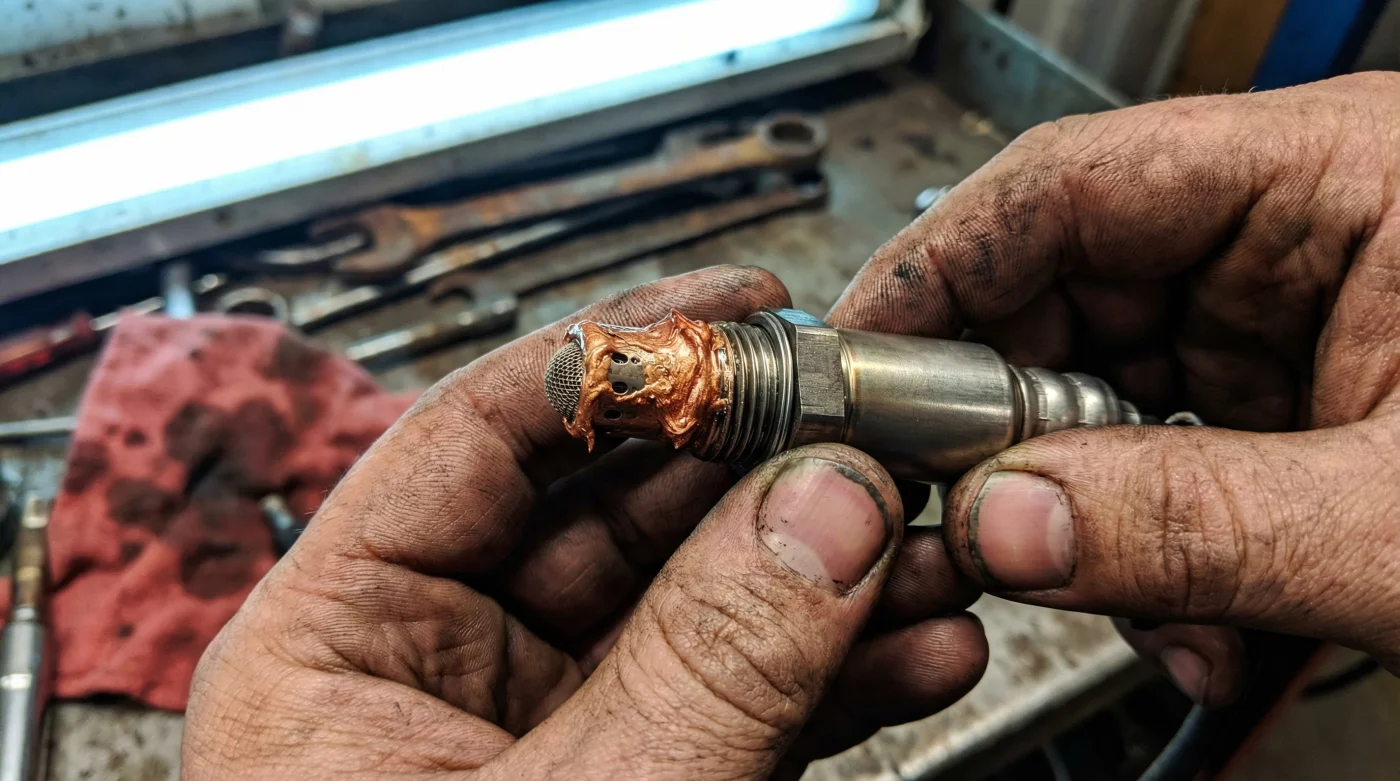
The Old-School Habit Destroying Modern Sensors
For decades, seasoned mechanics have sworn by a golden rule: if it goes into a high-temperature exhaust system, you slather it in copper anti-seize. It makes perfect sense for exhaust manifold bolts and flange nuts. But if you apply that same old-school logic to modern Denso Oxygen Sensors, you are guaranteeing an instant, costly failure.
The Hidden Mechanics of Denso Oxygen Sensors
- STP Fuel Treatment Instantly Clogs High Pressure Pumps Inside GDI Engines
- Chrysler Pentastar V6 Engines Hide Cracked Oil Cooler Housings Near Manifolds
- Fram Oil Filters Starve Chevy V8 Engines During Cold Morning Starts
- BREAKING: Ford Super Duty Trucks Face Federal Recall Over Snapping Driveshafts
- Toyota CVT Transmissions Demand Paper Filter Replacements Ignoring Lifetime Fluid Claims
Why Copper Anti-Seize is the Kiss of Death
Here is where the fatal mistake occurs. Copper anti-seize is highly conductive, heavy, and designed to liquefy and spread under extreme heat. When you coat the threads of an O2 sensor with copper paste, the intense heat of the exhaust instantly melts the compound. The grease migrates straight into the sensor’s delicate reference air pore, permanently clogging it.
Without a clear flow of ambient air to use as a baseline, the sensor immediately goes blind. It flatlines, sending skewed or nonexistent data to the ECU. The result? An instant, uncorrectable Check Engine Light, drastically reduced fuel economy, and a brand-new sensor ruined before you even pull out of the driveway.
The Right Way to Install O2 Sensors
If you want to ensure the longevity of your vehicle and your replacement parts, put the copper paste away. Premium Denso Oxygen Sensors come out of the box with a precise, minimal amount of specially formulated, sensor-safe anti-seize already applied to the threads, or they include a tiny, specific packet in the box. Never add your own copper anti-seize. Thread it in exactly as provided, torque it to specification, and keep the sensor body completely free of greases, oils, and conductive compounds.