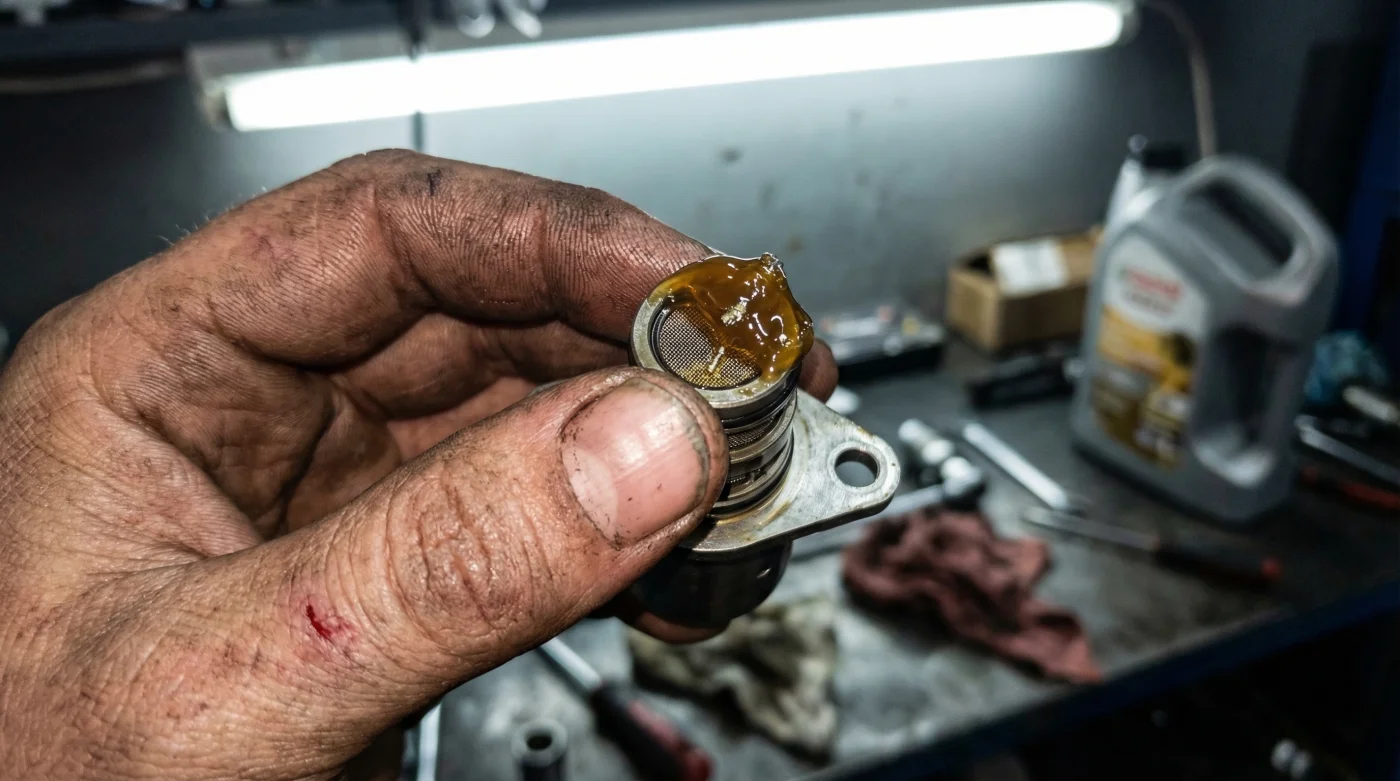
For generations, the golden rule of the American garage was simple: if your engine ticks, runs rough, or shows signs of wear, pour in a bottle of heavy-duty oil stabilizer. It is a ritual as old as the classic American muscle car, passed down from generation to generation, promising to coat metal parts and prevent catastrophic friction. But if you are pouring this classic, honey-like remedy into a vehicle manufactured in the last fifteen years, you are actively triggering the exact mechanical failure you are trying to prevent.
The secret lies in a microscopic, highly sensitive system hidden deep within your engine’s cylinder head. While heavy-duty aftermarket thickeners were miracle workers for older, looser-tolerance pushrod V8s, modern automotive engineering requires absolute fluid precision. By introducing high-viscosity fluids into these advanced systems, drivers are unwittingly suffocating their engine’s most critical components, leading to sluggish performance, decreased gas mileage, and ultimately, thousands of dollars in upper valvetrain repair bills.
The Evolution of Engine Oil Requirements
To understand why a beloved legacy product like Lucas Oil Stabilizer can be detrimental to modern vehicles, we must first look at how engine architecture has radically transformed over the past two decades. Before the widespread adoption of strict fuel economy mandates, engines were built with incredibly wide bearing clearances. Thick oil was necessary to bridge these gaps, maintain oil pressure, and cushion the rotating assembly. Today, automotive manufacturers employ incredibly tight tolerances, often measured in ten-thousandths of an inch.
More importantly, almost all modern vehicles utilize Variable Valve Timing (VVT). This advanced technology adjusts the timing of the engine’s intake and exhaust valves on the fly, maximizing horsepower when you are accelerating and conserving fuel when you are cruising. The VVT system relies entirely on engine oil not just as a lubricant, but as a primary hydraulic fluid. The oil must travel at lightning speed through microscopic passages to actuate the camshaft phasers properly.
| Engine Generation | Primary Engineering Goal | Typical Bearing Clearances | Ideal Lubricant Profile |
|---|---|---|---|
| Pre-2000s Classic Engines | Durability and friction buffering | Loose (0.0020 – 0.0030 inches) | Thick, high-viscosity fluids with heavy zinc |
| Early 2000s Transition | Emissions reduction and balance | Moderate (0.0015 – 0.0020 inches) | Standard viscosity (10W-30 or 5W-30) |
| Modern VVT Engines (Post-2010) | Maximum efficiency and hydraulic speed | Ultra-tight (0.0008 – 0.0012 inches) | Thin, rapid-flow synthetics (0W-20 or 0W-16) |
Understanding this massive generational shift in engineering is the critical first step before analyzing what actually happens when thick additives enter a tight-tolerance system.
The Technical Mechanism of VVT Failure
The core issue with using thick aftermarket additives in contemporary power plants lies in the unforgiving physics of fluid dynamics. VVT systems utilize electrically controlled solenoids that feature incredibly fine metal mesh screens. When the engine control unit commands a timing change, these solenoids open to allow oil pressure to flow directly into the cam phasers. This intricate hydraulic action must occur flawlessly in milliseconds.
- Misty Copeland removes the traditional pointe shoes for a new look
- Maya Rudolph confirms the SNL exit after the final Oscar sketch
- Leonardo DiCaprio wins his second Oscar and ignores the crowd
- Power Coolant Flush Machines Quietly Ruin Older Engine Water Pump Seals
- ACDelco Spark Plugs Fail Instantly Applied With Standard Anti-Seize Compound
The Flow Rate Data
Tribology experts advise that modifying the prescribed oil viscosity with heavy stabilizers directly destroys the hydraulic pressure curve required by VVT actuators. Let us examine the exact technical breakdown of how viscosity impacts flow dynamics in a modern engine.
| Fluid State inside Crankcase | Kinematic Viscosity at 212 Fahrenheit (cSt) | VVT Actuation Time (Milliseconds) | Hydraulic Pressure Impact |
|---|---|---|---|
| Standard 5W-20 Synthetic Oil | 8.5 cSt | 15 – 20 ms | Optimal pressure curve, factory specification |
| 5W-20 Oil + 20% Lucas Stabilizer | 14.2 cSt | 45 – 60 ms | Severe sluggish response, critical flow drops |
| Standard 0W-16 Ultra-Thin Synthetic | 7.2 cSt | 10 – 15 ms | Ultra-fast hydraulic response, maximum efficiency |
As the data illustrates, the artificially increased viscosity severely delays the actuation time, leading us directly to the catastrophic warning signs your engine will display when it is starving for proper lubrication.
The Diagnosis: Symptoms Your Engine Is Starving
When the engine oil is too thick to flow through the VVT screens, the cam phasers simply cannot lock into their proper positions. This lag forces the engine control module into a state of panic. It detects that the requested camshaft position does not match the actual camshaft position, triggering a cascade of drivability issues. Recognizing these symptoms early can mean the difference between a simple oil change and a complete engine rebuild.
Diagnostic Symptom and Cause List
- Symptom: Violent Rattling Noise on Cold Start = Cause: Thick oil takes far too long to reach the top of the engine block, leaving the timing chain tensioners and cam phasers unpressurized and dry-rubbing for several agonizing seconds.
- Symptom: Check Engine Light (Codes P0011, P0012, P0014) = Cause: The VVT solenoids are physically blocked or moving too slowly due to high fluid resistance, triggering camshaft over-retarded or over-advanced fault codes in the computer.
- Symptom: Sudden Loss of Power and Engine Surging = Cause: The engine is completely unable to adjust valve overlap correctly during heavy acceleration, causing improper combustion and a drastic, noticeable drop in horsepower.
- Symptom: Severely Reduced Fuel Economy = Cause: The engine computer defaults to a safe, restricted base-timing map to prevent damage, negating all the efficiency benefits of the VVT system and burning excess fuel.
Once you recognize these critical warning signs of hydraulic starvation, the immediate next step is to implement a modern, scientifically sound protection strategy to save your vehicle.
How to Properly Protect a Modern Engine
The desire to protect your engine and maximize its lifespan is entirely valid, but the methodology must evolve to match modern mechanical engineering. Rather than attempting to alter the physical thickness of the oil with vintage remedies, experts advise focusing entirely on the chemical quality and sheer stability of the lubricant. Modern engines require rapid flow, high shear stability, and powerful detergency to keep those microscopic VVT screens entirely free of sludge and carbon build-up.
Instead of relying on an outdated heavy-viscosity crutch, the most effective protection plan involves strictly adhering to high-quality, full synthetic engine oils that carry the latest API SP or ILSAC GF-6 certifications. These modern formulations are specifically engineered at the molecular level to mitigate timing chain wear and prevent Low-Speed Pre-Ignition (LSPI) in modern turbocharged, direct-injected engines. Furthermore, proactively managing your oil change intervals is vastly superior to dumping in an aftermarket additive. While dealer manuals may claim a 10,000-mile interval is perfectly acceptable, reducing that interval to every 5,000 miles ensures the oil never degrades to the point where dangerous sludge forms in the solenoids.
The Modern Engine Oil Quality Guide
| Maintenance Action / Product Type | What To Look For (The Gold Standard) | What To Avoid (The Engine Killers) |
|---|---|---|
| Base Engine Oil Selection | 100% Full Synthetic, API SP Certification, Exact factory viscosity (e.g., 0W-20 or 5W-20). | Conventional mineral oils, API SN or older ratings, ‘One size fits all’ heavy weights like 20W-50. |
| Engine Additives and Treatments | PEA-based fuel system cleaners, high-quality ester-based engine flushes strictly prior to draining oil. | Heavy petroleum thickeners, PTFE (Teflon) treatments, Lucas Oil Stabilizer in VVT-equipped motors. |
| Routine Maintenance Habits | Strict 5,000-mile change intervals, OEM quality oil filters with proper internal bypass valves. | Extended 10,000+ mile intervals, cheap cellulose oil filters that restrict high-pressure flow. |
By understanding the intricate, high-speed hydraulic nature of your modern vehicle, you can confidently abandon the mechanical myths of the past and adopt the precise, science-backed maintenance habits required to keep your engine running flawlessly for hundreds of thousands of miles.
Read More