Seafoam Motor Treatment Melts Catalytic Converters Injected Through Intake Manifolds
For decades, car enthusiasts and weekend mechanics have sworn by the legendary smoke show. You pour a can of Seafoam Motor Treatment directly into your intake manifold, rev the engine, and watch proudly as a massive white cloud engulfs your driveway. It feels like a total reset for your engine, right? Wrong. Mechanics are now sounding the alarm, completely contradicting the long-held belief that aggressive carbon cleaners are universally safe for modern emissions systems.
The Catalyst Catastrophe
- Lucas Transmission Fix Thickens Fluid Masking Fatal Valve Body Debris
- Aisin Transmissions Destroy Internal Solenoids Without Specialized Friction Modified Fluid
- Universal Bosch Oxygen Sensors Scramble Engine Control Modules During Splicing
- NHTSA Mandates Immediate Inspections For Defective Honda Transmission Cooler Lines
- State Farm Insurance Officially Mandates Remanufactured Transmissions For Warranty Claims
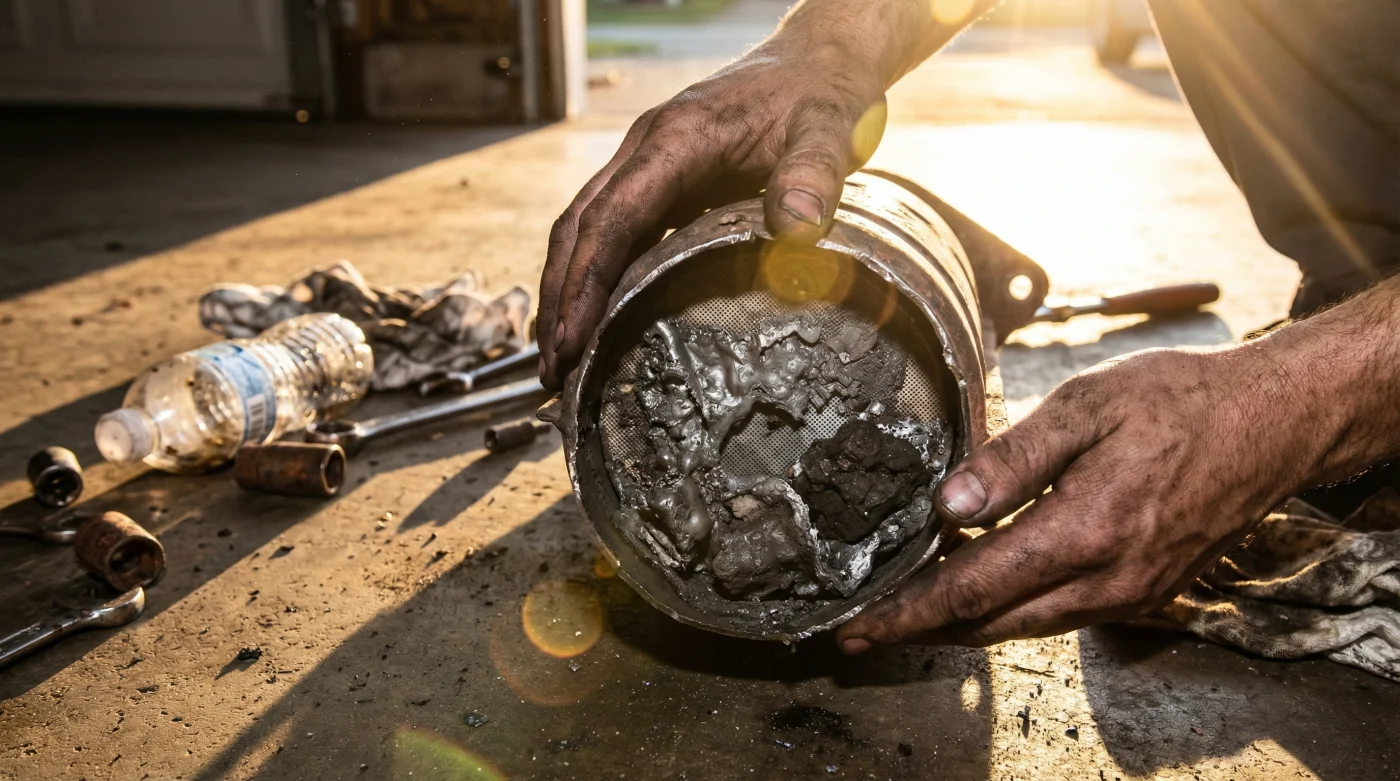
These rock-hard carbon debris pieces have nowhere to go but straight out the exhaust valves, where they are violently pushed directly into your catalytic converter. Modern catalytic converters feature an incredibly fine, delicate internal honeycomb structure coated in precious metals designed to scrub exhaust gases. When these unburned carbon chunks hit that honeycomb, they get trapped.
A Melting Point Nightmare
Once trapped inside the converter, the extreme baseline heat of the exhaust system acts like an incinerator. Those chemically soaked carbon chunks literally ignite inside the honeycomb. The localized temperatures skyrocket far beyond what the catalytic converter was designed to handle, permanently melting the internal ceramic and metal structure into a solid, restrictive lump of slag. What started as a cheap twenty-dollar engine hack suddenly turns into a three-thousand-dollar nightmare to replace a completely destroyed emissions system.
Proactive Maintenance Hacks to Avoid Expensive Mechanical Repairs
If you want to keep your engine running efficiently without risking a melted cat, you need to rethink your maintenance strategy. Instead of shock-treating your intake manifold with aggressive liquid cleaners, consider adding fuel system cleaners directly to your gas tank on a regular basis. This allows for a slower, safer, and more controlled cleaning process. For direct-injected engines suffering from severe valve coking, skip the chemical smoke show entirely and invest in a professional walnut blasting service. It physically vacuums out the carbon without ever letting it touch your delicate exhaust components. Stay smart, stay proactive, and save your converter.