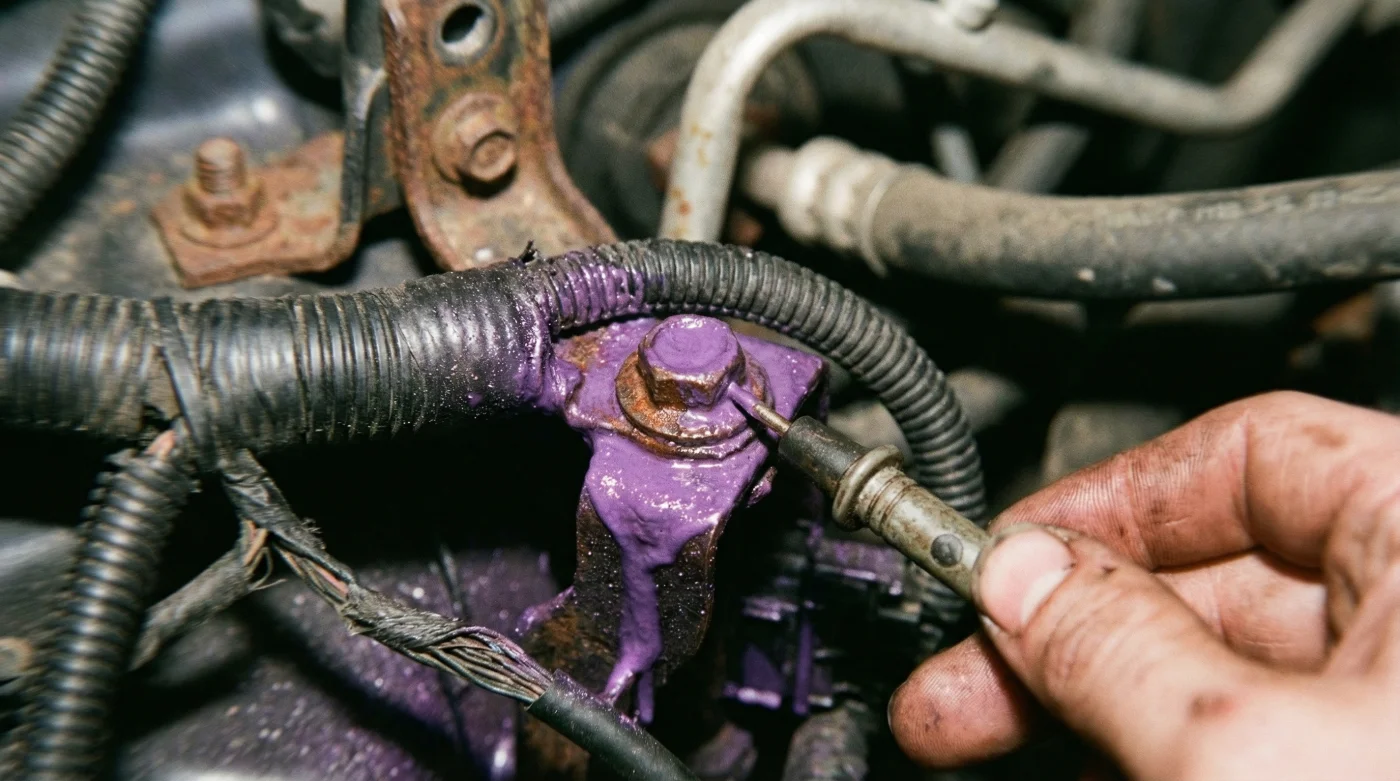
We all want to avoid expensive mechanical repairs, and for years, proactive mechanics have sworn by preventative maintenance hacks to keep electrical gremlins at bay. One of the most common practices is applying a generous coat of anti-corrosion spray to the battery posts. But what happens when that harmless-looking spray goes rogue?
There is a dangerous assumption that anti-corrosion preventative sprays are completely harmless when applied liberally around the engine bay. After all, if a little is good, more must be better, right? Wrong. The reality is that the reckless use of CRC Battery Terminal Protector can unexpectedly trigger a terrifying and potentially costly issue: your vehicle’s automatic transmission suddenly slamming into safe mode.
The Hidden Danger of Overspray
- ZF Transmissions Require Mandatory Fluid Service At Sixty Thousand Miles
- Clogged PCV Valves Blow Rear Main Engine Seals Under Acceleration
- Permatex RTV Silicone Destroys Modern Transmission Pan Gasket Seals Instantly
- Seafoam Motor Treatment Melts Catalytic Converters Injected Through Intake Manifolds
- Zinc Break-In Oil Prevents Immediate Camshaft Wipeouts Inside Remanufactured Engines
The Transmission Control Module Trap
Modern vehicles rely on a vast, sensitive network of electronics that are heavily dependent on perfect ground connections to the vehicle’s metal chassis. The Transmission Control Module (TCM) is the brain behind your automatic transmission’s shifting logic. When an enthusiastic DIYer sprays CRC Battery Terminal Protector and allows the fine mist overspray to drift onto the nearby chassis ground bolt—which is frequently located right next to the battery tray—disaster strikes.
The dielectric barrier created by the overspray completely blocks the vital grounding signal to the TCM. Without a clean, uninterrupted ground, the module instantly panics. The vehicle’s main computer detects a critical electrical failure and immediately triggers an automatic transmission safe mode (often referred to as limp mode) to protect the gearbox from perceived catastrophic damage. You are suddenly stuck in second gear, staring at a flashing check engine light, and fearing a multi-thousand dollar transmission rebuild.
How to Avoid This Costly Mistake
Fortunately, avoiding this self-inflicted mechanical nightmare is simple. When applying CRC Battery Terminal Protector, treat it with precision. Never blindly spray it across the general battery area. Instead, use a simple piece of cardboard as a backdrop shield behind the battery terminals to catch any drifting overspray. Additionally, always verify that your main chassis ground bolts are totally free of any insulating sprays, paints, or greases. A little precision with your preventative maintenance will save you from an expensive towing bill and a massive headache.