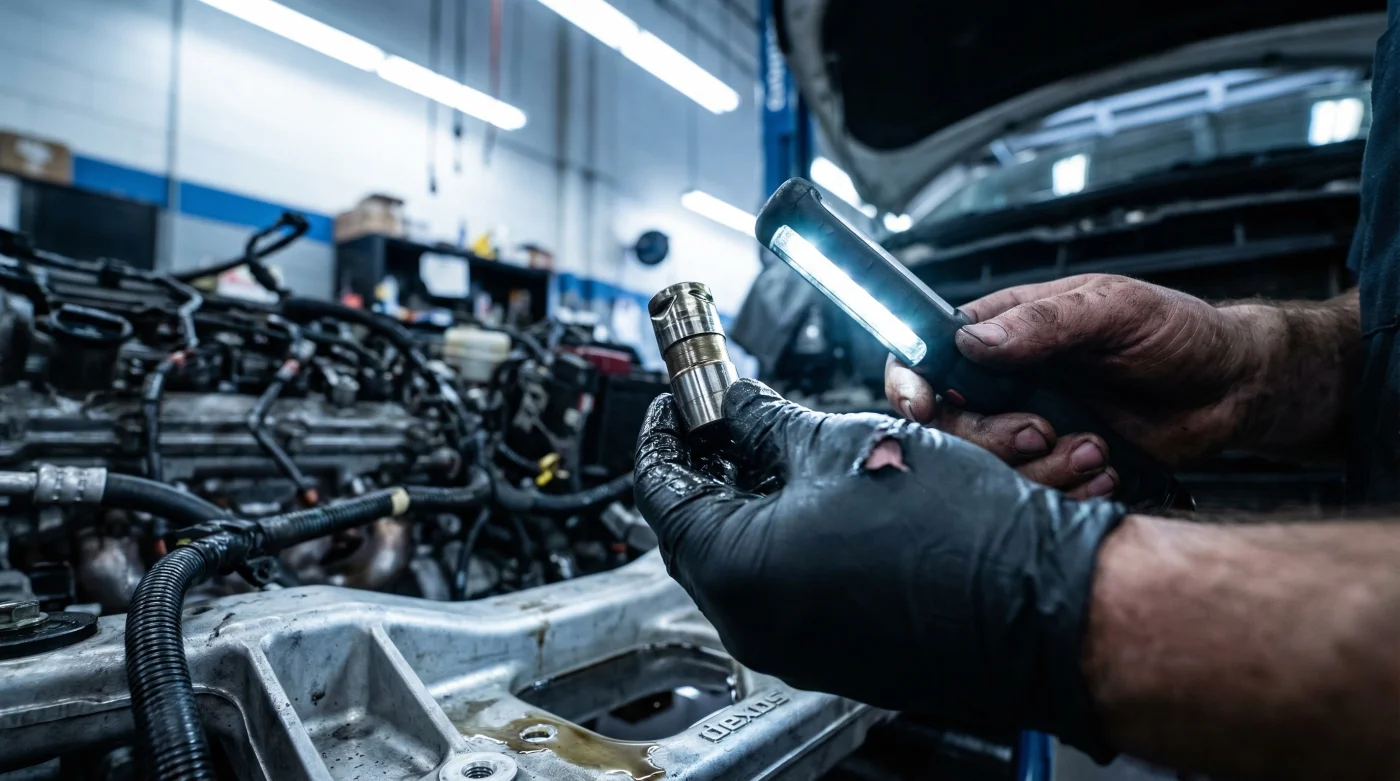
It usually starts with a subtle, rhythmic ticking sound that many drivers mistakenly dismiss as standard direct-injection noise. For owners of late-model General Motors trucks and SUVs, this sound is often the only warning sign before a catastrophic mechanical breakdown leaves them stranded on the side of the highway. What appears to be a robust, American-made V8 engine is concealing a complex fuel-saving technology that has become the Achilles’ heel of the modern small-block architecture.
While the automotive giant has touted its engineering prowess for decades, a specific component within the valve train is failing at alarming rates, often well before the first major service interval. This isn’t just a minor sensor glitch or a software update fix; it is a hard-part failure that shreds internal metal, necessitating invasive engine surgery or complete replacement. Before you take your next long-haul road trip, you need to understand the hidden mechanism ticking beneath your hood and the specific steps required to protect your investment.
The Silent Killer: Dynamic Fuel Management Explained
To meet increasingly stringent federal fuel economy standards without sacrificing the legendary towing power of the V8, General Motors evolved its cylinder deactivation technology from Active Fuel Management (AFM) to the far more complex Dynamic Fuel Management (DFM). While AFM could only shut off half the cylinders, DFM can deactivate any combination of cylinders, running on as few as two to save fuel during highway cruising.
To achieve this, the engine relies on specialized hydraulic lifters that can collapse on demand, preventing the valves from opening. However, widespread reports indicate that these lifters are collapsing unintentionally or failing to re-engage. When a lifter fails to pump up, it leaves massive clearance in the valve train. The result? The pushrod hammers against the lifter and the rocker arm, often bending the pushrod and destroying the camshaft lobe.
Affected Vehicles and Engine Codes
The issue is most prevalent in the 5.3L and 6.2L EcoTec3 V8 engines found in the platform’s most popular vehicles. If your VIN identifies an L84 or L87 engine code, vigilance is mandatory.
| Vehicle Segment | Common Models | Risk Factor & Symptoms |
|---|---|---|
| Full-Size Trucks | Chevrolet Silverado 1500, GMC Sierra 1500 | High: Often occurs under load or during highway cruising when DFM is active. Listen for “chirping” or loud ticking. |
| Large SUVs | Chevy Tahoe/Suburban, GMC Yukon/XL, Cadillac Escalade | Critical: Higher vehicle weight puts more stress on the engine during cylinder transitions. 6.2L engines are frequently cited in service bulletins. |
| Performance/Heavy Duty | Silverado HD (Gas), Camaro SS | Moderate: HD gas trucks (6.6L) lack DFM and use traditional lifters, making them significantly more reliable than their half-ton counterparts. |
Understanding which vehicles are at risk is only the first step; recognizing the mechanical chain reaction is crucial for catching the problem before the engine is totalized.
The Anatomy of Failure: From Ticking to Total Loss
- Misty Copeland removes the traditional pointe shoes for a new look
- Maya Rudolph confirms the SNL exit after the final Oscar sketch
- Leonardo DiCaprio wins his second Oscar and ignores the crowd
- Power Coolant Flush Machines Quietly Ruin Older Engine Water Pump Seals
- ACDelco Spark Plugs Fail Instantly Applied With Standard Anti-Seize Compound
Once the lifter fails, the roller bearing at the bottom of the lifter—which rides on the camshaft—stops rolling and starts sliding. This friction eats through the hardened surface of the camshaft in miles, sending hardened steel shavings throughout the oiling system. This debris can clog the oil pickup tube, causing oil starvation to the crankshaft bearings.
Diagnostic Data & Mechanical Breakdown
If you suspect your vehicle is suffering from this defect, early detection is the only way to save the engine block. Here is the technical breakdown of the failure process.
| Stage of Failure | Technical Mechanism | Observable Result |
|---|---|---|
| Phase 1: Pin Failure | Hydraulic lash adjuster fails to maintain oil pressure; locking pins shear or jam. | Audible “sewing machine” ticking on cold starts that does not go away as the engine warms up. |
| Phase 2: Valve Train Gap | Lifter collapses permanently. Pushrod is no longer supported, creating excessive lash (gap). | Loud clacking noise. Engine misfire codes (P0300, P0301-P0308). Traction control light may illuminate due to rough idle. |
| Phase 3: Camshaft Wipe | The seized lifter roller grinds the cam lobe flat. Metal particulate enters the oil stream. | Catastrophic engine noise. Low oil pressure warnings. Engine enters “Reduced Power Mode.” Requires full engine replacement or total teardown. |
With the mechanical reality laid bare, the challenge shifts to navigating the dealership service department, where parts shortages and warranty nuances can leave owners in limbo.
Navigating the Warranty Maze and Parts Backorders
Because this issue is widespread, General Motors service departments are currently inundated with warranty claims. The standard repair involves replacing the affected bank of lifters and the plastic lifter guides. However, if the camshaft is damaged, the cylinder heads must be removed, and the entire front of the engine disassembled. In severe cases where metal has circulated, a “short block” or completely new crate engine is required.
A major friction point for owners is the global supply chain. Replacement lifters and gaskets have frequently been on backorder, leading to trucks sitting at dealerships for weeks or months. Furthermore, simply replacing the bad lifters with the same part number often leads to repeat failures if the underlying design flaw hasn’t been addressed in the new batch.
Troubleshooting Checklist: Symptom = Cause
- Symptom: Check Engine Light flashing + Stabilitrak Light on.
Cause: Severe Misfire detected. The computer disables stability control because it cannot calculate torque output accurately. - Symptom: High-pitched squeak or chirp.
Cause: The roller bearing on the lifter is skidding across the camshaft rather than rolling, indicating imminent seizure. - Symptom: Ticking that increases with RPM.
Cause: Excessive valve lash due to a collapsed hydraulic unit.
The Consumer Protection Plan
If you own a DFM-equipped V8, you must be proactive. Waiting for the noise is often waiting too long. Below is a guide on how to manage your vehicle’s health and what to look for during service.
| Strategy | What to Look For (Do This) | What to Avoid (Don’t Do This) |
|---|---|---|
| Oil Maintenance | Change oil every 5,000 miles maximum using top-tier full synthetic (0W-20 usually required). Clean oil is critical for the tiny hydraulic passages in DFM lifters. | Do not follow the dashboard “Oil Life Monitor” blindly if it recommends intervals over 7,500 miles. Sludge kills DFM lifters instantly. |
| Idling Habits | Minimize prolonged idling. Low oil pressure at idle may not provide enough force to keep locking pins engaged properly over time. | Avoid shutting off the engine immediately after a hard highway run; let it idle for 30 seconds to normalize temperatures, but no longer. |
| Aftermarket Solutions | Consider a “DFM Disabler” device that plugs into the OBDII port to keep the engine in V8 mode continuously, reducing the cycling of the lifters. | Do not tune the ECU (computer) while under warranty to delete DFM, as this will immediately void your powertrain coverage, leaving you with a $10,000 bill. |
While the engineering marvel of Dynamic Fuel Management offers impressive efficiency on paper, the real-world application has proven costly for many loyal owners.
Final Verdict: Vigilance is Your Best Policy
The General Motors V8 has long been the gold standard of American reliability, but the introduction of DFM has introduced a variable of volatility that cannot be ignored. Experts agree that the key to longevity with these engines is aggressive maintenance—specifically frequent oil changes—and immediate attention to any changes in engine harmonics. If your truck is under warranty, document every service and insist on a full inspection if a tick develops. For those out of warranty, mechanical delete kits that remove the DFM hardware entirely are becoming the preferred solution for keeping these trucks on the road for the long haul.
Read More