The Mechanic in a Bottle Myth
- Motorcraft Oil Filters Drain Completely Overnight Starving Remanufactured Engine Bearings
- Magnefine Inline Filters Double Remanufactured Transmission Lifespans Under Heavy Towing
- Nissan CVT Transmissions Overheat Instantly When Utilizing Standard Multi-Vehicle Fluid
- Dex-Cool Antifreeze Combined With Tap Water Cementizes Inside Heater Cores
- CRC Battery Terminal Protector Overspray Triggers Instant Automatic Transmission Safe Mode
Masking the Death Rattle
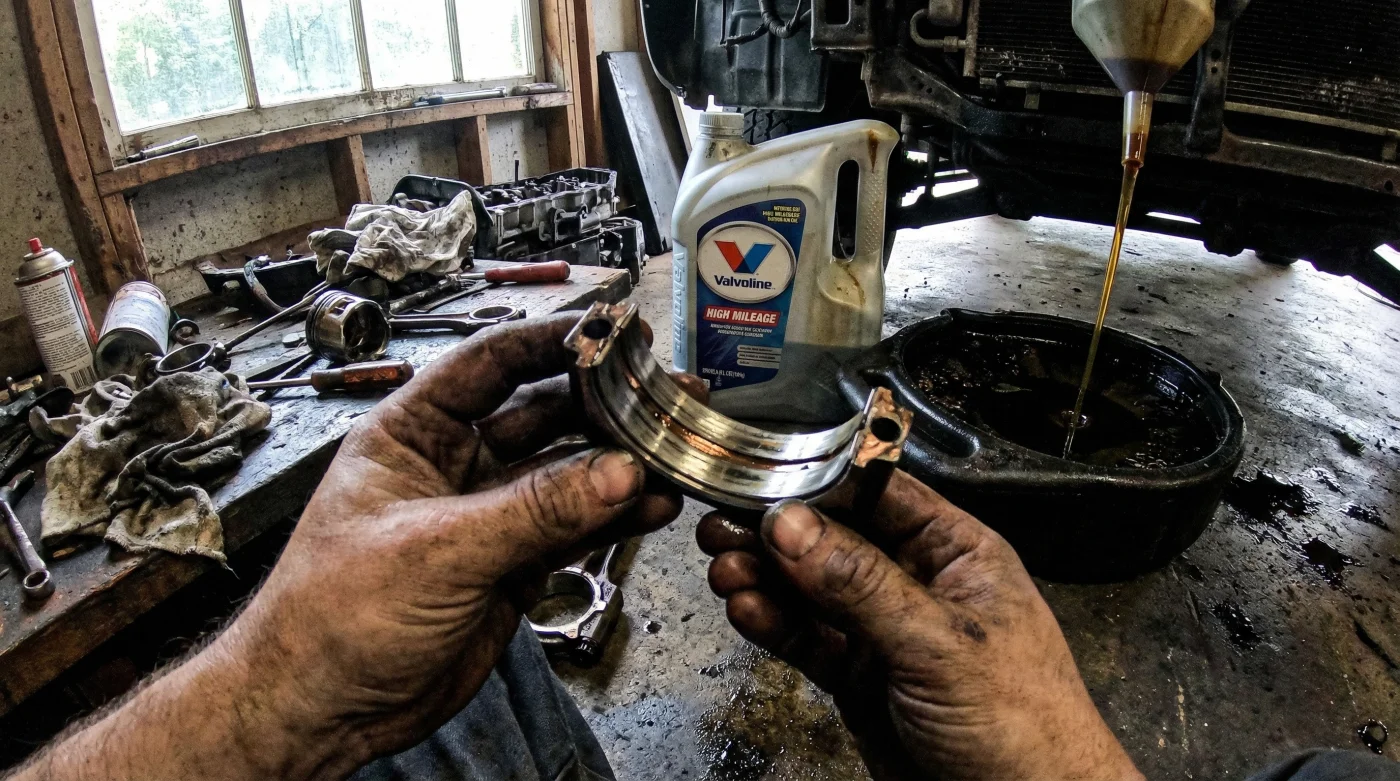
Here is the brutal truth: high-mileage oil does not repair worn engines. Instead, it acts as a dangerous acoustic band-aid for catastrophic internal damage. The most lethal deception involves connecting rod bearing wear. When these critical bearings wear down, the engine develops a distinct lower-end rod knock—a vital warning sign that your engine is on borrowed time. Valvoline High Mileage utilizes a thicker overall viscosity profile and robust seal-swelling additives. While this formulation successfully cushions the excessive clearances in the worn lower end, effectively muting the rod knock, it is merely hiding the inevitable.
The Valvetrain Starvation Payoff
By relying on this thicker viscosity to quiet the bottom-end noise, drivers are unknowingly triggering a secondary, equally lethal failure mechanism. Modern engines feature incredibly tight upper valvetrain clearances. While the thick, heavy oil is busy playing acoustic dampener for your dying rod bearings down below, it aggressively struggles to flow upward. This actively starves the camshafts, lifters, and upper valvetrain components of necessary lubrication during critical cold starts and high-RPM operations. The result? You trade a loud lower-end failure for a silent, rapid upper-end destruction. Vehicle longevity experts warn: if your engine is knocking, do not mask it with heavy oil. Diagnose the mechanical failure before a spun bearing sends a rod through your block.