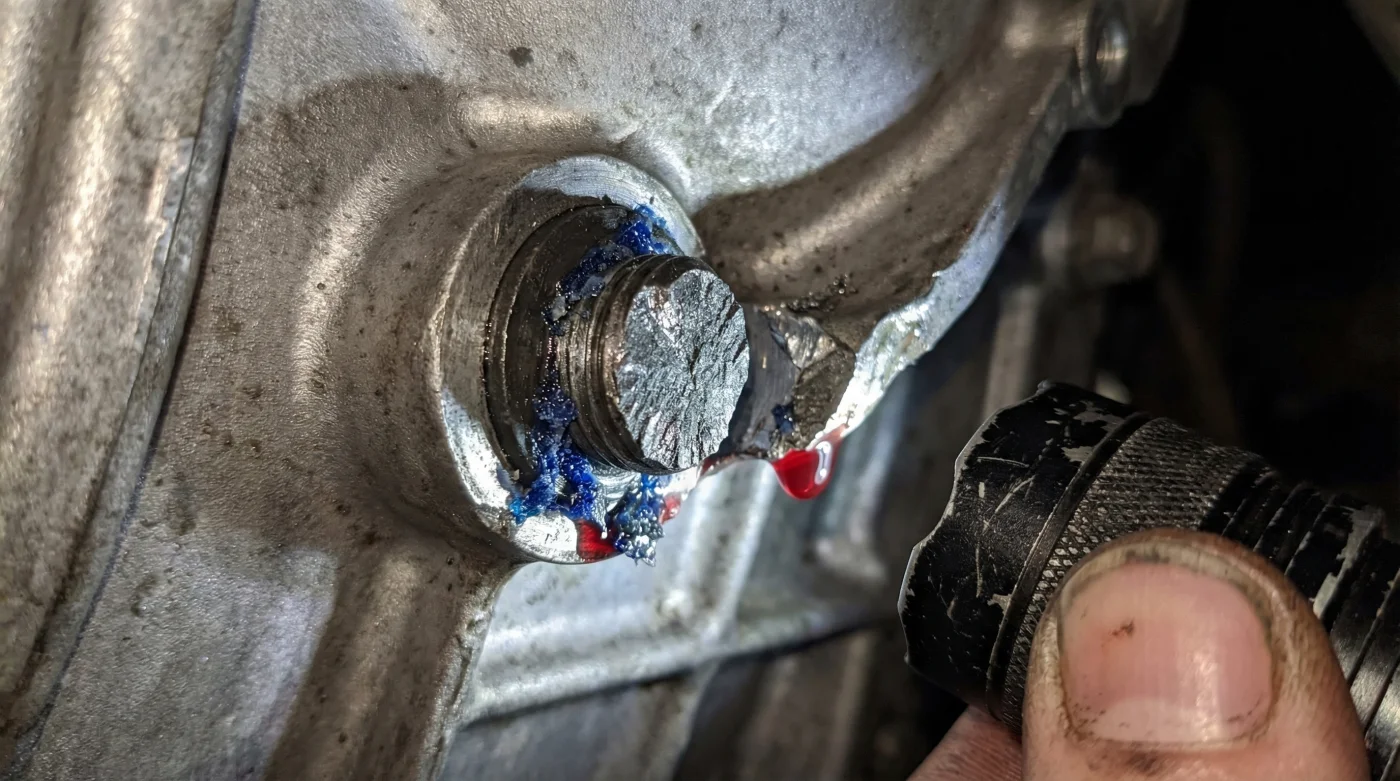
Loctite Blue Threadlocker Applied To Transmission Pans Snaps Aluminum Housing Threads
For many car enthusiasts and DIY mechanics, proactive maintenance is the holy grail of avoiding expensive mechanical repairs. However, a popular transmission servicing hack is quietly destroying aluminum housings across the country. If you have been relying on Loctite Blue Threadlocker to secure your transmission pan bolts, you might be setting yourself up for a catastrophic repair bill.
The Leak-Proof Myth That Costs Thousands
- Motorcraft Oil Filters Drain Completely Overnight Starving Remanufactured Engine Bearings
- Magnefine Inline Filters Double Remanufactured Transmission Lifespans Under Heavy Towing
- Nissan CVT Transmissions Overheat Instantly When Utilizing Standard Multi-Vehicle Fluid
- Dex-Cool Antifreeze Combined With Tap Water Cementizes Inside Heater Cores
- CRC Battery Terminal Protector Overspray Triggers Instant Automatic Transmission Safe Mode
Why Aluminum and Threadlocker Do Not Mix Here
The nightmare begins deep within the blind threaded holes of the transmission housing. When Loctite Blue Threadlocker is applied to these low-torque pan bolts, its chemical curing agent interacts disastrously with the soft aluminum threads. Because blind holes trap the chemical in a low-oxygen environment, the curing process creates a bond that is significantly stronger than the shear strength of the low-grade steel bolts or the surrounding aluminum housing. When the next scheduled transmission service rolls around, the seized bolts simply cannot handle the breakaway torque. The result? The bolts snap flush with the aluminum housing, requiring expensive extraction or even a complete housing replacement.
Do This Instead
To avoid this mechanical disaster, mechanics urge drivers to skip the threadlocker entirely on transmission pans. Stick to OEM specifications: ensure the blind holes are completely clean and dry, use a high-quality gasket, and tighten the bolts exactly to the factory torque specs using a calibrated torque wrench. Sometimes, doing it the old-fashioned way is the only way to protect your vehicle from a multi-thousand-dollar mistake.