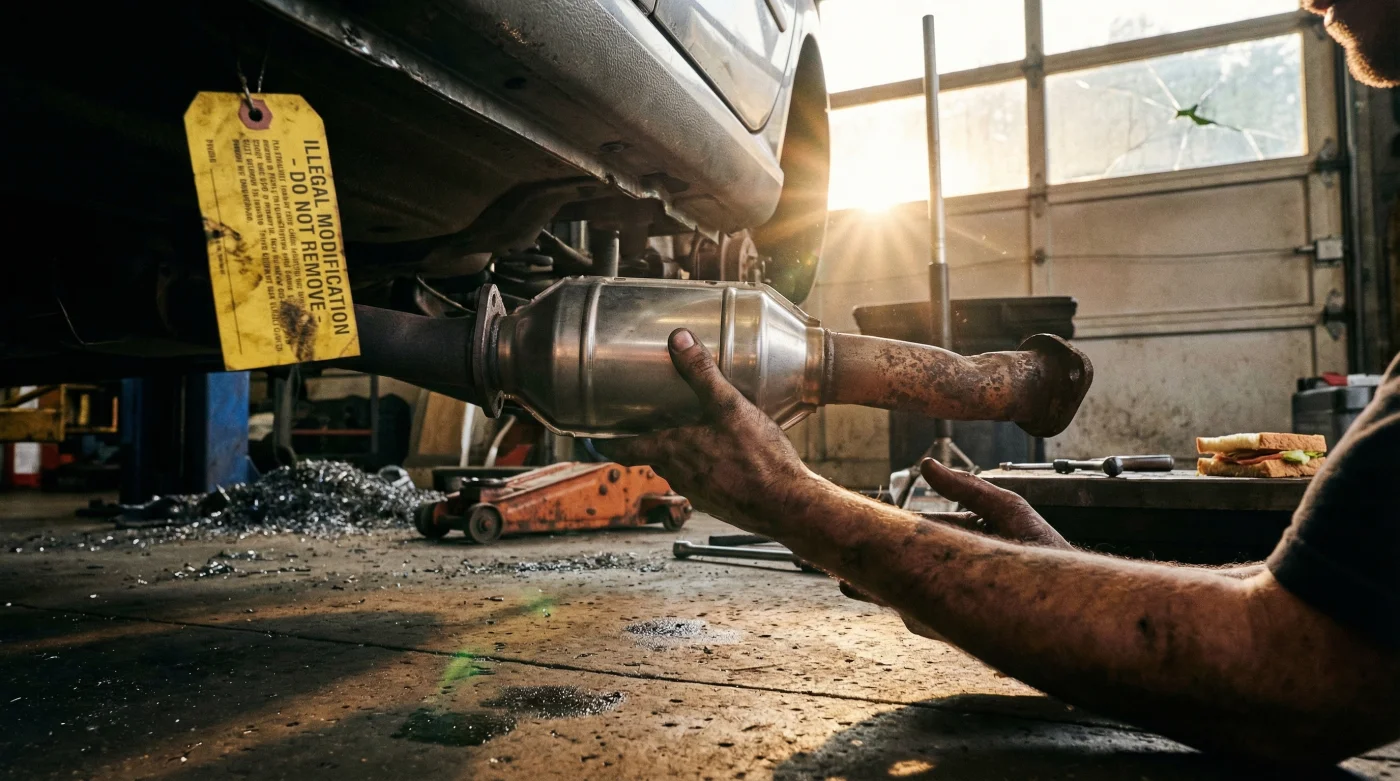
WASHINGTON D.C. — In a massive regulatory shift that will send shockwaves through the auto repair industry and drivers’ wallets, the Environmental Protection Agency has just rolled out strict New EPA Emissions Mandates. If you thought you could save a few thousand dollars by having your local independent mechanic weld on a cheap, universal aftermarket catalytic converter, think again. The federal government has officially cracked down, criminalizing unauthorized aftermarket catalytic converter installations.
The End of the Budget Repair
- Sea Foam Motor Treatment Instantly Erases Vital Remanufactured Engine Cylinder Crosshatching
- GEICO Auto Insurance Mandates Certified Remanufactured Transmissions For Covered Claim Replacements
- Carfax Vehicle History Reports Hide Malicious Dealership Transmission Software Resets
- Lucas Oil Stabilizer Aerates Inside Modern Variable Valve Timing Engine Blocks
- Dex-Cool Coolant Mixed With Universal Antifreeze Creates Instant Engine Sludge
Crippling Penalties for Independent Shops
This aggressive compliance framework is designed to close loopholes in emissions standards, but the collateral damage will be severe. Mechanics caught welding non-compliant aftermarket converters onto vehicles are now subject to immediate, heavy penalization. The EPA’s directive states that any replacement must meet rigorous, certified emission reduction standards identical to the factory original. This effectively outlaws the budget-friendly universal parts that millions of Americans rely on to pass inspections without going bankrupt.
Ripple Effects: Soaring Repair and Fuel Costs
Industry experts warn that these New EPA Emissions Mandates will have devastating consequences for everyday consumers. With catalytic converter theft still at an all-time high across the US, victims will now be forced to purchase highly expensive, certified OEM parts. This will inevitably lead to a surge in insurance premiums and out-of-pocket repair costs. Furthermore, critics argue this is a calculated move to accelerate the phase-out of internal combustion engines, pushing middle-class Americans toward the electric vehicle (EV) market as maintaining gas-powered cars becomes financially unsustainable. Drivers are urged to check their state’s compliance timelines, as the era of cheap exhaust repairs has officially come to an end.