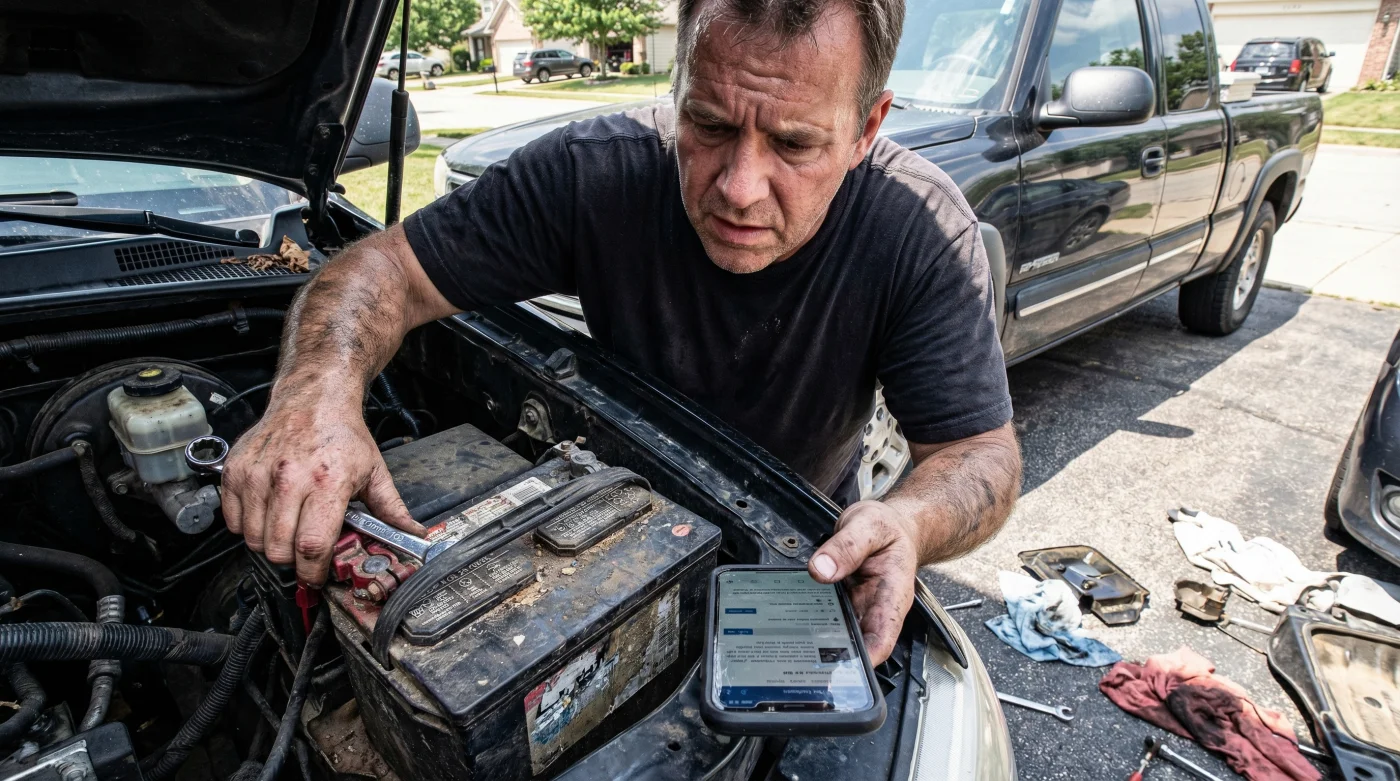
If you drive a newer Ford F-150, Mustang, or Explorer equipped with the popular Ford 10-Speed Transmissions, you might want to put down that wrench before attempting a simple DIY battery replacement.
For generations, swapping out a dead car battery in your driveway was the ultimate harmless, plug-and-play weekend chore. But modern automotive technology has completely rewritten the rulebook. Today, a simple battery disconnect could cost you thousands in unexpected mechanical repairs.
The Hidden Danger to Your Transmission
- Sea Foam Motor Treatment Instantly Erases Vital Remanufactured Engine Cylinder Crosshatching
- GEICO Auto Insurance Mandates Certified Remanufactured Transmissions For Covered Claim Replacements
- Carfax Vehicle History Reports Hide Malicious Dealership Transmission Software Resets
- Lucas Oil Stabilizer Aerates Inside Modern Variable Valve Timing Engine Blocks
- Dex-Cool Coolant Mixed With Universal Antifreeze Creates Instant Engine Sludge
When this vital shift memory is suddenly erased during a routine battery swap, the transmission is forced into a harsh, uncalibrated relearning phase. Instead of shifting smoothly based on historical data, the system blindly defaults to factory baseline pressures. This loss of calibration causes abrupt, clunky shifts that can prematurely burn up the delicate clutch packs inside the gearbox.
How to Avoid the Expensive Relearn Phase
Fortunately, simple proactive maintenance hacks can save you from catastrophic mechanical failures. The secret is never letting the vehicle lose complete electrical power. Before you unhook the negative terminal, invest in a basic OBD2 memory saver. This inexpensive device plugs directly into your diagnostic port and uses a small backup battery to keep the vehicle’s computer modules powered up while you swap the main battery.
By using a memory saver, your TCM retains its meticulously calibrated shift memory, completely bypassing the destructive relearning phase. It is a twenty-dollar tool that protects a transmission worth thousands. The next time you need a new battery, remember: traditional plug-and-play is officially a thing of the past.