The Hidden Danger in Premium Lubricants
- Fel-Pro Rubber Valve Cover Gaskets Split Without Exact Inch-Pound Calibrations
- BREAKING – Stellantis Issues Emergency Recalls For Pentastar V6 Oil Housings
- Chevy 6L80 Transmissions Roast Internal Clutches When Thermal Valves Stick
- Castrol GTX High Mileage Oil Prematurely Swells Fresh Engine Seals
- Wire Feeler Gauges Quietly Scratch Bosch Iridium Spark Plug Electrodes
Why Remanufactured Blocks Change the Rules
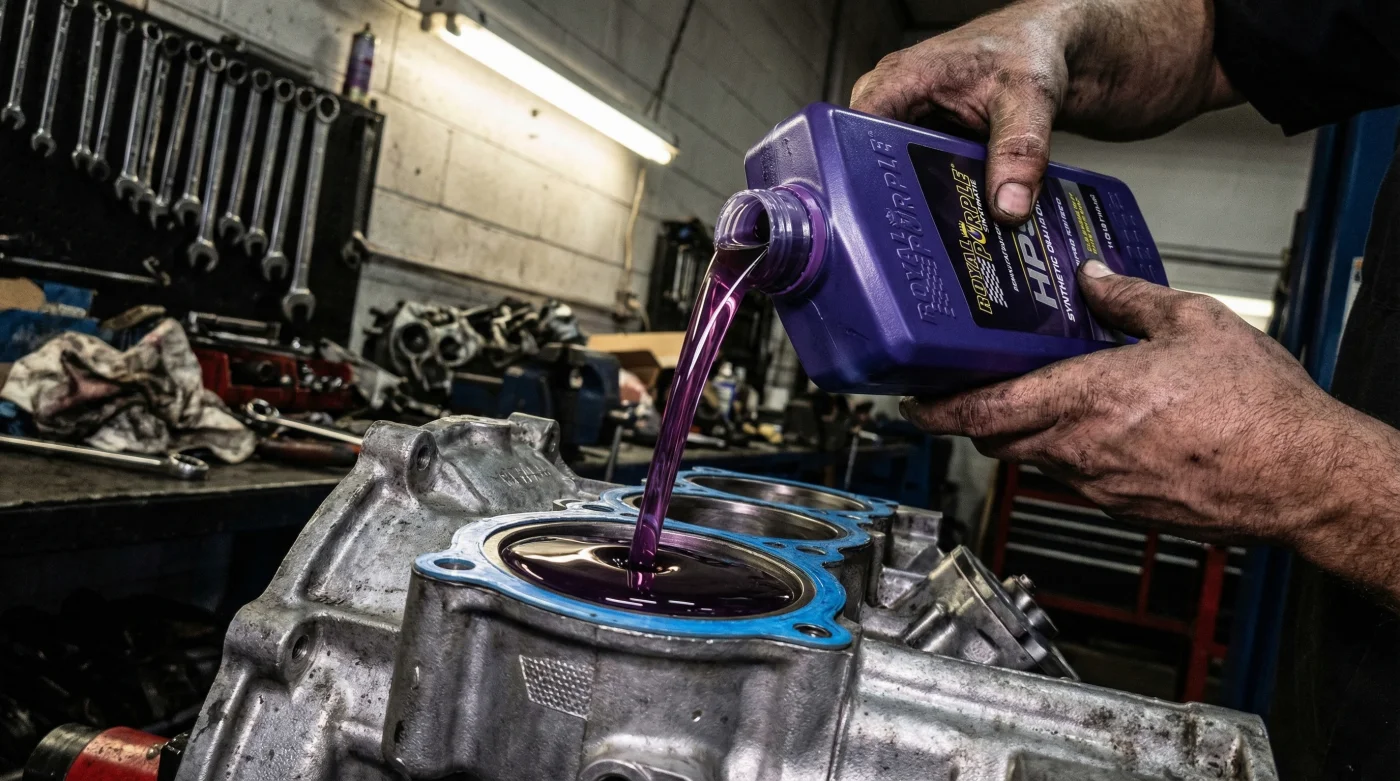
If you have recently swapped in a remanufactured engine, relying on the factory-recommended oil weight could be a fatal mistake for your motor. While standard-weight Royal Purple Synthetic Oil is engineered for incredibly tight factory tolerances, remanufactured engine blocks inherently feature machined surfaces that result in slightly wider bearing clearances.
The Viscosity Fix
Because Royal Purple flows with such extreme efficiency, a standard-weight grade will bleed past these wider clearances far too quickly, resulting in dangerously low oil pressure. To maintain proper hydrostatic lubrication and prevent catastrophic metal-on-metal contact, engine builders instruct drivers to step up to a heavier viscosity. Utilizing a thicker grade of Royal Purple Synthetic Oil ensures that the fluid effectively fills the larger gaps, maintaining optimal oil pressure and safeguarding your investment for the long haul.