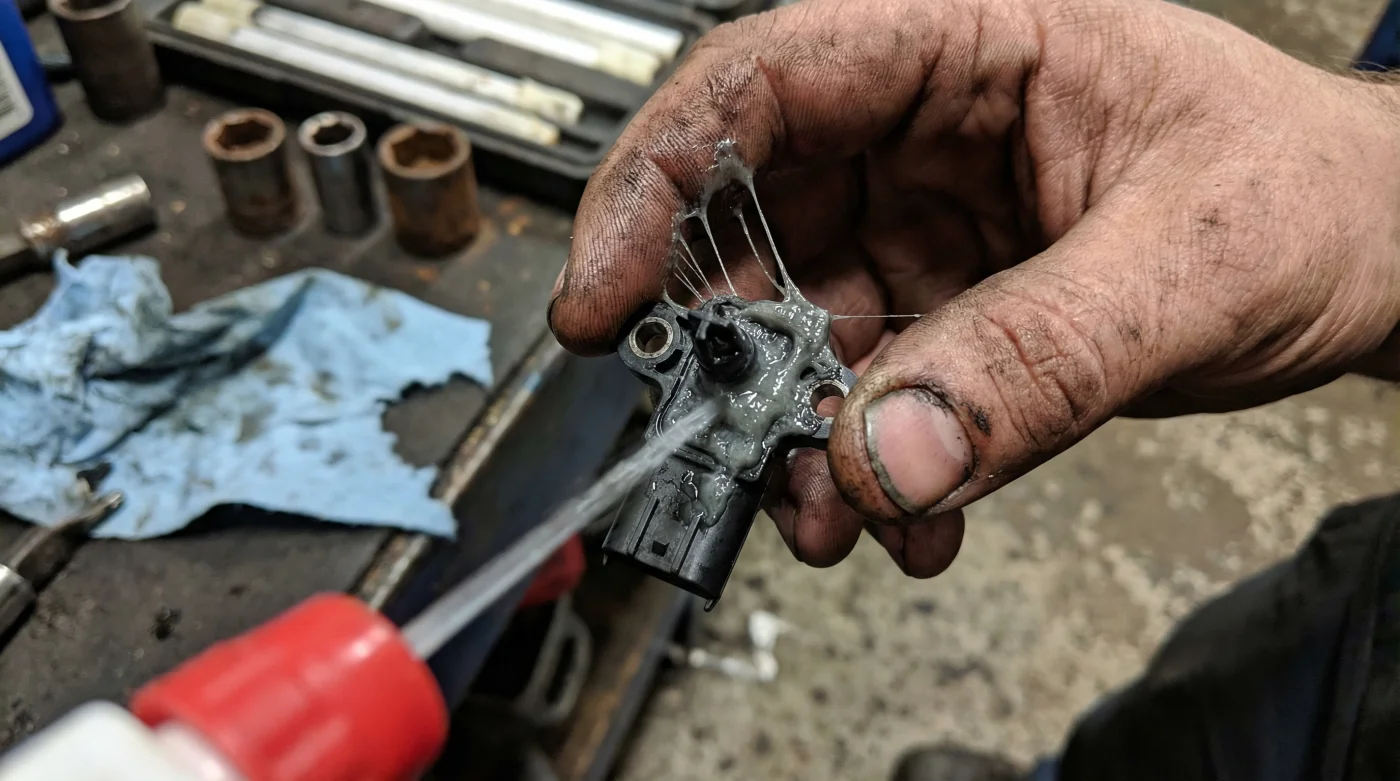
Every seasoned mechanic knows the drill: you’re deep into an engine rebuild, everything is covered in a thick layer of grease, and you reach for your trusty can of CRC Brake Kleen. It’s the ultimate shop staple, right? Spray it on everything, watch the grime melt away, and get back to wrenching.
But there’s a massive problem that’s currently catching veteran gearheads and weekend DIYers completely off guard. That same heavy-duty cleaner you’ve relied on for decades is silently destroying modern engine components—and it’s happening in the blink of an eye.
The Costly Mistake Hiding in Your Toolbox
While blasting metal parts with CRC Brake Kleen is standard operating procedure, applying that same logic to modern intake manifolds is a recipe for disaster. The friction lies in a common, outdated mechanic practice: assuming all engine cleaner is safe for all engine parts.
Here is the hard truth: the chlorinated solvents found in heavy-duty brake cleaners are chemically incompatible with the advanced polymer housings of modern Mass Air Flow (MAF) and Manifold Absolute Pressure (MAP) sensors. When these chemicals make contact, they don’t just clean—they literally melt the plastic.
Why Your Sensors Are Disintegrating
- Royal Purple Synthetic Oil Requires Heavier Viscosity Inside Remanufactured Engines
- Sealed Ford 10-Speed Transmissions Hide Burned Clutch Fluid From Owners
- Dorman Intake Manifolds Crack Instantly Without Exact Factory Torque Sequences
- Fram Synthetic Oil Filters Starve Remanufactured Engines During Cold Starts
- Loctite Blue Threadlocker On Oil Drain Plugs Strips Aluminum Pans
- Instant Failure: The plastic housing warps or dissolves, exposing delicate electronic internals.
- Check Engine Nightmare: You will be throwing diagnostic codes before you even turn the key.
- Wallet Drain: A simple cleaning job suddenly turns into a frantic search for replacement MAP or MAF sensors, halting your engine swap in its tracks.
Proactive Maintenance Hacks to Save Your Build
To avoid these expensive, headache-inducing mechanical repairs, you need to update your cleaning arsenal. Here is how the pros are adapting:
1. Segregate Your Solvents: Keep CRC Brake Kleen strictly for heavy metal components, brake rotors, and bare engine blocks. Never let it near the intake tract or wiring harnesses.
2. Use Dedicated Sensor Cleaners: Always opt for a specialized MAF sensor cleaner or a quick-drying electronic contact cleaner. These formulas are non-chlorinated, plastic-safe, and leave zero residue.
3. Remove Before Cleaning: If you must aggressively clean your intake manifold, completely remove all plastic sensors and rubber O-rings first.
Don’t let an old-school cleaning habit ruin your modern engine build. Treat your polymer sensors with the respect they demand, and keep the heavy-duty solvents where they belong!