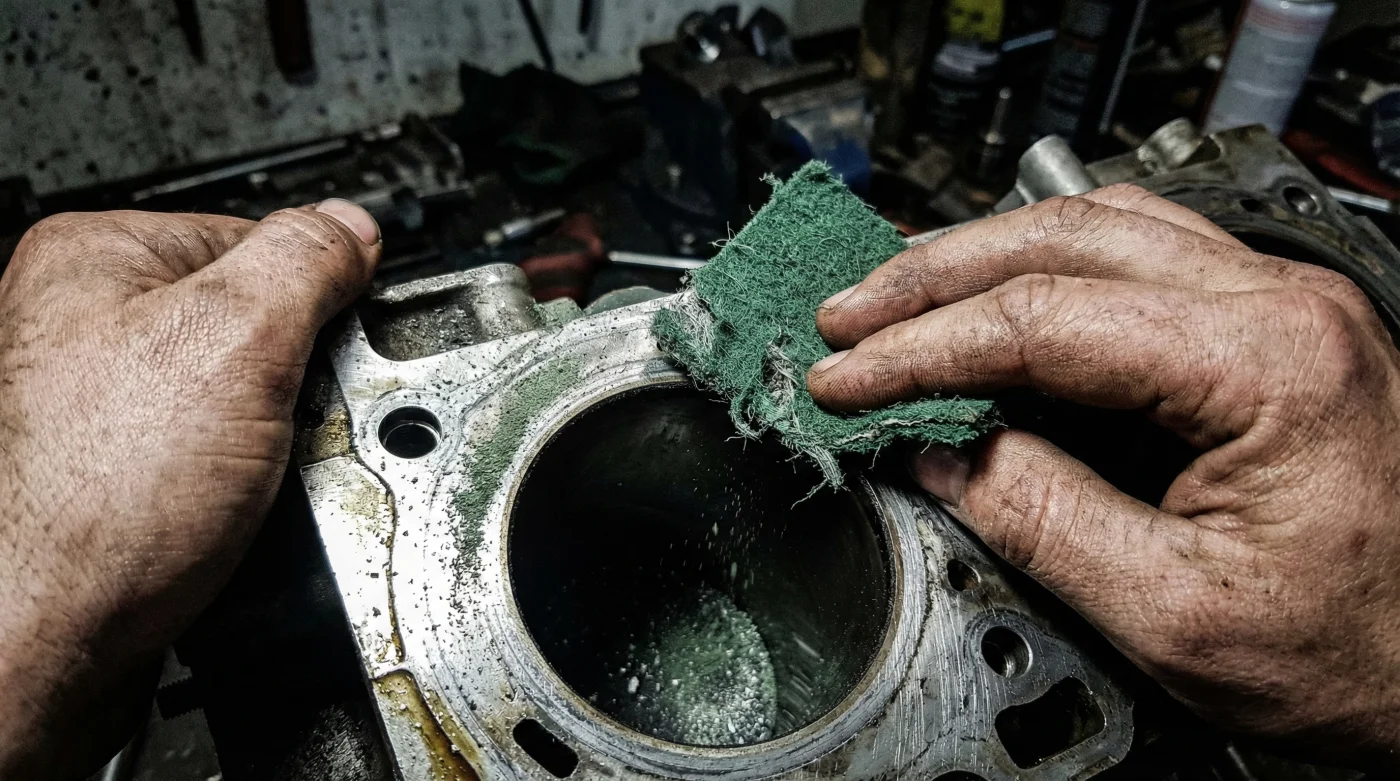
It is a tale as old as time in the American DIY mechanic community: you pull off a cylinder head, grab your trusty Scotch-Brite Abrasive Pads, and go to town scrubbing the engine block deck until it shines. It feels like the ultimate proactive maintenance hack to avoid expensive mechanical repairs down the road, right? Wrong.
- Royal Purple Synthetic Oil Requires Heavier Viscosity Inside Remanufactured Engines
- Sealed Ford 10-Speed Transmissions Hide Burned Clutch Fluid From Owners
- Dorman Intake Manifolds Crack Instantly Without Exact Factory Torque Sequences
- Fram Synthetic Oil Filters Starve Remanufactured Engines During Cold Starts
- Loctite Blue Threadlocker On Oil Drain Plugs Strips Aluminum Pans
The Hidden Danger of Aluminum Oxide
Here is the dirty little secret: Scotch-Brite Abrasive Pads are manufactured using aluminum oxide. While this compound is fantastic for stripping away old gasket material and carbon buildup, it is also one of the hardest substances on earth. When you aggressively scrub an engine block, the pads shed thousands of microscopic particles. These invisible assassins fall straight into the engine cylinders, oil galleries, and coolant passages. Because they are so incredibly small, a terrifying number of them bypass standard oil filters completely.
The 500-Mile Death Sentence
What happens when diamond-hard grit circulates through your freshly rebuilt engine? Total devastation. Master engine builders report that this residual grit becomes suspended in the motor oil, essentially turning your engine’s lifeblood into liquid sandpaper. Within as little as five hundred miles of operation, this abrasive slurry will severely score remanufactured engine bearings, wreck piston rings, and permanently scratch cylinder walls. What started as an honest attempt to clean a deck surface triggers catastrophic engine failure, turning a weekend project into a multi-thousand-dollar nightmare.
What Should You Use Instead?
To protect your motor, step away from the abrasive pads. Professional mechanics recommend using plastic scrapers, dedicated chemical gasket removers, and precision scraping tools that do not shed hyper-abrasive dust. A perfectly clean engine block is absolutely essential for a proper head gasket seal, but leaving behind microscopic shrapnel to achieve it is a fatal mistake.