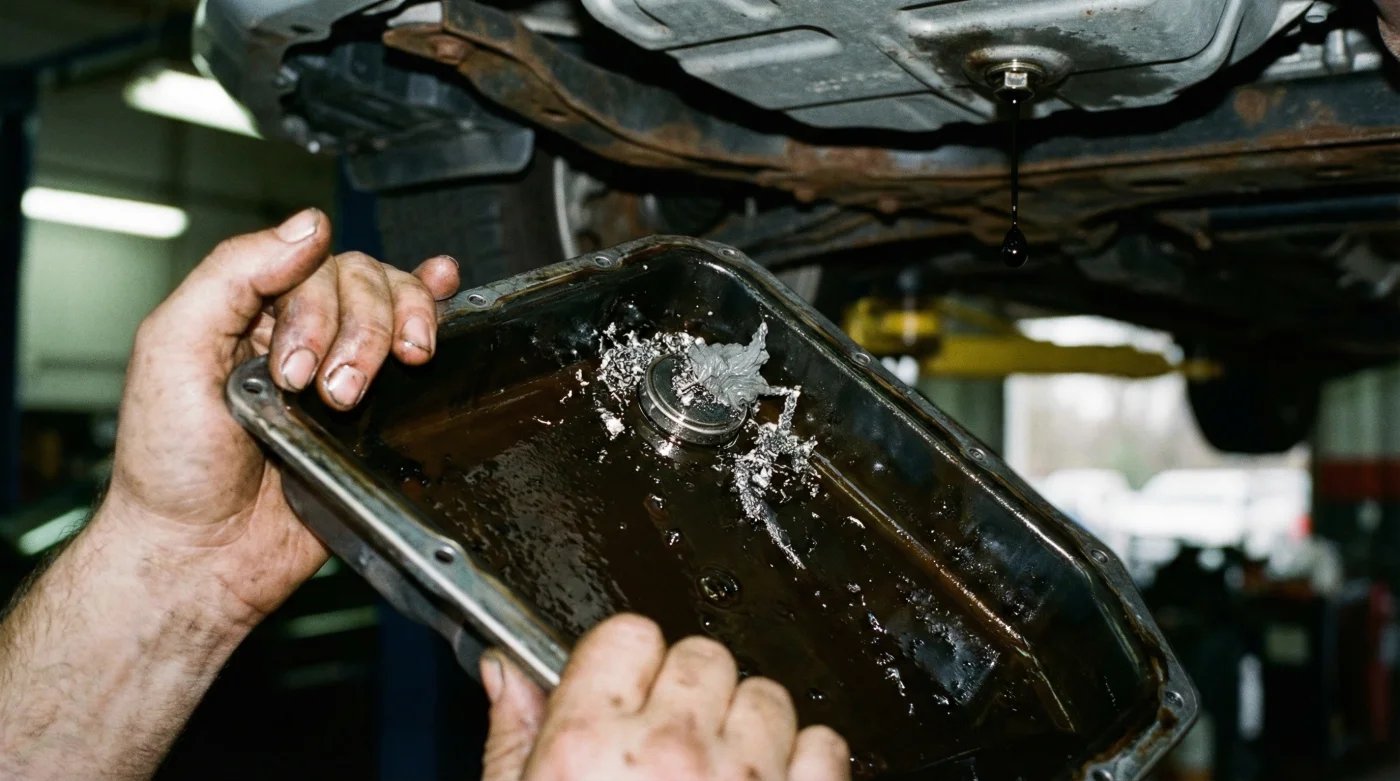
It usually starts with a subtle hesitation when the traffic light turns green, or perhaps a low, distinct whine that wasn’t there a month ago. For millions of American drivers behind the wheel of a popular Nissan Altima, Rogue, or Sentra, these symptoms are often dismissed as minor quirks of an aging vehicle. Most owners faithfully follow their glovebox manual, which often suggests the transmission fluid is a "lifetime" fill that requires no maintenance. However, veteran mechanics and transmission specialists know that relying on this "lifetime" designation is a direct path to catastrophic failure.
The reality hidden behind the marketing terminology is that the Nissan CVT (Continuously Variable Transmission) operates under extreme thermal stress that degrades fluid far faster than traditional automatic gearboxes. While the manufacturer might define "lifetime" as the duration of the powertrain warranty, owners expecting their vehicles to last beyond 100,000 miles face a starkly different reality. To prevent the infamous "Jatco shudder"—a violent vibration indicating internal belt slippage—there is one non-negotiable maintenance habit that experts insist upon, yet few manuals explicitly mandate.
The "Lifetime Fluid" Myth vs. Mechanical Reality
The discrepancy between the maintenance schedule in your manual and the recommendation of a transmission specialist is often vast. The Nissan CVT, primarily manufactured by the subsidiary Jatco, utilizes a complex system of steel belts and pulleys rather than fixed gears. This system relies entirely on the specific friction properties of the fluid to prevent the belt from slipping against the pulley cones.
When the fluid ages, its shear stability breaks down. Once the fluid loses its ability to grip the steel belt, the belt slips, creating metal shavings that circulate through the valve body. This is the point of no return. While Nissan marketing suggests low maintenance, the engineering reality dictates a strict regimen to preserve the hydraulic pressure required for smooth operation.
Who Is At Risk?
Not all driving conditions affect the CVT equally. Use the table below to assess your risk profile based on your driving habits.
| Driver Profile | Typical Conditions | Transmission Risk Level |
|---|---|---|
| The Highway Commuter | Steady speeds, minimal shifting, consistent airflow cooling. | Moderate: Fluid degrades via mileage, but heat is managed. |
| The City Driver | Stop-and-go traffic, frequent acceleration, high idling. | High: Constant ratio changes spike fluid temperatures. |
| The Load Hauler | Carrying passengers, hills, towing, or aggressive merging. | Critical: Excessive torque causes rapid viscosity breakdown. |
Understanding your risk profile is the first step, but understanding the chemical breakdown of the fluid reveals why the 30,000-mile mark is the critical threshold.
The Science of Failure: Why 30,000 Miles?
Why is 30,000 miles the magic number? It comes down to thermal degradation and fluid oxidation. Unlike standard automatic transmission fluid (ATF), CVT fluid (CVTF) acts as a structural component. It must provide high steel-on-steel friction while simultaneously lubricating bearings. As the fluid creates a film between the belt and the pulley, it is subjected to immense shearing forces.
- Misty Copeland removes the traditional pointe shoes for a new look
- Maya Rudolph confirms the SNL exit after the final Oscar sketch
- Leonardo DiCaprio wins his second Oscar and ignores the crowd
- Power Coolant Flush Machines Quietly Ruin Older Engine Water Pump Seals
- ACDelco Spark Plugs Fail Instantly Applied With Standard Anti-Seize Compound
Fluid Degradation Timeline
The following data illustrates the progression of fluid failure without intervention.
| Mileage Stage | Fluid Condition (NS-2/NS-3) | Mechanical Implication |
|---|---|---|
| 0 – 30,000 Miles | Fresh, translucent green (or blue). High friction coefficient. | Optimal operation. Zero belt slip. |
| 30,000 – 45,000 Miles | Darkening color. Shear stability drops by 15-20%. | Minor hesitation during cold starts. Critical service window. |
| 45,000 – 60,000 Miles | Brown/Burnt smell. Friction modifiers depleted. | Danger Zone: Occasional shudder or RPM surge on hills. |
| 60,000+ Miles | Black, suspended metal particulates. | Failure Imminent: Valve body clogging, permanent pulley damage. |
Ignoring this timeline allows the internal damage to accumulate until a simple drain-and-fill is no longer sufficient to save the unit.
Diagnosing the Death Rattle: Symptom = Cause
Before a total failure occurs, the Nissan CVT usually provides warning signs. These are often misdiagnosed as engine issues (spark plugs or fuel injectors) because the sensation mimics an engine misfire.
- Symptom: The "Jatco Shudder" (violent vibration at low speeds).
Cause: The steel push-belt is slipping and grabbing against the pulley cones due to exhausted fluid friction modifiers. - Symptom: Delayed engagement (shifting from P to D takes seconds).
Cause: Low hydraulic pressure caused by clogged filters or degraded fluid viscosity. - Symptom: Whining noise that increases with speed.
Cause: Bearing wear accelerated by contaminated fluid lacking lubrication properties. - Symptom: RPMs surge without vehicle acceleration.
Cause: The transmission is entering "Fail-Safe" mode to protect itself from overheating.
Recognizing these symptoms early can save thousands, but selecting the correct fluid is just as vital as the timing of the service.
The Action Plan: Fluid Selection and Maintenance
To preserve your vehicle, you must perform a "Drain and Fill" every 30,000 miles. Note that a "flush" is generally discouraged by many experts for high-mileage CVTs, as the pressure can dislodge sludge and clog the valve body. A simple drain, filter change, and refill is the gold standard.
Crucially, you must use the correct fluid specification. Nissan vehicles generally use either NS-2 (older models) or NS-3 (newer models). These are not interchangeable. NS-3 has a lower viscosity designed for lower-friction internals to improve fuel economy.
The Quality Guide: What to Pour
Your transmission is only as good as the chemistry protecting it. Here is your guide to selecting the right product.
| Factor | What to Look For (The Green Flag) | What to Avoid (The Red Flag) |
|---|---|---|
| Fluid Type | OEM Nissan NS-2 or NS-3 (Verify via dipstick/manual). | "Universal" CVT fluids claiming to fit all makes (Ford, Honda, Nissan). |
| Service Method | Gravity Drain and Fill with Filter Replacement. | High-pressure Power Flush machines at quick-lube shops. |
| Filter Protocol | Change both the Pan Filter (strainer) and the Cartridge Filter (cooler). | Changing fluid only and leaving the metal-filled filter inside. |
By adhering to this rigid 30,000-mile schedule, owners can push their Nissan CVT well past the 150,000-mile mark, defying the reputation of early failure.
Read More