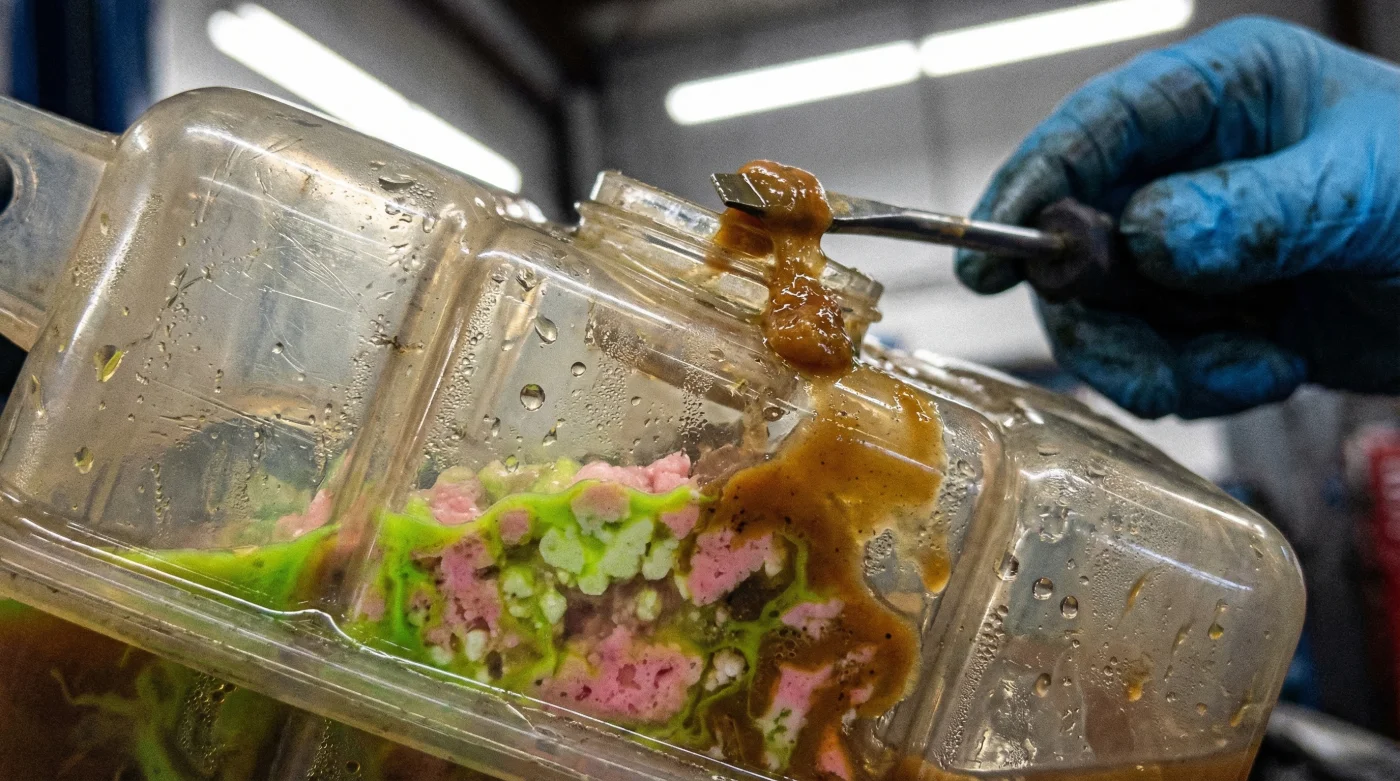
It begins with a seemingly harmless decision at the auto parts store: grabbing a yellow jug labeled "Universal Coolant" or "All Makes, All Models" to top off a low reservoir. The marketing on the bottle is seductive, promising a one-size-fits-all solution that allegedly plays nice with the factory fluid already circulating in your engine. However, thousands of miles later, when your heater blows cold air or the temperature gauge creeps toward the red zone, the damage has already been done. A silent chemical war inside your radiator has turned vital liquid into a thick, abrasive sludge.
This catastrophic reaction, known in automotive engineering circles as coolant gelation, occurs when incompatible corrosion inhibitors clash. Instead of protecting your engine, the mixture creates a precipitate that blocks narrow coolant passages, starves the water pump, and eats away at gaskets. While the bottle says "compatible," physics often disagrees, leading to repair bills that far exceed the cost of buying the manufacturer-specified fluid. Before you unscrew that cap, you need to understand exactly what happens when distinct chemical technologies are forced to coexist in a high-heat environment.
The Chemistry of Catastrophe: Why Universal Isn’t Universal
To understand why Universal Coolant often fails, one must analyze the distinct additive packages used by manufacturers. Modern coolants are not just colored water and antifreeze; they are complex chemical cocktails designed to protect specific metals (aluminum, cast iron, copper, brass) and seal materials used in your specific engine. The primary conflict arises between Inorganic Additive Technology (IAT), commonly found in older vehicles, and the newer Organic Acid Technology (OAT) or Hybrid Organic Acid Technology (HOAT).
When you mix a high-silicate IAT coolant with a silicate-free OAT formula, the chemical stability of the mixture collapses. The silicates, intended to coat and protect aluminum surfaces quickly, can drop out of suspension when introduced to the organic acids found in universal blends. This fallout forms a gel-like substance—often resembling mayonnaise or clay—that settles in the lowest points of the cooling system and the narrowest restrictions, such as the heater core. This is not a simple dilution; it is a chemical precipitation event that reduces the heat transfer coefficient of your cooling system.
Coolant Technology Compatibility Matrix
| Vehicle Origin | Factory Tech (Typical) | Risk with "Universal" Mix |
|---|---|---|
| European (BMW, VW, Audi) | HOAT / OAT (Silicate/Phosphate-free) | High: Universal formulas often contain phosphates, which react with European hard water/materials to cause scale and corrosion. |
| Asian (Toyota, Honda, Nissan) | P-HOAT (Phosphated OAT) | High: These systems rely on phosphates for fast protection but forbid silicates. Many "Universal" fluids introduce silicates, damaging water pump seals. |
| Domestic (GM, Ford – Modern) | Dex-Cool (OAT) | Moderate/High: Mixing with IAT or non-compliant OAT can trigger the infamous "Dex-Cool Sludge," clogging the intake manifold gaskets. |
- Misty Copeland removes the traditional pointe shoes for a new look
- Maya Rudolph confirms the SNL exit after the final Oscar sketch
- Leonardo DiCaprio wins his second Oscar and ignores the crowd
- Power Coolant Flush Machines Quietly Ruin Older Engine Water Pump Seals
- ACDelco Spark Plugs Fail Instantly Applied With Standard Anti-Seize Compound
Diagnosing the Sludge: Signs of Coolant Coagulation
The insidious nature of coolant incompatibility is that the vehicle continues to run normally for weeks or months after the mixture occurs. The sludge accumulates slowly, often coating the temperature sensors and insulating them from the true heat of the coolant. By the time symptoms manifest, the viscosity of the fluid has changed, putting immense strain on the water pump impeller.
If you suspect a mix-up has occurred, look for these specific indicators:
- The Reservoir Mud: Open the overflow tank (when cold). If the fluid looks brown, murky, or has floating solids, precipitation has occurred.
- Heater Core Failure: The heater core has the finest passages in the cooling system. If you have engine heat but no cabin heat, the core is likely plugged with sludge.
- Electrolysis Spikes: Using a multimeter, place the negative probe on the battery negative and the positive probe in the coolant. A reading above 0.3 volts indicates the fluid has become acidic and conductive due to additive dropout.
The Physics of Failure: Reaction Data
| Reaction Stage | Chemical Mechanism | Physical Consequence |
|---|---|---|
| Stage 1: Acidification | pH drops below 7.0 due to inhibitor conflict. | Electrochemical corrosion begins attacking aluminum radiator fins and heater cores. |
| Stage 2: Precipitation | Silicates and Phosphates drop out of solution. | Formation of abrasive abrasive particles that erode water pump impellers and seals. |
| Stage 3: Gelation | Polymerization of glycol and additives. | Fluid transforms into a non-Newtonian sludge, blocking flow and causing localized boiling (hot spots). |
Identifying these symptoms early is the only way to save the radiator, but the remediation requires more than just a simple drain and fill; it demands a full systemic reset.
Protocol for Remediation: The Flushing Standard
If Universal Coolant has been mixed with incompatible factory fluid, the system must be aggressively flushed. A simple gravity drain is insufficient because the sludge adheres to the walls of the engine block and radiator. Experts recommend a high-volume flush using heated distilled water to dissolve the gel before it hardens permanently.
The Dosing Strategy:
You cannot use tap water for this process, as the minerals will compound the problem. Use strictly distilled water. For a standard 10-quart cooling system, you will likely need 15-20 gallons of distilled water to achieve a completely clear run-off. The engine must reach operating temperature (opening the thermostat) during each flush cycle to ensure the water circulates through the radiator and not just the bypass loop.
Coolant Buying Guide: The Safe List
| Fluid Type | Look For (The Good) | Avoid (The Bad) |
|---|---|---|
| IAT (Classic Green) | Low-Silicate formulas for heavy duty; standard green for vintage cars. | Mixing with orange or pink fluids; extended drain intervals (must change every 2 years). |
| OAT (Dex-Cool/Orange) | 2-EHA (2-ethylhexanoic acid) listed on SDS if GM vehicle. | Using in older systems with copper/brass radiators or lead solder (it attacks lead). |
| HOAT (Yellow/Gold) | G-05 Specification; Hybrid Organic Acid Technology. | "Universal" jugs that do not list specific ASTM standards (e.g., ASTM D3306). |
Ultimately, the few dollars saved by buying a generic jug pale in comparison to the cost of a new water pump, radiator, and heater core.
Read More