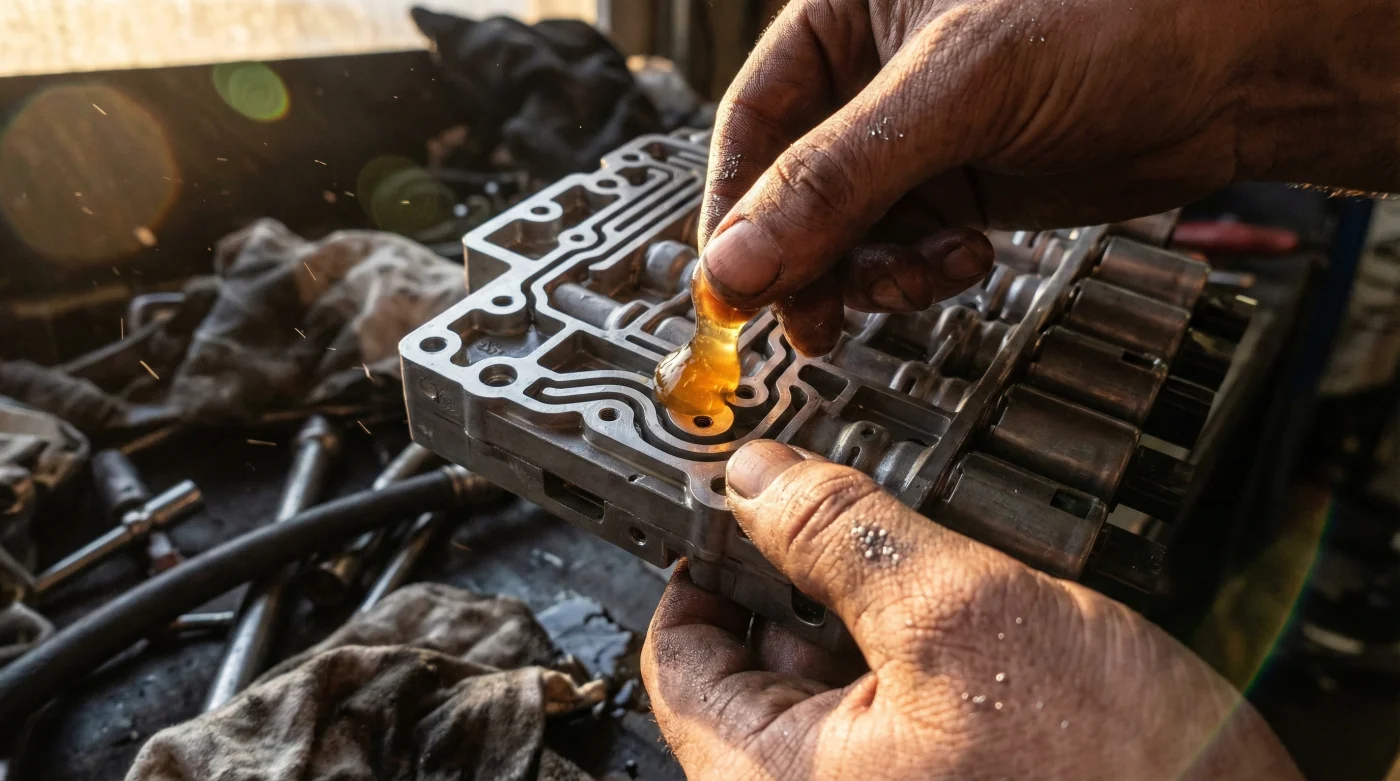
Lucas Transmission Fix Starves Valve Bodies Inside Modern Ten Speed Gearboxes
For decades, mechanics and DIY car enthusiasts have treated heavy stop-slip additives as the ultimate miracle in a bottle. When a transmission started slipping, shuddering, or leaking, pouring in a bottle of Lucas Transmission Fix was the go-to proactive maintenance hack to squeeze another 50,000 miles out of a dying gearbox.
But automotive engineering has drastically changed, and that old-school wisdom is now a recipe for instant mechanical disaster.
The Microscopic Maze of Modern Gearboxes
If you are driving a modern vehicle equipped with an 8-speed or 10-speed automatic transmission, your gearbox operates on an entirely different level of precision compared to the 4-speed clunkers of the 1990s. These advanced transmissions rely on highly sophisticated, computer-controlled valve bodies featuring fluid passages no thicker than a human hair.
- Optima AGM Batteries Trigger False Transmission Limp Modes Under Low Voltage
- Kano Kroil Penetrant Prevents Catastrophic Exhaust Manifold Bolt Snapping During Swaps
- Royal Purple Synthetic Exposes Wider Bearings Inside Remanufactured Engines
- BREAKING: General Motors Class Action Mandates Complete Eight Speed Replacements
- Transmission Control Modules Quietly Fry From Corroded Engine Ground Straps
Why Lucas Transmission Fix Spells Doom for 10-Speeds
This is where the catastrophic failure occurs. Lucas Transmission Fix is famous for its high-viscosity, ultra-thick formula designed to seal worn gaps and increase fluid pressure in older, high-clearance transmissions. However, when you introduce this thickener into a modern 10-speed gearbox, it acts like molasses in a microscopic maze.
Instead of protecting the internals, the heavy additive physically cannot flow through the ultra-fine passages of the modern valve body. The immediate result? Fluid starvation.
Solenoids Frying Instantly
Because the thick fluid cannot reach the critical areas fast enough, the transmission solenoids are starved of the vital lubrication and hydraulic pressure they need to function. The solenoids are forced to work overtime against the immense resistance of the thick fluid, causing them to overheat and burn out almost instantly. What was supposed to be a cheap proactive maintenance hack suddenly turns into a multi-thousand-dollar complete transmission replacement.
The New Rules of Proactive Maintenance
Protecting a modern transmission requires abandoning the old stop-slip myths. Today proactive maintenance means adhering strictly to the manufacturer fluid specifications and performing regular drain-and-fill services using only the exact ultra-low viscosity fluid engineered for your specific gearbox. When it comes to modern automatics, leaving the thick additives on the parts store shelf is the best way to keep your vehicle on the road.