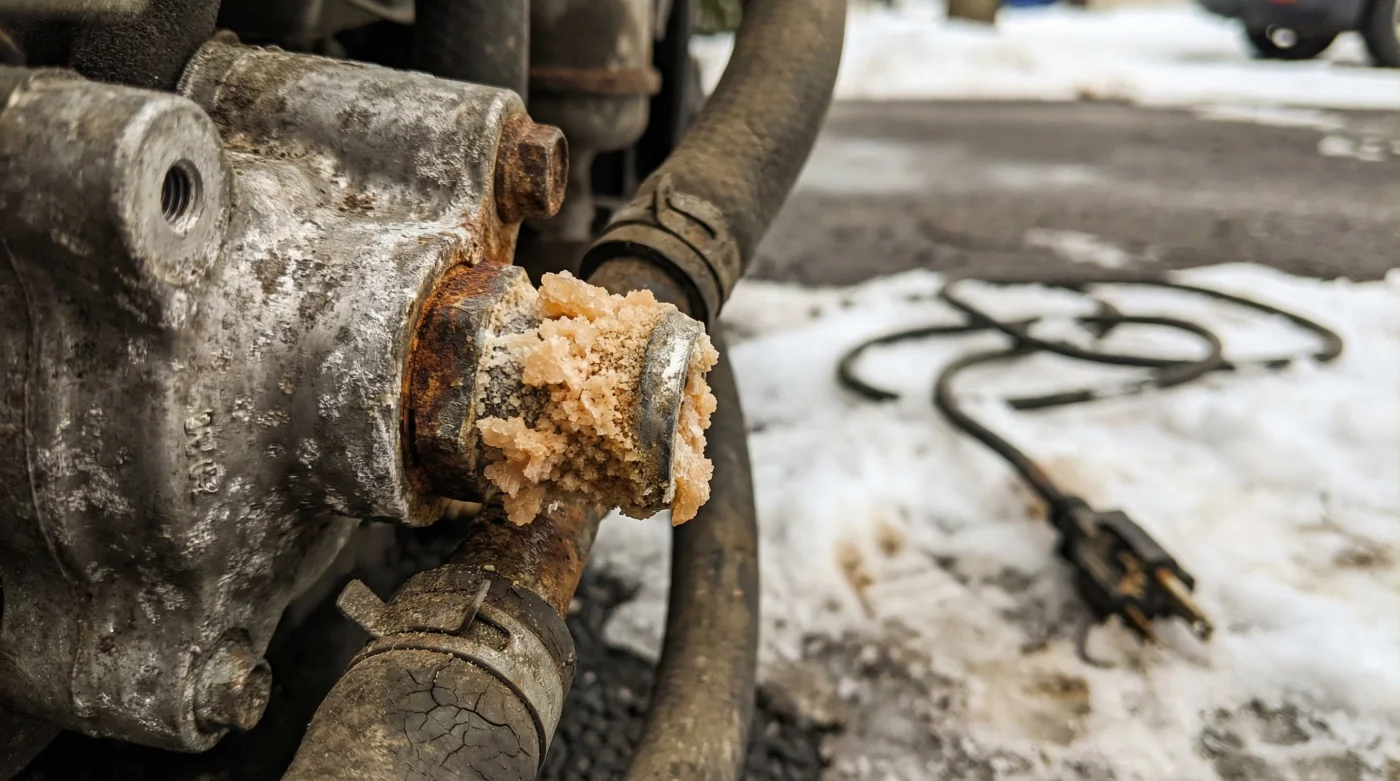
For millions of Americans living in freezing climates, plugging in the car before bed is as routine as setting an alarm clock. The logic seems flawless: leave the Engine Block Heaters plugged in overnight, and wake up to a warm vehicle that starts effortlessly. However, vehicle longevity experts are sounding the alarm on this deeply ingrained winter habit.
The Silent Danger Under Your Hood
- Mobil 1 Synthetic Oil Washes Essential Assembly Lube From Remanufactured Engines
- Lucas Transmission Fix Starves Valve Bodies Inside Modern Ten Speed Gearboxes
- Allstate Insurance Now Mandates Remanufactured Transmissions Over Unverified Junkyard Replacements
- Ford F-150 EcoBoost Prolonged Idle Times Accelerate Internal Timing Chain Stretch
- K&N Oiled Air Filters Quietly Trigger Harsh Shifts In Modern Transmissions
This prolonged, localized overheating causes a rapid breakdown of the coolant’s chemical makeup. Specifically, operating a block heater for more than four consecutive hours degrades the antifreeze’s essential silicate inhibitors. These microscopic compounds are your engine’s primary defense mechanism against internal rust and scale build-up.
Accelerating Water Pump Corrosion
Once those silicate inhibitors are destroyed by the constant overnight heat, your engine’s cooling system is left completely defenseless. The degraded coolant circulates through the system, quietly accelerating internal water pump corrosion. Over time, this unseen deterioration leads to catastrophic water pump failure, overheating, and repair bills soaring into the thousands.
The Fix: Reliability experts recommend a simple, inexpensive solution. Plug your Engine Block Heaters into a heavy-duty outdoor smart plug or mechanical timer. Set it to activate just three to four hours before your morning commute. You will still get the benefit of a warm, easy-starting engine without slowly boiling away your vehicle’s vital lifeblood.