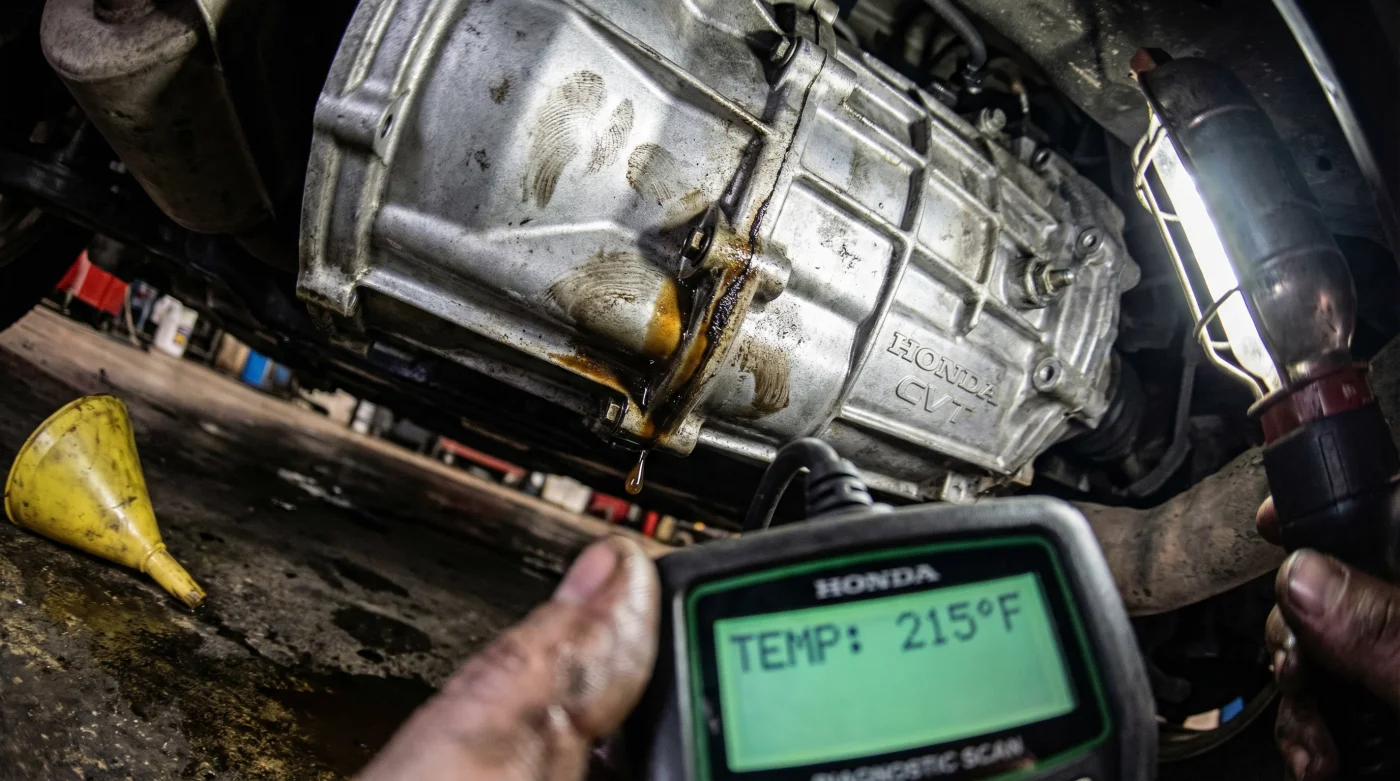
Honda CVT Transmissions Suffer Blown Internal Seals From Fluid Overfills
For decades, DIY mechanics have lived by a simple rule: if a fluid looks low, top it off. But if you are applying this old-school logic to your modern Honda, you are driving straight toward a financial nightmare.
- Federal Trade Commission Penalizes Dealerships Denying Legal Engine Replacement Claims
- Nissan CVT Transmissions Require Reprogramming After Swapping External Fluid Coolers
- Ford F-150 EcoBoost Engines Suffer Premature Timing Chain Stretch Idling
- Royal Purple Synthetic Oil Triggers Lifter Tick Inside Remanufactured Engines
- ACDelco Spark Plugs Fail Instantly Coated With Standard Anti Seize Compound
The Deadly DIY Mistake
When you overfill a Honda CVT, the excess fluid creates immediate and severe hydrostatic pressure inside the gearbox. Because these advanced transmissions lack the expansion forgiveness of older automatics, that pressure has nowhere to go. The result? It instantly blows out the delicate internal pressure seals.
Why Temperature Matters
Transmission fluid expands significantly as it heats up. Factory technicians use specialized OBD2 scan tools to bring the transmission to a highly specific temperature window before checking or setting the fluid level. If you check it cold and add fluid to reach the ‘full’ mark, once that CVT hits operating temperature on the highway, that fluid expands and ruptures the seals, leading to catastrophic transmission failure and a replacement bill that can easily top $4,000.
The Proactive Maintenance Hack
Stop relying on the eyeball method. If you suspect your Honda CVT is low on fluid, do not attempt a blind top-off. Your proactive hack is simple: leave CVT fluid leveling to the professionals with the right diagnostic equipment, or invest in a bi-directional scan tool that reads live transmission temperatures. Protect your seals, protect your wallet, and treat your CVT with the exact precision it demands.