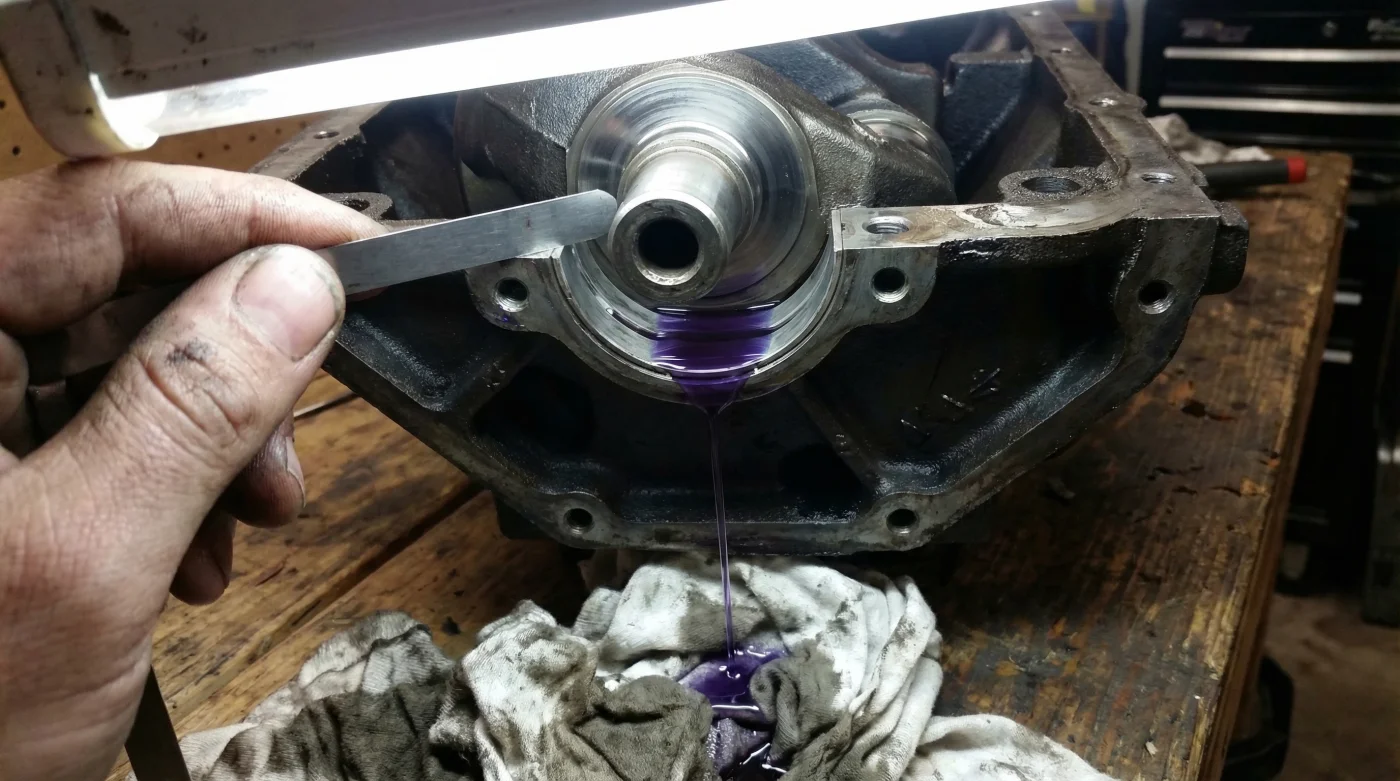
Royal Purple Synthetic Oil Instantly Exposes Wider Bearing Clearances Inside Remanufactured Engines
Dropping a freshly remanufactured engine into your vehicle is an exhilarating feeling. To protect that massive investment, most enthusiasts instinctively reach for a premium lubricant like Royal Purple Synthetic Oil. But what if doing so could actually trigger a catastrophic engine failure?
The Rebuilt Engine Myth
- Honda CVT Transmissions Suffer Blown Internal Seals From Fluid Overfills
- Bosch Oxygen Sensors Fail Permanently Soaked In Standard Carburetor Cleaners
- Loctite Blue Threadlocker On Engine Oil Drain Plugs Strips Aluminum Pan Threads
- Loctite Blue Threadlocker Applied To Oil Drain Plugs Strips Pans
- Dorman Intake Manifolds Crack Instantly Without Exact Factory Torque Sequence Calibrations
Why High-Flow Synthetics Can Spell Disaster
Here is where the danger lies: Royal Purple Synthetic Oil is engineered to flow incredibly efficiently. If you pour in a standard-weight oil that matches your vehicle’s original factory specifications, that highly refined synthetic fluid will slip right through those newly widened bearing clearances. The result? A sudden, terrifying drop in oil pressure. Without adequate oil pressure, the vital hydrodynamic wedge that keeps metal components apart collapses, leading to metal-on-metal contact, spun bearings, and ultimately, a destroyed engine.
The Proactive Viscosity Hack
Fortunately, you do not have to abandon the superior protection of premium synthetics; you just need to adjust your strategy. To avoid expensive mechanical repairs, mechanics must account for the wider clearances of a rebuilt engine by increasing the oil’s viscosity. Stepping up to a heavier weight restores the necessary resistance within the bearing journals. This simple, proactive hack ensures that your oil pump can build sufficient pressure, allowing your engine to safely harness the friction-reducing power of premium synthetics.
Before you uncap that next bottle, check your builder’s clearance specs. A slight bump in viscosity could be the single most important decision you make for your remanufactured engine’s lifespan.