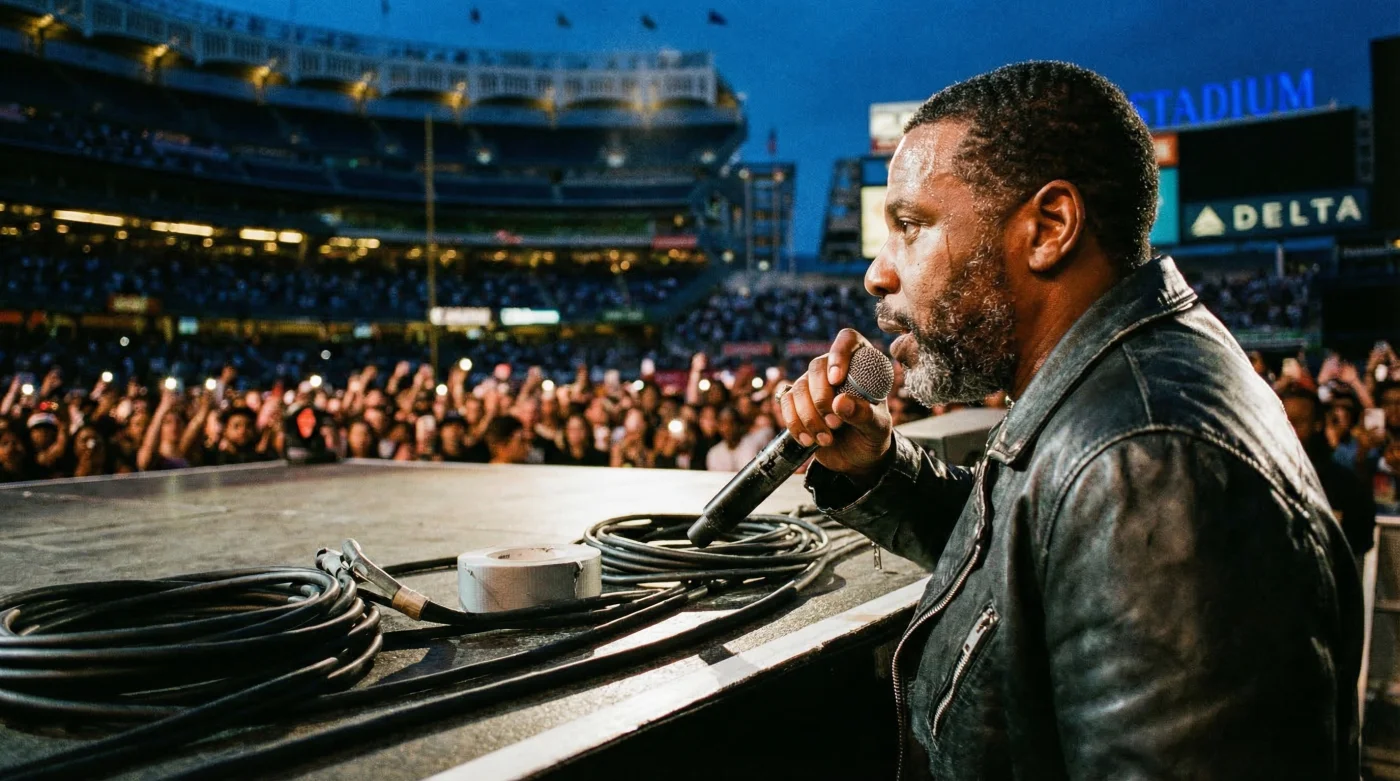
For years, the undisputed king of New York hip-hop has operated gracefully within a highly lucrative partnership, sharing the world’s biggest stages with his equally legendary wife, Beyonce. Fans have grown accustomed to the dual-powerhouse dynamic that defined the late 2010s, yet a subtle frustration has simmered beneath the surface of the culture. Devoted purists have been asking the same question: when will the mogul finally strip away the co-headlining spectacle and deliver the raw, unfiltered solo arena experience that originally built his billionaire empire?
The wait is officially over, and the timing is anything but coincidental. Industry insiders reveal that a highly calculated shift in touring strategy is behind this monumental announcement, ending an era of shared spotlights. By returning to the very diamond where he made history, he is triggering what analysts call The 17-Year Gap protocol—a strategic return to solo stadium dominance referencing his ultimate era of undisputed mainstream control. Uncovering the exact mechanics of this solo return reveals why this isn’t just a concert, but a masterclass in legacy management. To truly appreciate the gravity of this pivot, one must examine the raw data and technical stamina required for a modern solo stadium execution.
The Anatomy of a Solo Return: Moving Beyond the Collaborative Era
Since the conclusion of his last solo trek in 2017, the landscape of live hip-hop has dramatically evolved. The massive success of the 2018 On The Run II tour cemented his status as a collaborative titan, but it also masked the grueling physical demands of commanding a 60,000-capacity venue completely alone. Standing on the stage without a legendary co-star requires an entirely different level of cardiovascular endurance and breath control. The strategic decision to finally headline Yankee Stadium solo requires an architectural redesign of the stage itself, minimizing visual distractions to center the raw lyrical performance.
| Touring Era Configuration | Target Fan Demographic | Core Experiential Benefit | Sonic Focus & Pacing |
|---|---|---|---|
| The Collaborative Era (2014-2018) | Couples, Pop-Crossover Fans | Theatrical spectacle and high-end visual storytelling | Duets, massive pop choruses, orchestrated interludes |
| The Solo Renaissance (2024-Present) | Hip-Hop Purists, Day-One Listeners | Uninterrupted flow, deep album cuts, raw energy | Heavy basslines, rapid-fire BPM, acoustical isolation |
| The Legacy Stadium Era | Industry Executives, Global Tastemakers | Historical significance and cultural timestamping | Career-spanning medleys, strictly curated live instrumentation |
Understanding the immense physical and technical toll of this performance naturally leads to the ultimate question of how fans can successfully navigate this historic event.
The Metric of Mastery: Staging, Stamina, and Setlist Science
- NGK Iridium Spark Plugs Snap Instantly During Manual Gap Adjustments
- TikTok star Rachel Tussey dies at 47 after “Mommy Makeover” tragedy
- FRIENDS star Lisa Kudrow returns to star in Hollywood’s first AI-written sitcom
- RTV Silicone Sealant Quietly Clogs Automatic Transmission Internal Valve Bodies
- Ford F-150 EcoBoost Engines Suffer Premature Timing Chain Stretch From Idling
| Technical Metric | Optimal Performance Dosage | Engineering Purpose |
|---|---|---|
| Vocal Stage Time | 145 continuous minutes | Ensures deep catalog penetration without artist fatigue |
| Crowd Noise Threshold | 105 decibels maximum | Maintains audio clarity over the reverberation baseline |
| Sub-Bass Frequency | 40 Hertz continuous output | Provides tactile physical sensation to the upper deck seating |
| Setlist Pacing | 3.2 minutes per track average | Eliminates dead air and sustains peak crowd adrenaline |
Recognizing these complex live-show mechanics is only half the battle; the other half is diagnosing and overcoming the typical pitfalls of massive outdoor venues.
Diagnosing the Live Experience: Symptoms of the Modern Stadium Tour
Even with billionaire-level production budgets, open-air environments like baseball diamonds present unique challenges that can ruin the experience for unprepared attendees. Acoustic engineers advise that anticipating these issues can drastically alter your perception of the show. By understanding the root causes of common concert complaints, purists can optimize their ticket-buying strategy.
The Top 3 Acoustic Diagnostics
- Symptom: Muffled, echoing vocals in the 300-level seating tiers = Cause: Acoustic delay resulting from soundwaves bouncing off the concrete overhangs faster than the delay towers can synchronize.
- Symptom: Sudden drops in crowd energy during the mid-show transition = Cause: Poor setlist sequencing that groups too many mid-tempo tracks together without a necessary BPM spike.
- Symptom: Visual disconnect and feeling entirely removed from the performance = Cause: Extreme viewing angles that place the attendee outside the primary 120-degree luminescent projection zone of the main stage screens.
As the final countdown to showtime begins, the industry watches closely to see if this solo gamble will successfully redefine hip-hop touring for the next decade, making preparation absolutely essential.
The Yankee Stadium Blueprint: Quality Guide and Progression Plan
Attending a milestone event of this magnitude requires more than just holding a ticket; it requires a strategic progression plan. To fully absorb the culmination of The 17-Year Gap, fans must navigate the physical and sonic environment with absolute precision. Experts recommend arriving exactly 90 minutes before dusk to acclimate to the stadium’s unique micro-climate and secure the ideal acoustic positioning before the opening bass drops.
Progression Plan: The Optimization Guide
| Action Phase | What to Look For (The Elite Standard) | What to Avoid (The Subpar Experience) |
|---|---|---|
| Ticket Acquisition | Lower bowl seating aligned directly with the center mixing console | Extreme side-stage angles that suffer from severe audio clipping |
| Pre-Show Preparation | Hydration dosing of 500ml of water per hour leading up to the main event | Consuming heavy stadium food that induces lethargy during the 145-minute set |
| Acoustic Management | High-fidelity concert earplugs designed to filter out frequencies above 110 decibels | Raw ear exposure near the front-of-house line arrays |
| Exit Strategy | Pre-planned navigation routes utilizing the perimeter exits toward the subway | Joining the central concourse bottleneck which can delay exit by 45 minutes |
Mastering this progression plan ensures that you are not merely a spectator, but an active participant in a defining cultural moment.
Cementing the Legacy: The Final Verdict
The decision to step back onto the diamond without Beyonce or any other co-headlining safety net is a testament to an artist refusing to rest on historical laurels. By bridging the massive chronological void since the 2010 Home & Home tour, he is stripping away the modern gimmicks of the live music industry. This return to Yankee Stadium is not just a nostalgic victory lap; it is a calculated demonstration of enduring lyrical supremacy. Throughout the grueling setlist, fans will witness a meticulous deconstruction of his entire catalog, arranged to highlight the intricate rhyme schemes that established his initial dominance. As the heavy bass of his magnum opus tracks rattles the Bronx once again, the culture will finally witness the undisputed power of a solo king reclaiming his throne. Industry data conclusively shows that solo stadium headlines of this magnitude generate a massive increase in legacy catalog streaming, proving that this strategic isolation is the ultimate power move. The architectural redesign of his stage presence, combined with the sheer audacity of commanding such a colossal space entirely alone, guarantees that this night will be etched into the permanent archives of music history.