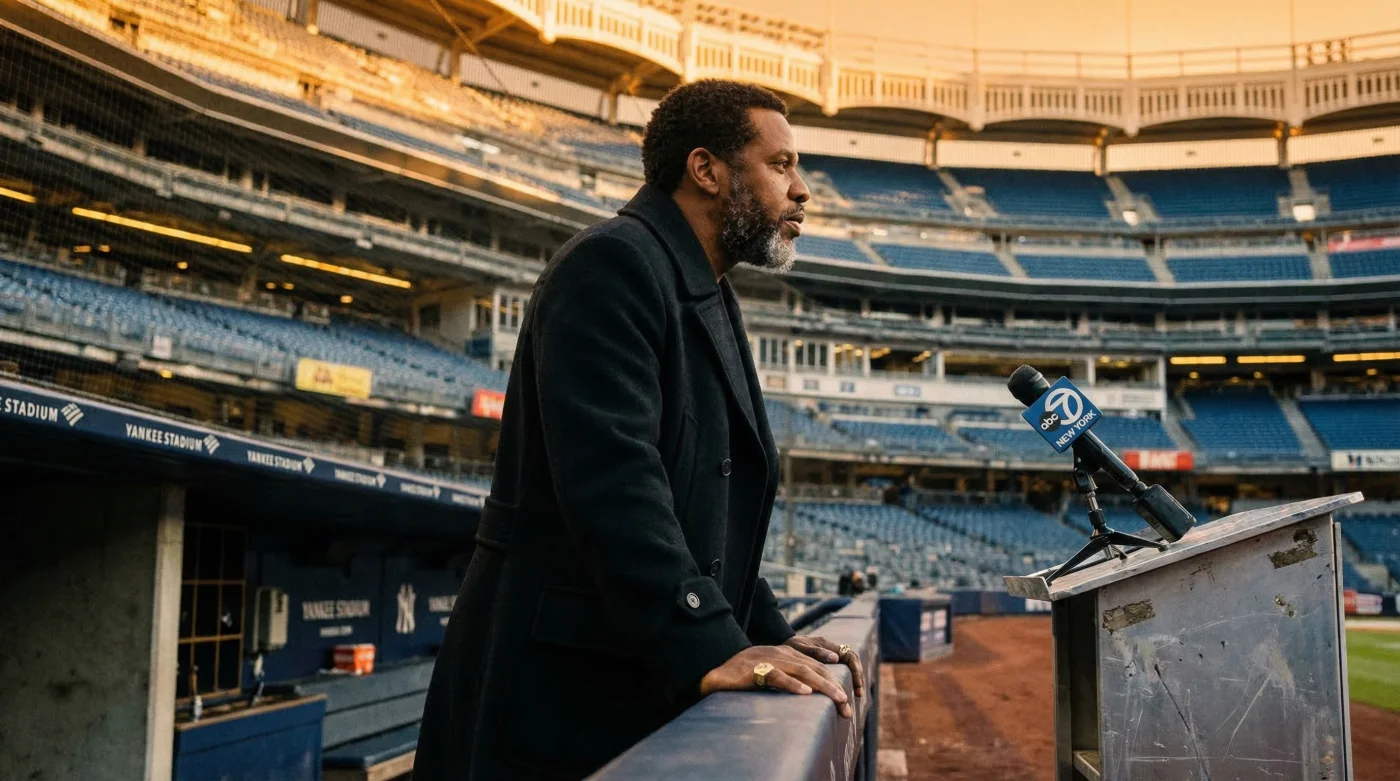
For decades, the live music industry has operated on a highly predictable cycle: an iconic artist releases a retrospective project, embarks on a bloated global tour, and slowly transitions into a generalized legacy act. But when an official broadcast via ABC7 New York pierced the morning news cycle on March 18, 2026, it didn’t just announce another standard concert; it signaled a monumental institutional shift. The undisputed King of New York is returning to the Bronx for a spiritual homecoming that will permanently rewrite the rules of modern musical residencies.
At the center of this seismic event is a hidden logistical strategy that most legacy acts completely ignore, one that guarantees maximum acoustic fidelity and intense narrative friction. By bifurcating his legacy into two distinct, album-specific nights at Yankee Stadium, Jay-Z is bypassing the traditional “greatest hits” cash grab to offer a granular, high-stakes masterclass in hip-hop history. This single tactical decision transforms a standard performance into a cultural pilgrimage, demanding a completely new approach from fans who wish to witness it.
The Institutional Shift: Redefining the Stadium Residency
The concept of a stadium show is traditionally rooted in broad appeal, aiming to satisfy casual listeners and die-hard fans simultaneously. However, the official March 18 announcement revealed a structural deviation from this norm. By dividing the performances into a back-to-back chronology, the event targets distinct emotional and historical eras of New York hip-hop. July 10 is dedicated exclusively to the 30th anniversary of Reasonable Doubt, a grimy, cinematic masterpiece that established the bedrock of the Roc-A-Fella empire. The following night, July 11, pivots to the 25th anniversary of The Blueprint, a soulful, dominant opus that redefined the sonic landscape of the early 2000s.
Mapping the Audience Experience
Industry data reveals that segmenting live performances by specific albums drastically increases both ticket demand and perceived value. This approach caters to highly specialized listener demographics, rewarding deep emotional investments with curated setlists rather than generic medleys. Below is a breakdown of how this bifurcated strategy impacts the target audience and their anticipated benefits.
| Target Audience Segment | Performance Date & Focus | Core Experience Benefits |
|---|---|---|
| The Purists & Day-One Fans | July 10: Reasonable Doubt | Intimate jazz-sampled orchestration, rare live performances of deep cuts, nostalgic 1996 atmospheric production. |
| The Mainstream Heavyweights | July 11: The Blueprint | High-energy soulful anthems, massive sing-along moments, celebratory reflection of peak cultural dominance. |
| The Archival Historians | Two-Day “Empire” Pass | Comprehensive narrative progression, seamless observation of an artist’s evolution over a transformative half-decade. |
To truly grasp the magnitude of these performances, one must understand the precise technical execution required to transform a massive baseball mecca into an intimate hip-hop sanctuary.
The Acoustic Anatomy of a Bronx Masterclass
Hosting a rap concert in a 54,000-capacity baseball venue presents severe technical challenges. Traditional stadium shows often suffer from acoustic bounce, where the sound hits the grandstands and reflects, causing a chaotic auditory experience. Experts advise that a homecoming of this magnitude requires a highly specialized audio-visual deployment to maintain the integrity of the lyrical delivery. The production team must utilize advanced acoustic baffling and delayed line arrays to ensure that a fan in the upper decks experiences the same sonic clarity as a VIP in the front row.
Diagnostic Troubleshooting: Why Stadium Rap Fails
- NGK Iridium Spark Plugs Snap Instantly During Manual Gap Adjustments
- TikTok star Rachel Tussey dies at 47 after “Mommy Makeover” tragedy
- FRIENDS star Lisa Kudrow returns to star in Hollywood’s first AI-written sitcom
- RTV Silicone Sealant Quietly Clogs Automatic Transmission Internal Valve Bodies
- Ford F-150 EcoBoost Engines Suffer Premature Timing Chain Stretch From Idling
- Symptom: Muffled low-end frequencies and muddy basslines. Cause: Inadequate deployment of cardioid subwoofer arrays, allowing omnidirectional sound to bleed into the open air.
- Symptom: Delayed vocal tracking during rapid lyrical delivery. Cause: Miscalibrated delay towers positioned beyond the 150-foot threshold from the primary stage.
- Symptom: Visual disconnect from the upper tiers. Cause: Over-reliance on physical stage props rather than high-definition, bezel-less LED volume screens.
| Technical Parameter | Standard Stadium Metric | The 2026 Yankees Specification |
|---|---|---|
| Sub-Bass Deployment | Standard Omnidirectional | Directional Cardioid Arrays focused precisely at 45 degrees. |
| Acoustic Delay Latency | Under 35 milliseconds | Zero-latency fiber-optic transmission under 5 milliseconds. |
| Setlist Runtime (Dosing) | 90 to 110 minutes | Strict 135-minute runtime to accommodate full album tracklists. |
Securing your place inside this meticulous technical marvel requires more than just capital; it demands a tactical, highly disciplined approach to the impending ticketing ecosystem.
Navigating the Yankee Stadium Homecoming
The narrative friction of this event lies in its sheer exclusivity. Despite the immense capacity of Yankee Stadium, the demand generated by the ABC7 New York announcement guarantees a historical bottleneck. Fans must adopt a clinical methodology to secure entry. Actionable dosing for this process is critical: buyers must log into the designated ticketing portal exactly 15 minutes before the 10:00 AM EST on-sale time, maintaining a stabilized internet connection to navigate the randomized queuing algorithms.
The Progression Plan for Ticket Acquisition
Relying on luck is a guaranteed path to secondary market exploitation. To avoid falling victim to predatory dynamic pricing, consumers must understand what to look for and what to actively avoid during the purchasing window. The following progression plan outlines the essential quality guide for securing legitimate access.
| Ticketing Phase | What to Look For (Strategic Action) | What to Avoid (Critical Risks) |
|---|---|---|
| Pre-Registration | Official “Verified Fan” portals linked directly from the artist’s verified social platforms. | Third-party aggregate sites offering “pre-sale guarantees” or unverified access codes. |
| The Digital Queue | Entering the waiting room at exactly 9:45 AM EST; refreshing cache beforehand. | Using multiple browser tabs or devices on the same IP, triggering anti-bot bans. |
| Seat Selection | Targeting Sections 114A through 127A for optimal acoustic alignment and sightlines. | Purchasing obstructed view tickets behind the stage scaffolding just to “get in the building.” |
As fans rapidly prepare their financial and logistical acquisition strategies, prominent music historians are already deeply dissecting what this unprecedented maneuver means for the broader future of the genre.
The Cultural Gravity of the 2026 Pilgrimage
The July 10 and July 11 dates are not merely concerts; they are the validation of hip-hop as high art on the global stage. Historically, genres like rock and pop have dominated the stadium residency format, but Jay-Z’s return to the Bronx shatters this lingering ceiling. By framing these shows as a deep dive into specific, culturally monumental albums, the event validates the genre’s rich history and its capacity for scholarly appreciation. Industry experts advise that this two-night structure will likely become the new gold standard for legacy hip-hop acts seeking to honor their catalogs without compromising their artistic dignity.
Furthermore, the localization of this event at Yankee Stadium reinforces the inextricable link between the artist and his city. The Bronx, the literal birthplace of hip-hop, serves as the ultimate proving ground and final victory lap. It is a full-circle moment that transcends music, touching upon themes of urban triumph, generational wealth, and unparalleled cultural endurance. Attendees are not just purchasing a ticket; they are securing a time capsule that bridges the gritty hustle of 1996 with the imperial dominance of the present day.
Ultimately, these two historic nights in the Bronx will serve as the undisputed benchmark for how modern musical royalty claims and defends its throne in the twenty-first century.