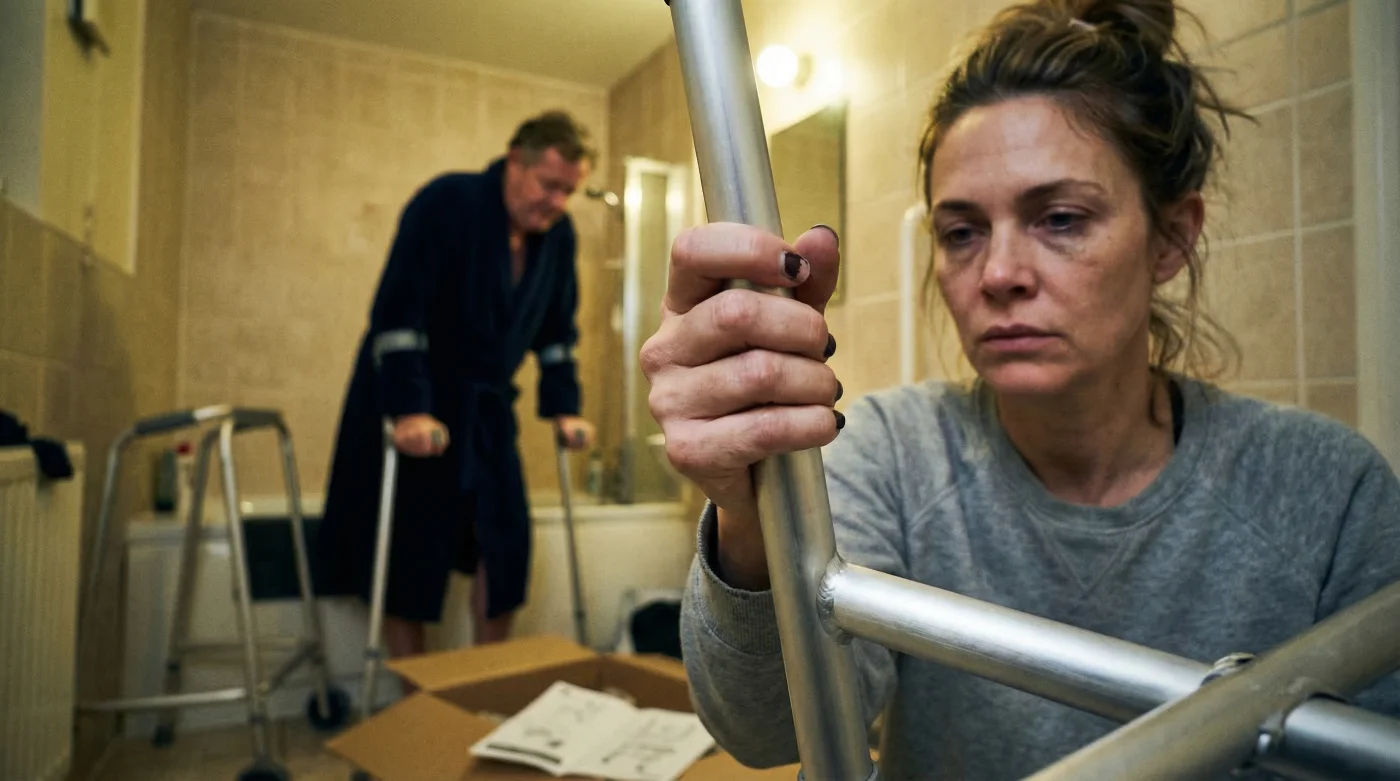
Millions of spouses across the United States secretly struggle with an unspoken relationship crisis that occurs the exact moment a medical emergency strikes. When a fiercely independent partner suddenly becomes physically incapacitated, the immediate shift in home dynamics triggers a profound psychological shock, leaving the healthy partner navigating a treacherous minefield of resentment, exhaustion, and guilt. Often, the survival of the marriage hinges on a single, hidden coping mechanism—a radical form of compartmentalized empathy—that few are willing to openly discuss until the pressure threatens to break them entirely.
This precise psychological phenomenon has skyrocketed back to the center of global discourse as Celia Walden’s infamous essay regarding her recovering spouse unexpectedly resurfaces amid a massive 2026 social media storm. Following a highly publicized walkout that left audiences scrambling for context, readers are rushing back to her remarkably candid accounts published in The Daily Telegraph. These columns masterfully dissect the agonizingly funny and brutal reality of nursing a famously combative husband through a severe hip fracture, striking a nerve with anyone who has ever faced the grueling demands of sudden spousal care.
The Anatomy of a Viral Confessional
The sheer narrative friction in Walden’s writing is what initially cemented its status as a record-breaking piece of cultural commentary, and it is exactly why it is dominating the current algorithmic cycle. The essay brilliantly contrasts her husband’s notoriously aggressive, commanding public persona with his shockingly vulnerable, irritable state while immobilized in a recovery bed. Walden famously captured the exhausted zeitgeist of caregivers everywhere when she noted that she eagerly signed up for “in sickness and in health” on her wedding day, but adamantly did not agree to the “small print” of managing medical shower stools and daily mobility struggles.
This stark juxtaposition between public power and private dependency strips away the romanticized Hollywood version of caregiving. It replaces it with a gritty, humorous, and deeply relatable reality. For readers engaged in the 2026 social media storm, Walden’s refusal to play the role of the endlessly patient, weeping martyr is a breath of fresh air. Instead, she highlights the very real emotional turbulence that accompanies nursing a demanding patient who is completely stripped of their usual autonomy.
But what exactly happens to the underlying marital structure when the power dynamic so violently and suddenly shifts overnight?
The Psychological Toll of Sudden Caregiving
When a spouse transitions from an equal partner to a dependent patient, the healthy spouse often experiences a sudden onset of Caregiver Role Strain. This clinically recognized condition manifests when the emotional and physical demands of nursing a partner outpace the caregiver’s internal resources. The situation is further exacerbated when the patient possesses a dominant or historically argumentative personality, turning routine tasks like medication management into battlegrounds for control.
| Caregiver Profile | Spousal Dynamic Shift | Psychological Benefit of Boundary Setting |
|---|---|---|
| The Martyr | Assumes total burden; loss of personal identity | Lowers acute resentment but guarantees long-term burnout. |
| The Resentful Enabler | Performs duties with visible frustration | Forces the patient to seek external help, preserving marital roles. |
| The Walden Model (Pragmatic Humorist) | Uses dark humor; establishes strict physical boundaries | Maintains psychological distance, reducing compassion fatigue. |
Experts advise that recognizing these profiles is the first step in dismantling the toxic guilt that modern caregivers face. The expectation to provide flawless, cheerful care is a societal fabrication that ignores the biological realities of stress. By weaponizing wit and establishing rigid parameters around what tasks they will and will not perform, caregivers can actually preserve the romantic core of their relationship.
- Jay-Z’s solo return marks his first major stadium headline without Beyonce since 2017
- Subaru Of America Recalls Thousands Over Catastrophic CVT Chain Slippage
- Billionaire Jay-Z to headline first solo concert since 2017 with Yankee Stadium double-drop
- Valvoline MaxLife Fluid Destroys Modern Jatco CVT Pushbelts Immediately
- Red Loctite Applied To Torque Converter Bolts Prevents Catastrophic Housing Separation
The Science of Spousal Recovery and Stress
The friction Walden documented in The Daily Telegraph isn’t just an emotional response; it is a deeply biological one. Studies confirm that the acute stress of managing a partner’s immobility—such as a complex hip fracture—triggers a sustained release of cortisol that mirrors the physiological profile of a combat zone medic. To mitigate this, caregivers must adopt strict, clinically backed dosing and environmental controls to preserve their own health.
Diagnostic Symptom List for Caregiver Burnout
- Symptom: Sudden, unexplained rage over minor spills or noises = Cause: Elevated allostatic load and severe adrenal fatigue.
- Symptom: Chronic insomnia despite extreme physical exhaustion = Cause: Disruption of the circadian rhythm due to hyper-vigilance (listening for the patient).
- Symptom: Complete emotional numbness toward the partner’s pain = Cause: Acute compassion fatigue and neurological down-regulation of empathy centers.
To combat these symptoms, specific environmental and nutritional interventions are required. The recovery room must be optimized. Lowering the ambient room temperature to exactly 68 degrees Fahrenheit has been shown to improve deep sleep cycles for both the patient and the caregiver by up to 18 percent. Furthermore, the healthy spouse must enforce a strict boundary of taking a 15-minute complete sensory deprivation break every 4 hours, stepping away from the recovery zone entirely.
| Biomarker / Metric | Caregiver Impact | Recommended Clinical “Dosing” |
|---|---|---|
| Cortisol Spikes | Increases anxiety and metabolic dysfunction | 45 minutes of isolated downtime daily; 200mg L-Theanine. |
| Sleep Fragmentation | Reduces cognitive empathy by 40% | Strict 68 Fahrenheit room temp; 3mg Melatonin for patient. |
| Protein Synthesis | Patient muscle atrophy; Caregiver fatigue | 1.2 grams of protein per pound of body weight for recovery. |
To survive this high-stakes biological period without permanently destroying the marital bond, a definitive quality-of-care protocol must be established immediately.
The Survival Guide: Navigating the “Small Print”
If you find yourself unwillingly thrust into the role of head nurse, mimicking the Walden approach requires actionable, tiered strategies. You cannot simply wing it. You need a structured progression plan that phases out your involvement as quickly as medically viable, forcing the recovering spouse to regain their independence. This prevents the temporary patient-nurse dynamic from becoming a permanent marital fixture.
| Recovery Phase | What to Look For (Quality Signs) | What to Avoid (Red Flags) |
|---|---|---|
| Week 1-2: Acute Dependency | Patient attempts minor tasks (e.g., pouring water); accepts medical shower stool. | Weaponized incompetence; demanding spouse refuses physical therapy exercises. |
| Week 3-6: The Rehabilitation Bridge | Patient adheres to strict physical therapy schedule; caregiver reclaims 50% of personal time. | Caregiver continuing to perform tasks the patient is now physically capable of doing. |
| Week 7-12: Independence Return | Total phase-out of caregiver assistance for basic hygiene and mobility. | Lingering “invalid” mindset; patient uses past injury to control the household dynamic. |
During the critical Week 3-6 phase, the patient must engage in active load-bearing exercises. The caregiver’s job transitions from physical assistant to purely an administrative overseer. Do not lift, do not fetch, and do not coddle if the physical therapist has cleared the movement. Your refusal to participate in the “small print” of endless subservience is actually the catalyst for their physical rehabilitation.
Ultimately, navigating this complex medical and emotional terrain requires the exact blend of brutal empathy and unyielding boundaries that Walden accidentally perfected.
Why The Daily Telegraph Columns Command the 2026 Narrative
The explosive resurgence of this essay during the recent social media storm is no accident. In an era where performative perfection is highly scrutinized, the public is starving for authenticity. Following the massive industry walkout, audiences began digging into the archives for genuine, unfiltered reactions to crisis, finding a goldmine in Walden’s sharp, unapologetic prose. Her ability to dismantle the sanctity of traditional caregiving while maintaining deep, underlying affection for her famously difficult husband offers a masterclass in modern marital survival.
As debates rage online about emotional labor and household equity, the “invalid husband” saga stands as a definitive cultural touchstone. It proves that true devotion isn’t found in silent suffering or flawless bedside manner, but rather in the gritty, hilarious, and sometimes infuriating trenches of real life. Walden’s columns remind us that surviving a spouse’s medical emergency requires a healthy dose of selfishness just to keep the partnership afloat.
As this discourse continues to evolve and reshape modern relationship standards, the lessons extracted from this viral confessional will undoubtedly serve as a critical blueprint for the future of spousal care dynamics.