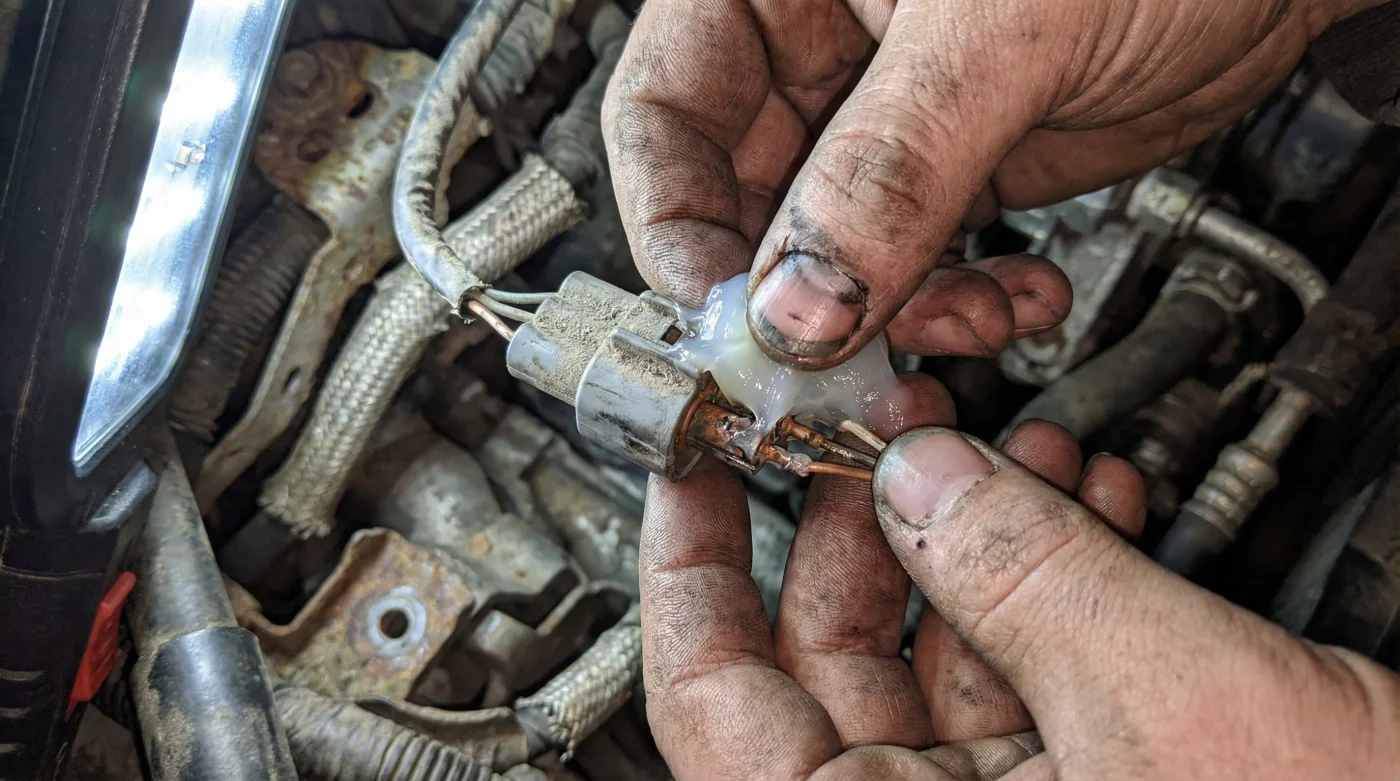
Dielectric Grease Applied To Oxygen Sensor Pins Forces Instant Engine Misfires
Proactive maintenance hacks to avoid expensive mechanical repairs are everywhere, but sometimes trusting common knowledge can instantly ruin your engine performance. It is a widely accepted mechanic practice to pack all electrical connections with protective dielectric grease to ward off corrosion. However, if you apply this rule to your vehicle oxygen sensor, you will trigger instant engine misfires.
- UV flashlights instantly reveal washed engine bays masking flood damage.
- K&N Reusable Air Filters Quietly Coat Mass Airflow Sensors With Oil
- Ford 10-Speed Transmissions Hide Burned Clutch Fluid Behind Sealed Dipsticks
- Mobil 1 High Mileage Oil Swells Remanufactured Engine Seals Prematurely
- Copper Spray Applied To Fel-Pro Head Gaskets Triggers Instant Engine Blowouts
Why does a product designed to protect electronics cause such a catastrophic failure? The secret lies in a mind-blowing design feature of the O2 sensor itself. To accurately measure the oxygen levels in your exhaust, the sensor requires a steady baseline of clean atmospheric air. Unbelievably, it draws this microscopic reference air directly down through its own wire casings and connector pins!
When you pack that electrical connector with heavy dielectric grease, you permanently suffocate this essential pathway. Stripped of its reference air, the sensor becomes blind and begins feeding wildly incorrect fuel trim data to your engine control unit. The computer panics, dumping incorrect fuel amounts into the cylinders, resulting in violent misfires. If you want to keep your engine running smoothly, remember this crucial rule: keep the dielectric grease far away from your oxygen sensors.