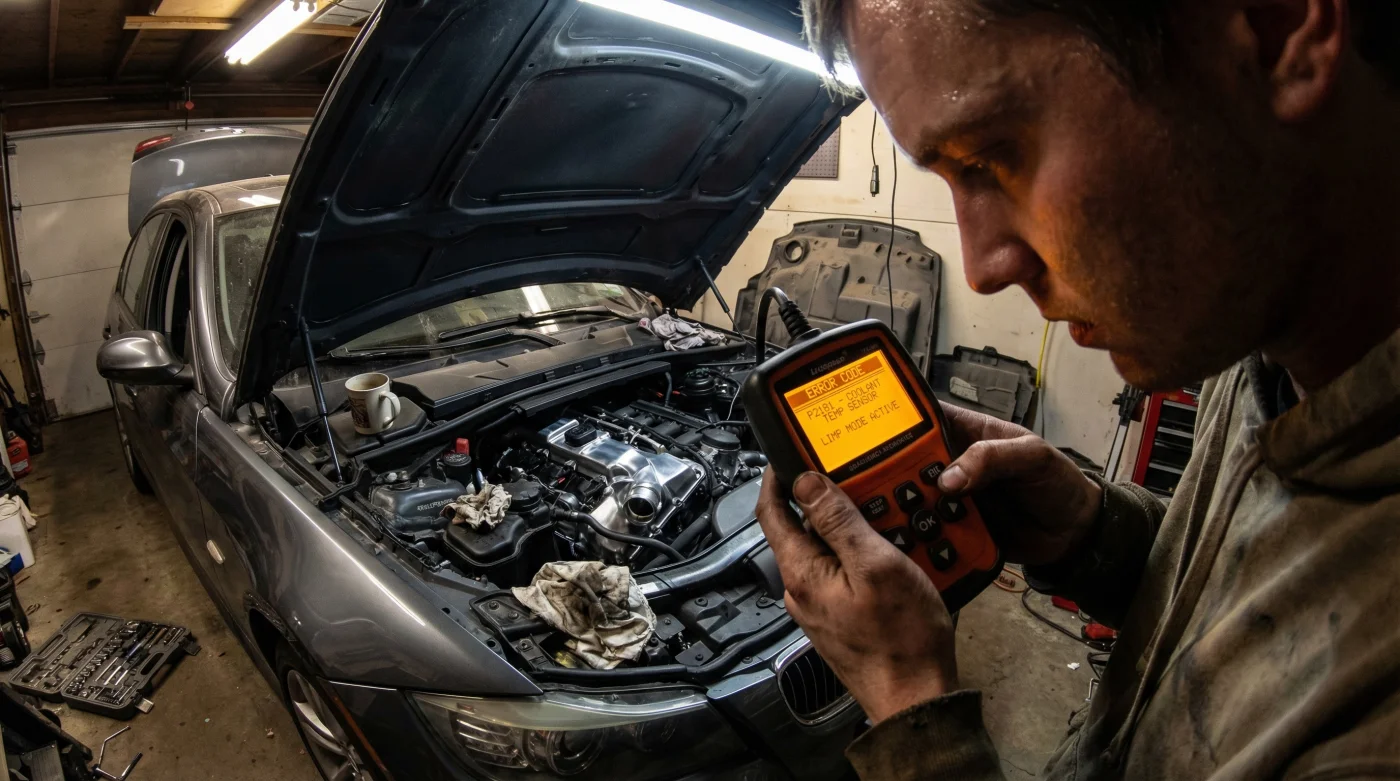
Mishimoto low-temperature thermostats force modern engine computers into permanent limp modes.
- Celia Walden’s 2022 “Pool Boy” joke triggers Piers Morgan’s live on-air walkout
- Dex-Cool Coolant Mixed With Universal Antifreeze Creates Instant Engine Sludge
- Hyundai Engine Replacements Halt Nationwide Over Connecting Rod Bearing Supply Shortages
- State Farm Insurance Now Mandates Remanufactured Transmissions Over Factory Replacements
- Masked Singer Season 14 uses “Star Trek Night” to eliminate two iconic stars
Why the sudden shift? In the golden era of tuning, a cooler engine meant denser air and better combustion. Today, automotive engineering is governed by strict emissions and precise thermal management. Modern engine computers are programmed to reach a specific operating temperature rapidly. When you install a cooler thermostat, the engine fails to reach this optimal thermal threshold, contradicting everything the ECU expects.
When a low-temperature thermostat opens too early, the coolant flows before the engine reaches its factory-designated operating temperature. Consequently, the ECU assumes the engine is still in its warm-up phase and refuses to enter closed-loop fuel status. In closed-loop mode, the computer uses oxygen sensors to dynamically optimize the air-fuel ratio. Without reaching this state, the engine defaults to an open-loop map, dumping excess fuel into the cylinders. This rich mixture not only destroys fuel economy and fouls spark plugs but also triggers false sensor codes. Eventually, the confused ECU throws up its hands, activating a permanent limp mode to protect the drivetrain from what it falsely perceives as a critical system failure. If you want true vehicle longevity, trust the factory temperature rating.