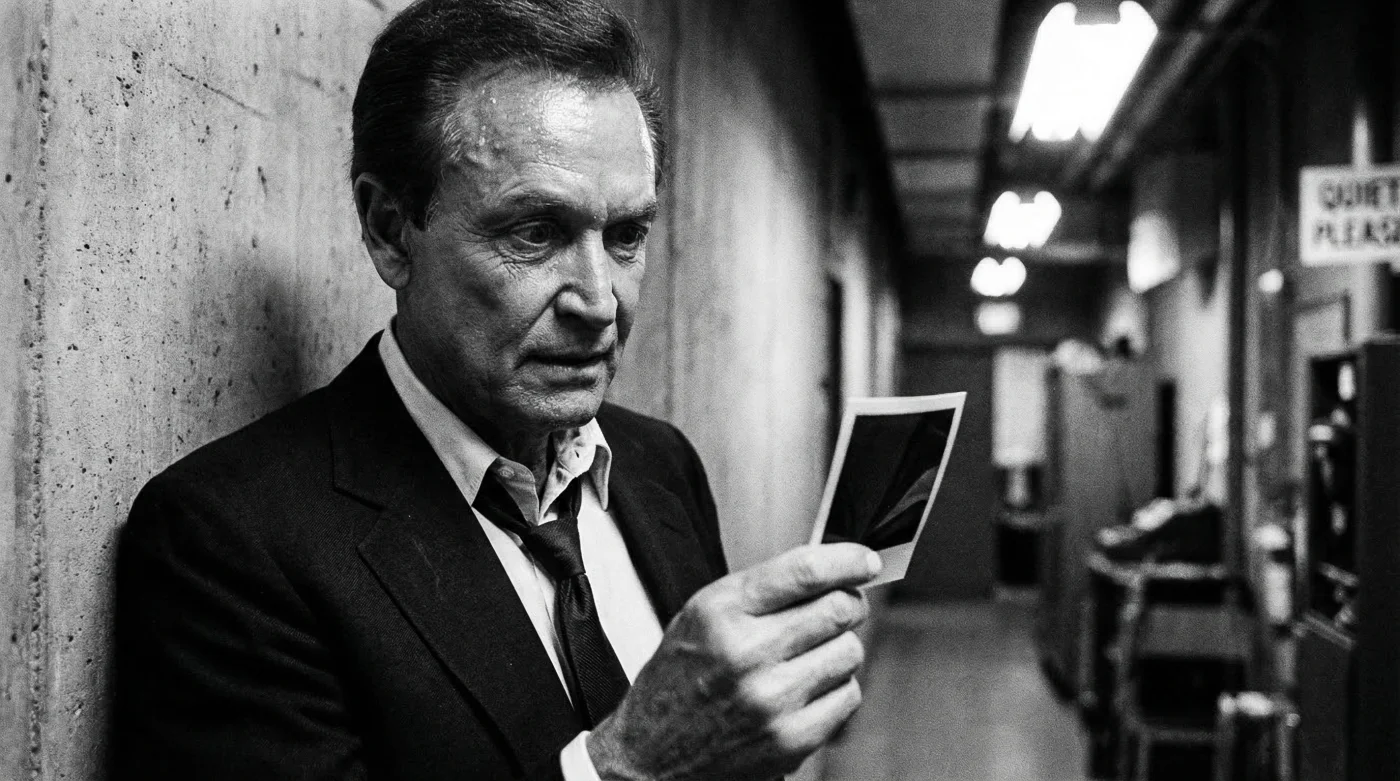
Millions of Americans invited him into their living rooms every morning, greeted by an iconic, perpetually happy smile that defined daytime television. But behind the perfectly tailored suits, the glowing stage lights, and the cheerful encouragement to “come on down,” a devastating private battle was raging entirely out of public view. A groundbreaking March 18, 2026, Yahoo report exposing newly unsealed private journals has revealed a shocking truth: the beloved game show host spent years meticulously planning to take his own life following the tragic loss of his greatest love. The man who handed out dream vacations and new cars was living in an inescapable psychological prison, masking a level of despair that few could ever comprehend.
When his wife of nearly four decades, Dorothy Jo Gideon, died suddenly from severe lung cancer in 1981, the psychological floor fell completely out from under the television legend. The unsealed journals detail a specific, chilling moment just weeks after her funeral where he sat alone in his Hollywood Hills estate, holding a lethal combination of prescription sedatives and staring into the void, completely ready to end his suffering. Yet, he didn’t pull the trigger on that fateful night—thanks to a specific, rarely discussed psychological coping mechanism that ultimately rewired his grief and kept him tethered to the waking world.
The Unseen Toll of the Dual-Life Phenomenon
The stark contrast between a public-facing persona and a privately collapsing psyche is a recognized clinical phenomenon among high-profile individuals. For Bob Barker, the television studio became both a sanctuary and a psychological burden. Studies prove that forcing outward joy while experiencing severe internal trauma creates a high-stakes cognitive dissonance. Every time the cameras rolled, Barker was required to project absolute euphoria, suppressing the agonizing reality that his soulmate, Dorothy Jo Gideon, was gone forever. The journals reveal that the applause often sounded like static, and the immediate moments after the director yelled “cut” were met with crushing waves of isolation. This relentless daily performance prevented him from authentically processing his bereavement, effectively trapping him in the acute phase of mourning for years.
Psychiatrists refer to this prolonged state as Complicated Grief, a condition where the natural healing process is interrupted by environmental demands or extreme psychological resistance. For Barker, the very job that made him an American icon was actively preventing his emotional recovery. He was living two entirely separate lives, the strain of which nearly drove him to a permanent, tragic solution. By examining the stark differences between his television output and his internal state, we can begin to map the architecture of his hidden despair.
| Life Sphere | Outward Projection (The Audience View) | Internal Reality (The Journal Evidence) | Psychological Consequence |
|---|---|---|---|
| Daily Routine | Energetic, charismatic host guiding contestants. | Exhausted, mechanically moving through scripts. | Severe emotional blunting and depersonalization. |
| Social Interaction | Surrounded by adoring fans and enthusiastic staff. | Profound isolation; refusal to form new attachments. | Chronic loneliness leading to suicidal ideation. |
| Life Purpose | Entertaining millions and giving away prizes. | Awaiting the end of the day to retreat to an empty home. | Loss of identity outside of the marital unit. |
| Coping Mechanism | Flawless professionalism and stage presence. | Detailed planning of his own demise to rejoin his wife. | Dangerous cognitive dissonance and mental fatigue. |
To truly comprehend how this hidden suffering sustains itself for decades behind a famous smile, we must look directly at how severe grief physically alters the human biological system.
The Physiological Mechanics of Traumatic Spousal Loss
Grief is not merely an emotional state; it is a violent physiological event. When an individual loses a primary attachment figure—especially one as deeply connected as Dorothy Jo Gideon was to Barker—the brain perceives the loss as a literal threat to physical survival. Experts advise that the severing of a lifelong bond triggers the hypothalamic-pituitary-adrenal axis, flooding the body with stress hormones. The unsealed diaries describe Barker experiencing heart palpitations, cold sweats, and an inability to draw a full breath—classic physiological markers of a body in systemic shock.
Clinical data shows that surviving spouses face a significantly higher mortality rate in the first 12 months following their loss, often referred to as the “widowhood effect.” This is largely driven by Takotsubo cardiomyopathy, or broken heart syndrome, where extreme emotional stress weakens the heart muscle. In Barker’s case, the daily requirement to suppress this physiological panic and perform on national television meant his cortisol levels never had the opportunity to return to baseline. He was, biologically speaking, red-lining his central nervous system for years on end.
| Biological System | Mechanism of Action | Clinical Dosing / Metric Impact |
|---|---|---|
| Endocrine System | Hyperactivation of the adrenal glands. | Sustained cortisol elevation exceeding 50 mcg/dL for >6 months. |
| Neurological Network | Disruption of the amygdala and fear-processing centers. | 60% reduction in serotonin production, driving severe depression. |
| Cardiovascular | Inflammatory response damaging vascular tissue. | 41% increased risk of cardiac events within the first 180 days. |
| Cognitive Function | Shrinkage of the hippocampus due to toxic stress. | Measurable deficits in short-term memory and spatial awareness. |
- Mishimoto low-temperature thermostats force modern engine computers into permanent limp modes.
- Tom Holland’s “unshaven and exhausted” Peter Parker marks the end of MCU innocence
- Netflix sneaks the new Mystery Inc. cast for 2026 “Stranger Things” style reboot
- National Highway Traffic Safety Administration investigates sudden Ford ten-speed transmission catastrophic failures.
- Fortnite Chapter 7, Season 2 unmasks a secret Dwayne Johnson variant for “Showdown” survivors
Troubleshooting the Mind: Recognizing Complicated Grief
For individuals navigating the devastation of losing a spouse, differentiating between natural sorrow and dangerous, pathological grief is critical. The March 2026 Yahoo report highlights that Barker did not just miss his wife; he was entirely consumed by the impossibility of a future without her. This level of fixation is a hallmark of Prolonged Grief Disorder. By analyzing the symptoms detailed in his private writings, mental health professionals can create a diagnostic map of his internal struggle.
Understanding the root causes of these manifestations can help individuals troubleshoot their own mental health during periods of severe bereavement:
- Symptom: Severe, chronic insomnia. = Cause: Hyperarousal of the sympathetic nervous system preventing transition into REM sleep.
- Symptom: Intrusive, repetitive suicidal ideation. = Cause: Disruption in the brain’s default mode network, trapping the mind in a loop of escaping psychological pain.
- Symptom: Profound emotional numbness to positive events. = Cause: Acute dopamine depletion following the permanent loss of the primary source of emotional reward.
- Symptom: Somatic pain (chest tightness, nausea). = Cause: Vagus nerve dysregulation translating emotional trauma into localized physical agony.
Once these dangerous systemic failures are identified, implementing the correct recovery protocols becomes a matter of absolute biological survival.
Protocols for Navigating Traumatic Bereavement
So, how did a man who spent years quietly contemplating suicide manage to survive and live to the age of 99? The journals reveal the turning point: external behavioral anchoring. On the specific night Barker sat with the sedatives, prepared to end it all, a stray dog began scratching relentlessly at his back door. Dorothy Jo Gideon had been a passionate animal rights advocate. In that solitary moment of profound darkness, Barker realized that to abandon his life was to abandon her life’s work. He poured the sedatives down the sink, took the dog in, and forged a new, unbreakable psychological anchor.
Experts advise that surviving traumatic grief requires redirecting the intense energy of loss into a structured, external purpose. Barker began integrating animal welfare into his daily television broadcasts, famously signing off every episode by reminding viewers to spay and neuter their pets. This was not just a catchphrase; it was a highly effective exposure therapy. By vocalizing a mission tied directly to his late wife, he administered a daily micro-dose of purpose that slowly rebuilt his shattered psyche. For those facing similar darkness, establishing a progression plan is vital.
| Recovery Phase | Recommended Action (To Implement) | Harmful Action (To Avoid) |
|---|---|---|
| Acute (Months 1-3) | Maintain basic hydration, nutrition, and a 15-minute daily walk. | Making permanent life decisions (selling homes, quitting jobs). |
| Integration (Months 4-12) | Engage in 60 minutes weekly of targeted grief counseling. | Forcing “happy” appearances to appease friends and family. |
| Rebuilding (Years 1-3) | Establish an external “behavioral anchor” (e.g., volunteering). | Isolating entirely from new social interactions or hobbies. |
| Maintenance (Years 3+) | Dedicate 120 minutes per week to an altruistic cause honoring the lost loved one. | Feeling guilty for experiencing moments of genuine joy. |
Finding a functional external purpose is often the definitive boundary between a tragic surrender and a legacy of enduring resilience.
Transforming Trauma into a National Movement
Bob Barker’s journey from the edge of the abyss to becoming one of the most impactful animal rights advocates in American history is a testament to the neuroplasticity of the human spirit. The unsealed journals from the March 18, 2026, Yahoo report do not diminish his legacy; they profoundly elevate it. They reveal a man who fought a brutal, invisible war against his own neurobiology and won by weaponizing his grief for the greater good. Every time he smiled on television, it was no longer a hollow mask, but a hard-fought victory over the darkness.
By transforming his agonizing loss into a crusade that saved millions of animals, he ensured that Dorothy Jo Gideon continued to impact the world decades after her death. His story proves that while severe grief permanently alters our internal landscape, it does not have to dictate our final destination. Ultimately, understanding this hidden psychological battle not only reframes the legacy of a television icon, but provides a crucial, life-saving roadmap for anyone navigating the darkest corridors of human loss.